

Blog

How the Volkswagen Atlas Handles Long Drives on I-40 Through Amarillo, TX

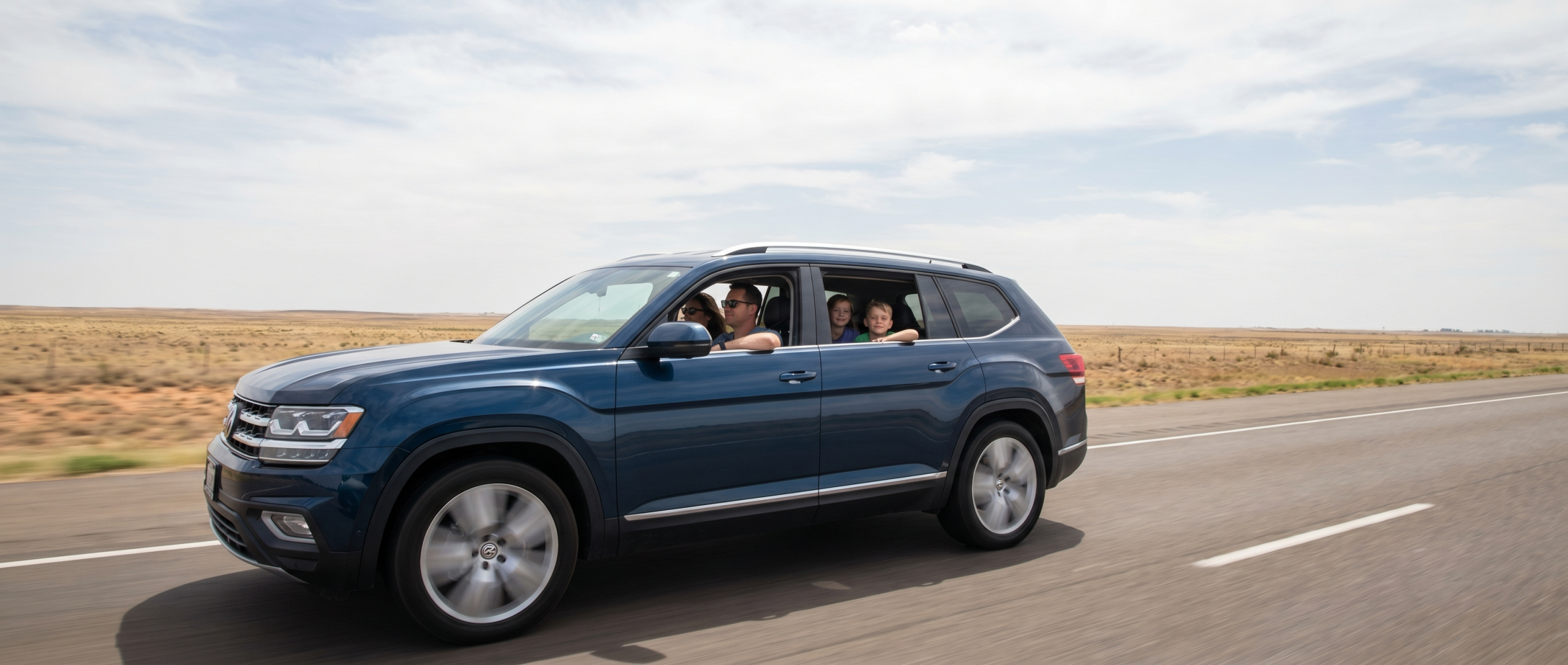
Volkswagen Atlas driving on I-40 near Amarillo TX showcasing highway comfort

The 177-mile stretch of I-40 through the Texas Panhandle tests every vehicle that crosses it - and the Volkswagen Atlas turns this challenge into its greatest showcase. Whether you're hauling the family to Cadillac Ranch or pushing through to Albuquerque, this three-row SUV transforms endless highway miles into comfortable journeys. For drivers in Amarillo, TX who regularly face long stretches of open road, understanding how the Atlas performs where it matters most - on I-40 - makes all the difference in choosing the right family vehicle.

Why I-40 Through the Panhandle Demands a Different Kind of SUV

Wind gusts averaging 15-20 mph year-round make I-40 through Potter and Randall Counties particularly demanding on vehicles - which is precisely where the Atlas's 5,037-pound curb weight becomes an advantage. This substantial mass, combined with the SUV's wide stance, creates remarkable stability even when semi-trucks create turbulent air pockets. The Atlas maintains its composure where lighter crossovers get pushed around.

The flat terrain might look easy, but the combination of sustained highway speeds, crosswinds, and temperature extremes creates unique challenges:

  • Constant headwinds reduce fuel efficiency by up to 25% in typical vehicles
  • Temperature swings from 20°F winter mornings to 100°F summer afternoons stress mechanical systems
  • Limited service stations between Amarillo and Tucumcari mean reliability matters more
  • Monotonous scenery for hours demands superior comfort to combat driver fatigue

Residents commuting between Canyon and downtown Amarillo understand these conditions aren't occasional - they're daily reality. The Atlas addresses each challenge through engineering specifically suited to long-distance highway driving.

Pro tip: The Atlas's aerodynamic design includes active grille shutters that close at highway speeds, reducing drag and improving efficiency by approximately 2 MPG on long I-40 stretches.

Real-World Fuel Economy Between Amarillo and Major Destinations

DestinationDistance from AmarilloAtlas V6 Fuel UsedTypical Fuel StopsDrive Time
Oklahoma City, OK260 miles10.4 gallons1 (optional)3 hrs 45 min
Albuquerque, NM290 miles11.6 gallons1 recommended4 hrs 15 min
Dallas, TX360 miles14.4 gallons1 required5 hrs 30 min
Denver, CO425 miles17.0 gallons1-2 required6 hrs 30 min

The Atlas V6 achieves 23-25 MPG on I-40 under real conditions - not just EPA estimates. With its 18.6-gallon tank, you'll pass numerous gas stations before needing to stop, providing flexibility to choose stations with better prices or cleaner facilities.

Cross-referencing fuel consumption with actual Atlas owners driving through the Panhandle reveals the AWD models typically see only a 1-2 MPG decrease compared to FWD versions. This minimal penalty makes AWD worth considering for those who also navigate unpaved roads near Lake Meredith or Caprock Canyons State Park.

Comfort Features That Matter After 300 Miles

By the time you reach the New Mexico border, inferior seats reveal themselves through backaches and numbness - but the Atlas keeps occupants comfortable well past the 5-hour mark. The driver's seat offers 12-way power adjustment including 4-way lumbar support, addressing the lower back strain that develops on flat, straight highways.

The Atlas provides comfort advantages that become apparent on long hauls:

  • Tri-zone climate control prevents the common "too hot in back, too cold in front" battle
  • Panoramic sunroof (available on SE trim and above) combats the claustrophobic feeling of endless highway
  • Ambient lighting in 10 colors helps reduce eye strain during pre-dawn or night drives
  • Heated and ventilated front seats adapt to Panhandle temperature extremes
  • Second-row captain's chairs (optional) provide first-class comfort for adult passengers

What sets the Atlas apart is how these features work together during extended drives. The ventilated seats circulate air continuously, preventing the sticky discomfort that develops after hours of sitting. Meanwhile, the panoramic sunroof's power shade can be partially opened to brighten the cabin without creating wind noise.

Take a look at our new inventory to explore Atlas models with these long-distance comfort features.

Wind Noise and Cabin Quietness at Panhandle Speeds

The Texas Panhandle's notorious winds create a natural sound laboratory for testing vehicle refinement - and the Atlas excels where it counts. At a steady 75 mph on I-40, the cabin maintains conversation-friendly sound levels thanks to acoustic glass in the windshield and front doors. This isn't just marketing speak; it translates to arriving in Santa Fe refreshed rather than exhausted from fighting noise fatigue.

VW engineers specifically addressed high-speed wind noise through:

  • Triple door seals that prevent air infiltration
  • Aerodynamic mirror designs that minimize turbulence
  • Active noise cancellation through the Fender premium audio system
  • Underbody panels that smooth airflow beneath the vehicle

During spring windstorms when gusts exceed 40 mph near Wildorado, the Atlas's cabin remains remarkably composed. You'll notice the wind's presence through gentle body motions, but the howling stays outside where it belongs.

Did you know? The Atlas's coefficient of drag (0.33 Cd) matches many sedans, despite its boxy three-row shape. This aerodynamic efficiency directly translates to reduced wind noise and improved fuel economy.

Technology That Enhances Long-Distance Driving Safety

Travel Assist - Volkswagen's hands-on semi-autonomous driving system - transforms I-40's monotonous straightaways from exhausting to manageable. This technology package (standard on SEL trim and above) combines adaptive cruise control with lane-keeping assistance to reduce the physical and mental fatigue of constant steering corrections.

Here's how Atlas technology specifically helps on I-40:

Active Safety Features:

  • Travel Assist maintains centered lane position automatically
  • Adaptive Cruise Control adjusts speed for traffic and curves
  • Front Assist with Automatic Emergency Braking watches for sudden stops
  • Blind Spot Monitor covers the long blind spots created by three rows
  • Rear Traffic Alert prevents backing accidents at busy rest stops

Driver Assistance Benefits:

  • Reduced steering input means less shoulder fatigue
  • Automatic speed adjustments for construction zones near Conway
  • Lane departure warnings combat highway hypnosis
  • High beam control maximizes night visibility without blinding others

The 8-inch touchscreen (10.25-inch on higher trims) runs Volkswagen's latest infotainment system with wireless Apple CarPlay and Android Auto. This means your phone charges in the wireless pad while streaming navigation and entertainment - no cables to manage during fuel stops.

Cargo Flexibility for Extended Road Trips

Behind the third row, the Atlas provides 20.6 cubic feet of cargo space - enough for a week's worth of luggage without playing Tetris. Fold that third row flat (power-folding on SEL Premium R-Line and above), and cargo capacity expands to 55.5 cubic feet. Drop the second row too, and you're looking at 96.8 cubic feet - more than most pickup truck beds.

Cargo Configuration Options:

Seating ConfigurationCargo SpaceReal-World Capacity
All seats up (7 passengers)20.6 cu ft4-5 carry-on suitcases
Third row down (5 passengers)55.5 cu ftFull Costco run + camping gear
Second & third rows down96.8 cu ftQueen mattress or bicycles

The power liftgate (standard on SE w/Technology and above) opens to reveal a low load floor - just 32.7 inches from the ground. This proves invaluable when loading heavy coolers at United Supermarkets before heading west. Hidden underfloor storage compartments keep emergency supplies and tools organized without eating into usable space.

For Amarillo residents who regularly transport gear to Palo Duro Canyon or haul supplies for lake weekends, the Atlas's combination of passenger comfort and cargo flexibility eliminates the need for multiple vehicles.

Performance at Altitude: Climbing to Flagstaff and Beyond

West of Amarillo, I-40 climbs from 3,600 feet to over 7,000 feet elevation near Flagstaff - a test that reveals underpowered engines quickly. The Atlas's 3.6-liter V6 produces 276 horsepower and 266 lb-ft of torque, maintaining highway speeds even when fully loaded with seven passengers and cargo. The 8-speed automatic transmission rarely hunts for gears, holding steady ratios during long climbs.

The turbocharged 2.0-liter four-cylinder (235 hp) available in lower trims provides adequate power for most situations but shows its limits above 6,000 feet elevation with a full load. For families who regularly drive beyond the Panhandle's flat expanses, the V6 proves worth its modest fuel economy penalty.

AWD Atlas models include Hill Descent Control, particularly useful when navigating the steep grades near Tucumcari or exploring unpaved Forest Service roads outside Flagstaff. The system maintains a controlled speed without riding the brakes, preventing the fade that ruins many vacation drives.

Check out our pre-owned inventory for V6-equipped Atlas models perfect for high-altitude adventures.

Maintenance Considerations for High-Mileage Highway Driving

Interstate driving might be easier on vehicles than stop-and-go traffic, but the Atlas still requires proper maintenance to handle countless I-40 miles reliably. Volkswagen designs the Atlas for 10,000-mile oil change intervals using synthetic oil - though Panhandle dust conditions might warrant slightly shorter intervals.

Highway Driving Maintenance Schedule:

  • Oil changes: Every 8,000-10,000 miles with full synthetic
  • Transmission service: Every 80,000 miles for the 8-speed automatic
  • Coolant flush: Every 100,000 miles or 5 years
  • Brake fluid: Every 2 years regardless of mileage
  • Cabin air filter: Every 20,000 miles (more frequently during dust storm season)

The Atlas's maintenance needs align well with highway-heavy use patterns. Brake pads last significantly longer with interstate driving - often exceeding 70,000 miles. The regenerative braking system on certain trims extends this even further by reducing mechanical brake use during gentle deceleration.

Pro tip: Schedule service during spring and fall to ensure your Atlas is prepared for the Panhandle's extreme summer and winter temperatures.

Comparing the Atlas to Competitors on Long Highway Drives

FeatureVW AtlasHonda PilotToyota HighlanderMazda CX-9
Highway MPG25 (V6)272928
Cargo (3rd row folded)55.5 cu ft46.8 cu ft48.4 cu ft38.2 cu ft
Towing Capacity5,000 lbs5,000 lbs5,000 lbs3,500 lbs
Warranty4yr/50k3yr/36k3yr/36k3yr/36k
3rd Row Adult ComfortExcellentGoodFairPoor

While competitors might edge out the Atlas in fuel economy, the VW provides superior passenger space and comfort for all three rows. The Highlander's third row, for instance, forces adults into uncomfortable positions on long drives. The Atlas's third row actually accommodates 6-foot passengers for multi-hour stints.

The 4-year/50,000-mile bumper-to-bumper warranty (plus 6-year/72,000-mile powertrain coverage) provides peace of mind for high-mileage drivers. This exceeds most competitors' coverage, particularly valuable for those accumulating miles on I-40 quickly.

Common Questions About the Volkswagen Atlas on I-40 in Amarillo, TX

How does the Atlas handle crosswinds on I-40 near Amarillo?

The Atlas's 5,037-pound weight and wide track provide excellent stability in the 15-20 mph crosswinds common through Potter County. The electronic stability control system actively counters wind gusts, while the substantial mass prevents the unsettling sideways movements lighter SUVs experience near Bushland and Wildorado.

What's the real-world range of an Atlas on a single tank driving I-40?

With the 18.6-gallon fuel tank and achieving 24-25 MPG highway, expect 440-465 miles of range in normal conditions. This means driving from Amarillo to Albuquerque and halfway back before needing fuel, or reaching Oklahoma City with over half a tank remaining.

Does the Atlas require premium gas for highway driving?

No, the Atlas V6 runs perfectly on regular 87-octane fuel, even during high-speed highway driving or when climbing to elevation. This saves approximately $7-10 per tank compared to competitors requiring premium fuel.

How comfortable is the third row for adults on long trips?

The Atlas offers class-leading third-row space with 33.7 inches of legroom and proper cushion height. Adults up to 6 feet tall can sit comfortably for 2-3 hour stretches, though most prefer the captain's chairs in row two for all-day comfort.

What's the towing capacity for RV or boat pulling on I-40?

The Atlas V6 tows up to 5,000 pounds when properly equipped with the factory tow package. This handles most travel trailers under 25 feet, boat/trailer combinations, or utility trailers without strain, even maintaining 70+ mph on I-40's grades.

Does Volkswagen's warranty cover high-mileage highway driving?

Yes, VW's 4-year/50,000-mile comprehensive warranty and 6-year/72,000-mile powertrain warranty apply regardless of driving type. The transferable coverage protects your investment whether accumulating city or highway miles.

Your Next Adventure Starts Here

Long drives on I-40 reveal the true character of any vehicle, and the Atlas proves itself mile after mile. From battling crosswinds near Cadillac Ranch to climbing toward Flagstaff fully loaded, this three-row SUV delivers the comfort, capability, and efficiency that Panhandle drivers need. The combination of a smooth V6 engine, genuinely spacious three-row seating, and advanced driver assistance technology transforms necessary travel into enjoyable journeys.

Whether you're commuting to Canyon for work or planning the next family vacation west, the Atlas adapts to your needs while keeping everyone comfortable. The team at Street Volkswagen of Amarillo understands the unique demands of Panhandle driving and can help match you with the perfect Atlas configuration for your lifestyle.
Street Volkswagen of Amarillo

8707 Pilgrim Dr, Amarillo, TX 79119

(864) 288-8300

Recommended Posts

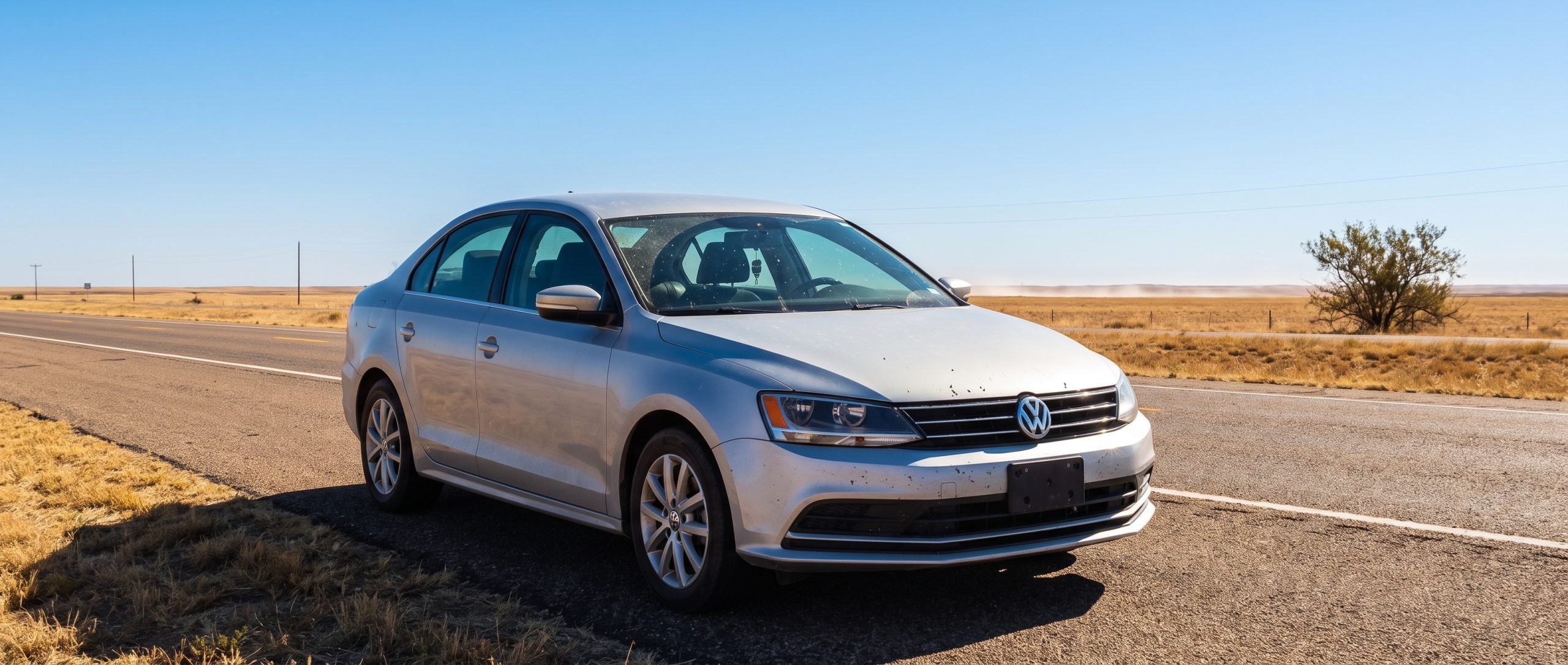
Volkswagen Jetta parked in Amarillo TX summer landscape ideal for daily commuting

Why the Volkswagen Jetta Is the Smarter Summer Commuter in Amarillo, TX

Summer in Amarillo, TX hits differently than almost anywhere else in Texas - triple-digit heat, relentless sun, and long stretches of open road that demand a reliable, fuel-conscious car. The Volkswagen® Jetta has earned a reputation as a practical commuter sedan for exactly these conditions, offering a comfortable cabin, solid fuel economy, and a proven powertrain that handles the demands of Panhandle summers without drama. If you're logging daily miles between neighborhoods, heading down I-40, or making the run out toward Canyon or Bushland, here's why the Jetta keeps coming up as a genuinely sensible choice. What Amarillo Summers Actually Do to Your Daily Driver Amarillo's summer climate is one of the more demanding in the country for daily commuters. Average high temperatures regularly sit above 95°F from June through August, with intense UV exposure and dry heat that accelerates wear on interiors, tires, and cooling systems alike. That matters for commuters more than most people realize. Extreme heat taxes your air conditioning system, strains your engine coolant, and degrades cabin materials faster than moderate climates. A car that handles this without constant attention is worth its weight in Panhandle dust. The Jetta's turbocharged 1.5-liter engine - paired with an 8-speed automatic transmission - is built to run efficiently under sustained heat load. It doesn't require premium fuel, which is a practical advantage when you're filling up multiple times per week in the Texas summer. Did you know? The Texas Panhandle averages over 260 sunny days per year, according to the National Weather Service - making UV protection for your cabin materials and dashboard a genuine long-term ownership concern, not just a comfort issue. Fuel Economy That Makes Sense for Panhandle Commutes The Jetta earns an EPA-estimated 29 mpg city and 43 mpg highway, making it one of the more efficient non-hybrid sedans in its class. For Amarillo commuters, that highway number is particularly relevant. Panhandle roads are long and flat - whether you're heading east on I-40, south on US-287 toward Claude, or running the loop around Coulter Drive and Bell Street during peak hours. A car that rewards highway driving pays off quickly when your daily commute involves sustained speeds rather than stop-and-go gridlock. Here's how the Jetta's fuel economy stacks up against typical commuter distances in the Amarillo area: Commute Route Avg. Round Trip Miles Weekly Fuel Cost at 29 mpg City Weekly Fuel Cost at 43 mpg Hwy Central Amarillo Loop 20-25 miles Lower cost, shorter fill cycle - Amarillo to Canyon, TX 40-50 miles - Significant savings over larger vehicles Amarillo to Bushland, TX 30-40 miles Mixed driving savings Strong highway efficiency Cross-town via I-27 25-35 miles Consistent fuel performance Benefits with light traffic Fuel cost estimates based on EPA ratings. Actual results vary by driving habits and conditions. The point is simple: the Jetta's efficiency isn't a headline number for a brochure. It's a figure that holds up on the actual roads Amarillo drivers use every day. Cabin Comfort When It's 100°F Before You Even Reach the Loop Long commutes in extreme heat come down to one thing: how quickly and how consistently your car keeps you comfortable. The Jetta's standard air conditioning system cools the cabin quickly and maintains temperature well - an important detail when your car has been sitting in surface parking lots near Westgate Mall or the open lots around Amarillo College during a full workday. The available leatherette seating resists heat absorption better than traditional leather, which means fewer unpleasant surprises when you drop into the seat after a full day in the Amarillo sun. Beyond cooling, the Jetta gives commuters: Available heated and ventilated seats for year-round Texas weather swings A driver-focused cockpit layout that keeps controls intuitive without distraction Rear seat legroom rated at 37.4 inches, which beats several popular competitors in its class IQ.DRIVE driver assistance tech with adaptive cruise control, making long Panhandle highway stretches less fatiguing 10-inch touchscreen display standard on higher trims, keeping navigation and audio accessible at a glance It's the kind of interior that doesn't feel like a compromise. You're not giving up comfort to get efficiency. How the Jetta Handles Amarillo's Road Conditions Amarillo roads have their own personality. You've got smooth interstate stretches, the constant construction zones near downtown, rougher patches on older surface streets, and the occasional hailstorm that reminds everyone what Texas weather is capable of. The Jetta's suspension is tuned for a balance between ride comfort and handling precision - which reads as confident without being stiff on less-than-perfect pavement. It's not an off-road vehicle, but it handles the everyday imperfections of Amarillo city streets and Panhandle highways without beating up the driver. Wind is also a real factor here. The Texas Panhandle regularly sees sustained winds of 15-25 mph, with gusts well above that during storm season. The Jetta's aerodynamic profile and stable wheelbase respond predictably in crosswind conditions - something drivers notice on open stretches like US-60 heading west toward Vega. Pro tip: If you commute on open Panhandle highways regularly, adaptive cruise control (available on Jetta SE and above) significantly reduces driver fatigue during gusty conditions by maintaining a steady speed without constant throttle adjustment. Jetta vs. Taos for the Amarillo Commuter: Choosing the Right Fit Some Amarillo drivers are deciding between the Jetta and the Volkswagen Taos™ - a compact SUV that offers more ground clearance and a higher seating position. It's a fair comparison, and the answer genuinely depends on your priorities. Strengths Jetta delivers better highway fuel economy (43 mpg hwy vs. 34 mpg hwy for the Taos FWD) Lower center of gravity means more confident handling in crosswind conditions Easier entry and exit in tight Amarillo parking areas (parking lots near the Amarillo National Center fill fast on event days) Lower price of entry with strong standard feature content Considerations Less cargo flexibility compared to the Taos for those who haul gear regularly Lower seating position isn't preferred by every driver, especially those coming from trucks or SUVs No AWD option if you travel through the Panhandle during winter ice conditions For a driver whose primary use is a daily work commute - especially on I-40, I-27, or the Bell Street corridor - the Jetta's efficiency advantage is meaningful over the course of a Texas summer. Browse our new inventory to see current Jetta and Taos trims available at the Amarillo lot. The Jetta GLI: When the Commute Should Actually Be Enjoyable Not everyone wants a commuter car that's purely utilitarian. If you'd rather look forward to the drive instead of just enduring it, the Jetta GLI™ is worth serious consideration. The GLI shares the Jetta's practical bones - same footprint, same efficiency-oriented design - but adds a 2.0-liter turbocharged engine producing 228 horsepower, available with either a 7-speed DSG automatic or a 6-speed manual transmission. On open Panhandle roads where you can actually use the power, it's a noticeably different experience. What the GLI keeps from the standard Jetta: Practical sedan dimensions that work in everyday Amarillo parking Similar interior comfort for long commutes Strong fuel economy for a performance-oriented sedan The same reliable VW engineering platform What it adds: Substantially more power for passing on US-287 or merging onto I-40 at highway speed Performance suspension tuning Sport front seats with better lateral support A driving character that makes the afternoon commute feel less like a chore The GLI doesn't require you to sacrifice practicality for engagement. That's a rare combination in this segment. Common Questions About the Volkswagen Jetta in Amarillo, TX Is the Volkswagen Jetta a good car for the Texas Panhandle heat? The Volkswagen Jetta holds up well in Texas Panhandle heat thanks to its efficient turbocharged engine, capable air conditioning system, and materials designed to resist UV degradation. Amarillo's 260-plus sunny days per year and summer temperatures regularly above 95°F make a car's cooling efficiency and material durability important long-term factors, and the Jetta addresses both without requiring extra maintenance steps in hot climates. How does the Jetta's fuel economy compare to similar cars driven in Amarillo? With EPA ratings of 29 mpg city and 43 mpg highway, the Jetta ranks among the more efficient non-hybrid sedans in its segment. For Amarillo commuters who spend significant time on flat Panhandle highways like I-40 or I-27, the 43 mpg highway figure translates to real savings week over week compared to compact SUVs or older sedans with lower highway ratings. Does the Volkswagen Jetta handle Amarillo's wind and open road conditions well? The Jetta performs reliably in Amarillo's frequent crosswind conditions due to its aerodynamic shape and stable chassis tuning. The Texas Panhandle regularly experiences sustained winds of 15-25 mph, which affects lighter or taller vehicles more noticeably. The Jetta's low center of gravity and predictable handling behavior make open highway driving in windy conditions more manageable than many of its taller competitors. What's the difference between the Jetta and the Jetta GLI for Amarillo drivers? The standard Jetta prioritizes fuel efficiency, affordability, and everyday comfort - making it well-suited for Amarillo commuters focused on practical ownership costs. The Jetta GLI offers a 2.0-liter turbocharged engine with 228 horsepower for drivers who want a more engaging driving experience without giving up the sedan's practical footprint. Both are solid commuter options; the GLI adds performance character for those who spend significant time on open Panhandle roads. Where can I test drive a Volkswagen Jetta near Amarillo, TX? You can test drive the Jetta at Street Volkswagen of Amarillo, which serves drivers throughout the Amarillo area including Canyon, Bushland, and surrounding Panhandle communities. Scheduling a test drive gives you a chance to evaluate the cabin cooling, ride comfort, and highway performance firsthand before making a decision. Is the Jetta or the Taos a better choice for Amarillo summer commuters? For pure commuting efficiency, the Jetta has the advantage - particularly its superior highway fuel economy and lower cost of entry. The Taos makes more sense for drivers who need additional cargo space, a higher seating position, or prefer an SUV form factor. If your primary use is a daily work commute in and around Amarillo, the Jetta's efficiency numbers and comfortable highway behavior give it a practical edge for summer driving. Making the Right Call for Your Amarillo Commute The Volkswagen Jetta earns its reputation as a summer commuter sedan not through flashy claims but through real-world practicalities: strong fuel economy on Panhandle highways, a cabin that cools quickly and stays comfortable, a powertrain that handles sustained Texas heat, and a size that fits Amarillo's parking reality. Whether you're commuting through central Amarillo, heading out toward Canyon, TX, or putting in highway miles on I-40, the Jetta gives you a straightforward, capable ownership experience without requiring compromise. The team at Street Volkswagen of Amarillo knows these roads and can help you find the trim and configuration that fits your specific commute and budget. View New Inventory Schedule a Service Street Volkswagen of Amarillo 8707 Pilgrim Dr, Amarillo, TX 79119 (864) 288-8300

Volkswagen Service Checklist Before Driving from Amarillo, TX to Albuquerque

The drive from Amarillo, TX to Albuquerque, NM covers roughly 285 miles of high-desert highway - and a surprising amount of it passes through areas where the nearest help is a long wait away. Before you load up your Volkswagen® and head west on I-40, a quick pre-trip service check can be the difference between a smooth trip and an unwanted roadside stop somewhere between Tucumcari and Santa Rosa. This checklist was built specifically for that route and the conditions your VW will face along the way. Why the Amarillo-to-Albuquerque Route Demands More Than a Quick Glance This is not a forgiving stretch of road for an underprepared vehicle. The I-40 corridor from Amarillo climbs steadily in elevation as you push west - Albuquerque sits at roughly 5,300 feet above sea level, compared to Amarillo's 3,600 feet. That elevation change affects engine performance, tire pressure, and cooling systems in ways that most drivers don't think about until something goes wrong. The Panhandle climate adds another layer of complexity. Temperatures can swing dramatically between morning and afternoon, especially during spring and fall. Wind along the Texas Panhandle is consistent and strong - anyone who has driven near Cadillac Ranch or along the stretches past Wildorado knows exactly what that feels like pushing against the side of a vehicle at highway speed. And then there's the distance between services. Once you clear Adrian (the geographic midpoint of old Route 66), your options thin out significantly until you reach New Mexico towns. Planning ahead is not optional on this drive - it's practical. The Pre-Trip Volkswagen Service Checklist Run through each of these before departure. Some items you can check yourself in the driveway. Others are worth having a technician confirm, especially if your VW is due for scheduled maintenance. Fluid Levels Engine oil - check level and condition; dark, gritty oil needs changing before a long haul Coolant - critical given elevation changes and potential temperature swings Brake fluid - especially important on mountain descents approaching Albuquerque Windshield washer fluid - dust and bug splatter on I-40 is relentless Power steering fluid (if applicable to your model) Tires Check tire pressure cold, before driving - elevation changes cause pressure fluctuations Inspect tread depth on all four tires, including the spare Look for sidewall cracking, bubbling, or uneven wear patterns Confirm the spare is inflated and the jack is accessible Brakes Listen for squealing or grinding during normal stops around Amarillo before departure Check brake pad thickness if you can visually inspect through the wheel spokes Note any pulling to one side during braking - have it evaluated Lights and Electrical Confirm all exterior lights work: headlights, taillights, brake lights, and turn signals Test hazard lights Check battery terminals for corrosion, especially after a cold Amarillo winter Belts, Hoses, and Filters Inspect serpentine belt for cracking or fraying Check coolant hoses for soft spots or leaks Replace cabin air filter if it has been more than 15,000 miles since the last change Pro tip: Volkswagen recommends checking tire pressure monthly and before any long trip. The correct PSI for your specific VW model is printed on the sticker inside the driver's door jamb - not on the tire sidewall. Using the sidewall number is one of the most common pressure mistakes drivers make. How Elevation Change Affects Your VW on This Specific Route Most drivers think of the Amarillo-to-Albuquerque drive as a flat interstate run. The truth is more interesting. While I-40 is not a dramatic mountain highway, the gradual elevation gain over 285 miles creates real mechanical stress that accumulates over the course of the trip. Your Volkswagen Tiguan™ or Taos™ engine management system adjusts air-fuel mixture automatically as altitude increases and oxygen thins. This is normal, and modern VW engines handle it well. What it does mean is that your engine is working somewhat harder in the final stretch approaching Albuquerque - which is precisely the wrong time to have a cooling system that is already operating at the edge of its capacity. System Effect of Elevation Gain What to Check Before You Leave Engine Cooling Higher elevation reduces cooling efficiency slightly Coolant level and condition Tire Pressure Pressure increases as altitude rises and temps change Set pressure cold at Amarillo PSI spec Fuel Economy Engine works harder at altitude, MPG may dip Full tank before departure Brakes Descent into Albuquerque basin increases brake load Pad thickness and fluid condition Transmission More load on climbs affects fluid temp Check fluid, especially on older models Drivers heading out from neighborhoods near Wolflin Village or the south Amarillo corridor along I-27 often make the mistake of checking fluids right after the car has been running. Always check engine oil and coolant when the engine is cold for an accurate reading. Battery and Electrical - The Overlooked Part of Every Pre-Trip Check A dead battery is among the most common reasons drivers get stranded, and it almost always happens at the worst possible moment. For Amarillo drivers, the Panhandle's temperature extremes are particularly hard on car batteries. Cold winters near the Canadian River corridor and the intense summer heat that bakes the city between May and September both accelerate battery wear. Most car batteries last between three and five years under normal conditions. If yours is approaching that range, have it load-tested before the trip - not just checked with a basic voltage meter. A battery can show adequate voltage at rest but fail under the actual load of starting the engine after sitting in the heat of a New Mexico rest stop. Did you know? Volkswagen vehicles use a battery management system (BMS) that monitors battery health and adjusts charging accordingly. If your VW battery is replaced without resetting the BMS through a diagnostic tool, the system may not charge the new battery correctly. This is one reason VW battery service is best handled by a trained technician rather than a quick swap. The Volkswagen Jetta™ and Jetta GLI are especially popular for this kind of highway run given their fuel efficiency, and their electrical systems are straightforward - but they still benefit from a battery check before any 285-mile trip. What to Pack in Your VW for This Route The stretch of I-40 between Amarillo and Albuquerque is beautiful and largely empty. Cell coverage is inconsistent through parts of eastern New Mexico, and services are sparse between some exits. Packing a few basics takes five minutes and can save hours of frustration. Roadside Essentials to Keep in Your Volkswagen Emergency reflective triangles or road flares Jumper cables or a portable jump starter Basic tool kit (screwdrivers, pliers, zip ties) Flashlight with fresh batteries First aid kit Blanket - temperatures drop fast in the high desert after sundown Water (at minimum one gallon per person) Phone charger and a portable power bank If you are driving an ID.4™ or planning a trip in a VW electric vehicle, the charging infrastructure along this specific corridor requires deliberate planning. Confirm charging station locations along your route before departure and know your range at highway speeds, which is typically 10-15% lower than city estimates. Timing Your Service Appointment Before the Trip If your Volkswagen is within 1,500 miles of a scheduled maintenance interval, go ahead and handle it before the drive rather than after. Coming back from Albuquerque with a car that is overdue for an oil change adds unnecessary wear to a trip that already puts meaningful miles on your vehicle. Here is a practical way to think about timing: Check your maintenance reminder on the instrument cluster or through the VW app if your model supports it Book service at least one week before departure to allow time for any parts that might be needed Request a multi-point inspection alongside any scheduled service - this catches things a standard oil change won't Ask specifically about the drive belt and cooling system given the elevation and heat factors involved in this route Confirm tire condition with a tread depth check - most service technicians can do this in minutes Drivers coming in from Canyon, TX or the Palo Duro Canyon area often have similar service needs before summer road trips, and scheduling ahead avoids the last-minute rush that tends to build in late spring. When you're ready to book, it's easy to schedule service directly and get your VW road-ready before departure day. Common Questions About VW Service Before Driving to Albuquerque from Amarillo, TX How far in advance should I have my Volkswagen serviced before a long road trip from Amarillo? Schedule your Volkswagen service at least five to seven days before your planned departure. This gives the service team enough time to order any needed parts and complete a proper multi-point inspection. If your VW is within 1,000 to 1,500 miles of a scheduled interval, completing that service before the trip is a smart call rather than waiting until you return. Does the elevation change between Amarillo, TX and Albuquerque affect my VW's performance? Yes, there is a measurable effect. The roughly 1,700-foot elevation gain between Amarillo and Albuquerque causes your VW engine to adjust its air-fuel mixture for thinner air, which can slightly reduce power output and fuel economy. Modern Volkswagen engines manage this well, but a properly maintained cooling system and fresh engine oil make a real difference in how smoothly your vehicle handles the transition. What tire pressure should I use for a Volkswagen driving from Amarillo to Albuquerque? Set your tire pressure to the manufacturer's recommended PSI listed on the driver's door jamb sticker before you leave Amarillo, with the tires cold. As outside temperatures rise and altitude increases during the drive, tire pressure will naturally increase slightly. Do not bleed air from hot tires mid-trip - the elevated pressure at temperature is expected and within normal operating range. Is the Volkswagen ID.4 practical for the Amarillo to Albuquerque drive? The Volkswagen ID.4 has a real-world highway range that requires advance planning on this route. Charging infrastructure along I-40 in eastern New Mexico is present but not as dense as in urban corridors. Plan your charging stops before departure, factor in that highway driving at 75-80 mph reduces range compared to city estimates, and account for elevation-related range changes. With proper planning, the trip is doable in an ID.4. Where can I get my Volkswagen serviced in Amarillo, TX before heading to New Mexico? Volkswagen-trained technicians in Amarillo have direct access to OEM parts and the diagnostic tools specific to VW vehicles. A dealership service center is the most reliable choice for pre-trip inspections because the technicians work exclusively on Volkswagen models and can access your vehicle's service history. This matters especially for newer models with complex driver assistance and battery management systems. Does Volkswagen recommend any specific pre-trip checks for the Tiguan or Atlas before highway driving? Volkswagen's general maintenance guidelines recommend checking tire pressure, fluid levels, and wiper blades before any extended highway trip. For the Volkswagen Atlas™ and Tiguan, the cooling system and transmission fluid are worth specific attention on high-desert routes like I-40, where temperatures and load vary more than typical city driving. If either vehicle is equipped with 4MOTION all-wheel drive, confirm that system is functioning properly before the trip. Ready to Head West with Confidence A little preparation before you leave Amarillo goes a long way on a 285-mile desert highway run. The I-40 corridor is a great drive when your VW is road-ready - open skies, manageable traffic, and that long steady pull toward the Sandia Mountains on the horizon as Albuquerque comes into view. Getting there without a detour into a service situation you did not plan for is the whole point of this checklist. The team at Street Volkswagen of Amarillo is here to make sure your vehicle is in solid shape before you head out, and that you come back just as easily as you left. Schedule a Service View New Inventory Street Volkswagen of Amarillo 8707 Pilgrim Dr, Amarillo, TX 79119 (864) 288-8300

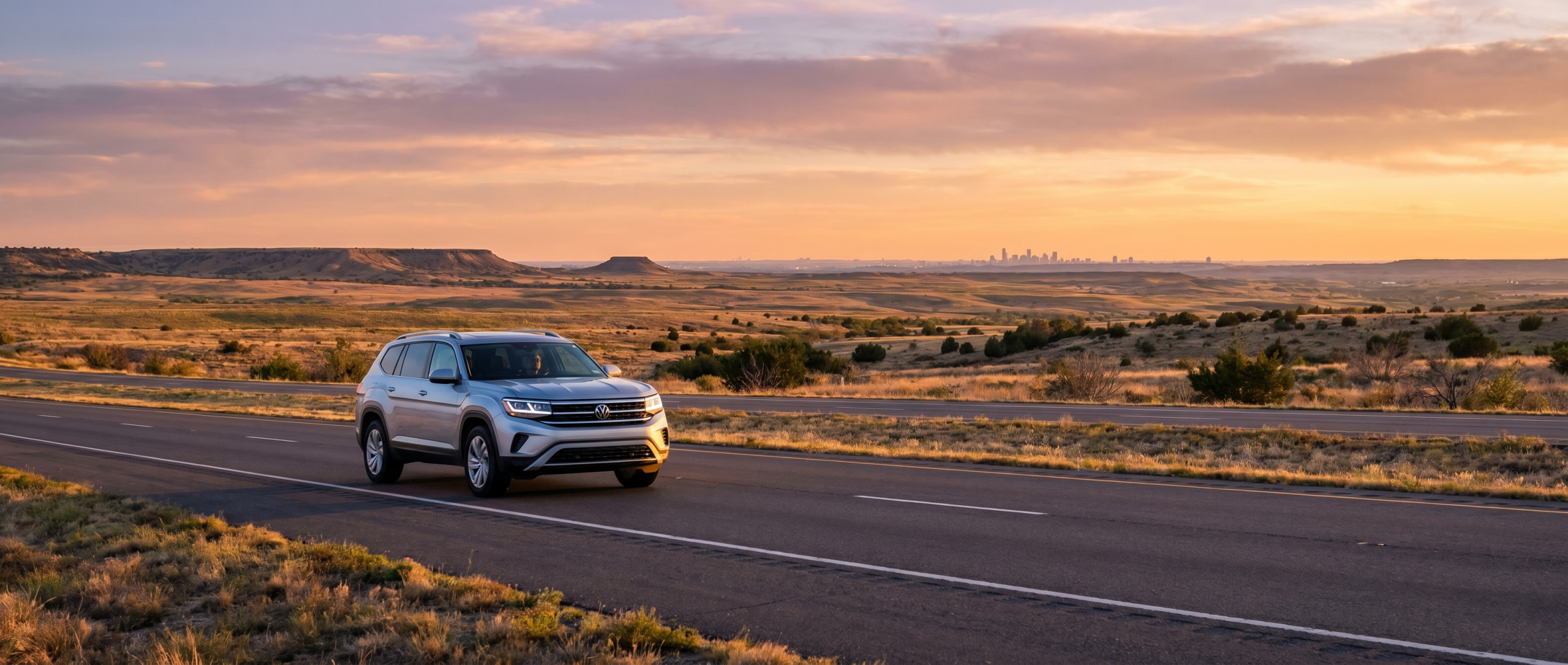
Volkswagen Atlas on a Texas highway road trip from Amarillo TX to Austin TX

Best Volkswagen Features for Road Trips from Amarillo to Austin, TX

The drive from Amarillo, TX to Austin covers roughly 450 miles of Texas highway - and how well your vehicle handles that distance makes all the difference between a trip you remember fondly and one you'd rather forget. Amarillo drivers know flat, open stretches on I-27 and I-40 give way to rolling Hill Country terrain as you push south, and the right Volkswagen® features can turn that long haul into something genuinely enjoyable. This guide breaks down exactly what to look for - and which models deliver it. Why the Amarillo-to-Austin Drive Demands More from Your Vehicle Covering 450-plus miles in a single day puts real demands on a vehicle that a short commute around Amarillo never would. You're dealing with sustained highway speeds, varying elevation as the landscape transitions from the Texas Panhandle plains to the Edwards Plateau, significant wind exposure across the open stretches south of Amarillo, and the kind of driver fatigue that builds slowly over hours behind the wheel. Texas Panhandle wind gusts frequently exceed 30 mph on open highway, which affects fuel efficiency and requires constant steering correction in vehicles that aren't well-tuned for highway stability. That's not a minor inconvenience - it's the difference between arriving in Austin relaxed or arriving worn out. Volkswagen's lineup addresses these specific challenges in ways worth understanding before you load up the car. The VW Features That Actually Matter on a Long Texas Drive Not every feature listed in a brochure earns its keep on a 450-mile haul. These are the ones that genuinely change the experience: Adaptive Cruise Control with Travel Assist The long, straight sections of US-287 and I-35 south of Abilene are where Travel Assist - available on several VW models - proves its value. It combines adaptive cruise control with lane-centering assistance, reducing the mental effort of maintaining speed and position for extended periods. On a drive this long, that matters more than most drivers expect until they've tried it. IQ.DRIVE Driver Assistance Suite Volkswagen's IQ.DRIVE package bundles together: Emergency Assist - monitors for driver unresponsiveness Lane Departure Warning with active lane-keeping Blind Spot Monitor - essential when merging on congested I-35 near Austin Front Assist with pedestrian detection Rear Traffic Alert for parking in Austin's packed lots These aren't luxury extras on a trip this long - they're legitimate fatigue management tools. Volkswagen Digital Cockpit Pro At highway speeds, minimizing how long your eyes leave the road matters. The Digital Cockpit Pro puts navigation, speed, and media information directly in the driver's sightline within the instrument cluster, so you're not hunting for information on a separate screen while doing 75 mph through open Texas countryside. Wireless Apple CarPlay and Android Auto Wiring fatigue is real. Having your phone stay in your bag while navigation runs wirelessly eliminates the cable management frustration that compounds on long drives, and keeps your charging port free. Pro tip: Before any Amarillo-to-Austin road trip, download offline maps for the stretch between Sweetwater and San Angelo. Cell coverage drops in parts of this corridor, and offline navigation keeps you on track without data. Matching the Right VW Model to Your Road Trip Style The best road trip vehicle isn't the same for everyone - it depends on who's in the car, what you're carrying, and what you prioritize over 450 miles. Traveler Type Best VW Match Key Advantage for This Drive Solo or couple, efficiency-focused Jetta or ID.4 Strong highway fuel economy, comfortable for two Family of four or five Tiguan or Atlas Third-row option, cargo space, passenger comfort Sporty driving focus Golf GTI or Jetta GLI Engaging drive on Hill Country roads, driver-first feel Larger group or gear-heavy Atlas Cross Sport Balanced cargo and passenger space in one package EV-curious traveler ID.4 Zero emissions, available DC fast charging along the route The Volkswagen Tiguan™ is worth a closer look for families doing this drive. With up to 73.5 cubic feet of cargo space behind the first row, it handles luggage, gear, and road trip extras without making passengers feel cramped. The available panoramic sunroof also opens up the cabin feel on those long open stretches south of Amarillo, where the Texas sky does something genuinely spectacular. The Atlas™ steps up when you're moving a larger group. Three rows, up to 96.8 cubic feet of cargo space behind the first row, and a cabin that genuinely accommodates adults in all three rows makes it one of the more practical choices for a multi-person Amarillo-to-Austin run. For drivers who want the Hill Country portion of the drive to feel like the point of the trip rather than just the last leg, the Golf GTI™ delivers a level of road engagement that makes the winding roads between Fredericksburg and Austin genuinely fun. How VW's Fuel Efficiency Plays Out Over 450 Texas Miles Fuel economy math is straightforward but often overlooked until you're standing at a pump in Coleman, TX wondering how many stops this trip requires. The Jetta™ achieves an EPA-estimated 38 mpg highway with the available turbocharged engine, which puts the Amarillo-to-Austin drive comfortably within a one-stop or even no-stop tank for many drivers depending on their starting fuel level. Did you know? The VW ID.4 has a range of up to 291 miles on a full charge in rear-wheel-drive configuration (EPA estimate). That means Austin is reachable with a single DC fast charge stop along the route - which, with the ID.4's 135 kW DC fast charging capability, can recover significant range in around 30 minutes. For road trippers planning to explore beyond Austin - Hill Country day trips, drives out to Fredericksburg or Luckenbach - having a vehicle with strong highway efficiency keeps the cost-per-mile down across the full trip, not just the Amarillo-to-Austin leg. Here's a rough comparison of how VW's lineup performs on the highway portion of this drive: Model EPA Highway MPG / Range Estimated Fuel Stops (Amarillo to Austin) Jetta (1.5T) 38 mpg highway 0-1 stops Tiguan (2.0T) 29 mpg highway 1 stop Atlas (2.0T) 24 mpg highway 1-2 stops ID.4 (RWD) 291 mi range 1 DC fast charge Golf GTI (2.0T) 36 mpg highway 0-1 stops Comfort and Cabin Features That Reduce Driver Fatigue Driver fatigue on a 7-to-8-hour drive is real, and cabin comfort has a direct effect on how you feel pulling into Austin. VW's available ergoComfort seats - found on higher Tiguan and Atlas trims - are certified by the Campaign for Healthier Backs (AGR), a German independent organization that evaluates seating for lumbar support and posture. On a drive this long, the difference between a well-designed seat and a basic one is measurable by hour five. Other features that matter after the first 200 miles: Three-zone climate control (Atlas) - passengers in every row can set their own temperature Rear seat USB-C ports - keeps everyone's devices charged and reduces arguments Ambient interior lighting - reduces eye strain during early morning or late evening driving Available Harman Kardon audio - makes the long open stretches more enjoyable The ID. Buzz™ also deserves mention here. Its upright seating position reduces the low, reclined posture fatigue that affects some drivers on long hauls, and its electric powertrain delivers that linear, quiet acceleration that takes a lot of the tension out of sustained highway driving. It's a different kind of road trip vehicle, but a genuinely comfortable one. Packing Smart: Cargo Space Across VW's Lineup How you load a vehicle affects passenger comfort, fuel efficiency, and driving stability - especially on a windy Panhandle highway. Before you leave Amarillo, consider these packing principles: Load heaviest items low and centered between the axles Distribute weight evenly side-to-side Keep frequently needed items in accessible positions, not buried under luggage Avoid overloading roof cargo carriers on high-wind days - aerodynamic drag increases fuel consumption noticeably at highway speeds Here's how VW's models compare for cargo capacity: Atlas: Up to 96.8 cu ft behind first row Atlas Cross Sport™: Up to 77.8 cu ft behind first row Tiguan: Up to 73.5 cu ft behind first row Taos™: Up to 65.9 cu ft behind first row ID.4: Up to 64.2 cu ft behind first row ID. Buzz: Up to 46.3 cu ft behind third row For families who frequent Palo Duro Canyon State Park before heading out on longer road trips - where gear like hiking boots, coolers, and trail supplies add up quickly - the Atlas and Tiguan offer enough space to carry everything without sacrificing rear passenger legroom. Planning Your Amarillo Departure for the Best Drive Timing your departure from Amarillo makes a meaningful difference in how the drive feels. Leaving from areas near Westgate Mall or Southwest Amarillo before 7 a.m. gets you past the I-27 and I-40 interchange before Amarillo's morning commute thickens. If you're coming from the Canyon area or near Palo Duro Canyon, you're already positioned well for an early southern departure via US-87. The stretch through Lubbock sees midday traffic that slows things down. An early Amarillo departure gets you through Lubbock before noon, which keeps the drive moving. The last 100 miles into Austin on I-35 can be unpredictable regardless of timing - the Travel Assist and navigation features mentioned earlier are particularly useful on this section. VW's navigation system on connected models shows real-time traffic data, so you can adjust your approach into Austin based on what's actually happening rather than what you expected. Pro tip: If you're making a stop in Lubbock before continuing south, the drive from Lubbock to Austin is still over 300 miles - so fuel, water, and a genuine stretch break matter before you continue. Common Questions About VW Road Trip Features in Amarillo, TX Which Volkswagen model is best for a long road trip from Amarillo to Austin with a family? The Volkswagen Atlas is a strong choice for family road trips from Amarillo to Austin, TX. With three rows of seating, available three-zone climate control, and cargo space that expands to 96.8 cubic feet behind the first row, it handles passengers and gear across 450 miles without compromising comfort. Travel Assist and the full IQ.DRIVE suite also reduce driver fatigue on the long open stretches of this drive. Does the VW ID.4 have enough range to make it from Amarillo to Austin, TX? The VW ID.4 in rear-wheel-drive configuration has an EPA-estimated range of 291 miles, which means a single DC fast charge stop is typically needed to complete the Amarillo-to-Austin drive. With 135 kW DC fast charging capability, a meaningful charge can be added in approximately 30 minutes, making the ID.4 a practical EV choice for this route with basic planning. What VW features help reduce driver fatigue on long Texas highway drives? Travel Assist (which combines adaptive cruise control with lane-centering) is the most impactful feature for reducing driver fatigue on long Texas highway drives. Paired with ergonomic seating on higher trims, three-zone climate control, and the Digital Cockpit Pro instrument display, these features collectively reduce the physical and mental effort of sustained highway driving between Amarillo and Austin. Is the VW Golf GTI a good choice for a road trip to Austin's Hill Country? The Golf GTI is genuinely well-suited for the Hill Country portion of the Amarillo-to-Austin drive. Its turbocharged 2.0-liter engine, sport-tuned suspension, and 36 mpg highway fuel economy make it an engaging and efficient choice on the winding roads between Fredericksburg and Austin. It's a better fit for two passengers than a full family given its cargo limitations. Where can I find a Volkswagen with Travel Assist or IQ.DRIVE in Amarillo, TX? Street Volkswagen of Amarillo carries Tiguan, Atlas, Atlas Cross Sport, and ID.4 models with IQ.DRIVE and Travel Assist across various trims. Visiting the showroom lets you explore exactly which trim levels include these features and compare them in person before committing. How does Panhandle wind affect fuel economy on the drive from Amarillo south? Headwinds or crosswinds above 20-25 mph can reduce highway fuel economy by 7-14% depending on the vehicle's aerodynamic profile, according to the U.S. Department of Energy. This is particularly relevant on the open Panhandle stretch south of Amarillo before the terrain provides more natural wind breaks. VW's more aerodynamic models like the Jetta and Golf GTI are less affected than larger SUVs in strong wind conditions. Ready to Make the Amarillo-to-Austin Drive Worth Looking Forward To A 450-mile road trip doesn't have to feel like an endurance test. The right Volkswagen - equipped with the right features for Texas highway driving - turns that drive into a genuine part of the trip rather than just the cost of getting there. Whether you're prioritizing space for the whole family, efficiency across those long open miles, or a more engaging drive once the Hill Country starts, there's a VW model that fits how you actually travel. The team at Street Volkswagen of Amarillo can help you find the one that makes your next Austin run feel easier, quieter, and a lot more enjoyable. Take a look at our new inventory to see what's available and ready to go. View New Inventory Schedule a Service Street Volkswagen of Amarillo 8707 Pilgrim Dr, Amarillo, TX 79119 (864) 288-8300