

Blog

All Volkswagen Model Features Volkswagen Information New Inventory Amarillo Volkswagen Dealer VW News Helpful Tips VW Features Amarillo Volkswagen Service Dealership Information Pre-Owned Inventory Service and Repair Street Volkswagen Volkswagen Tiguan Just for Fun Street Volkswagen of Amarillo Service Press Release Volkswagen Atlas Volkswagen Taos
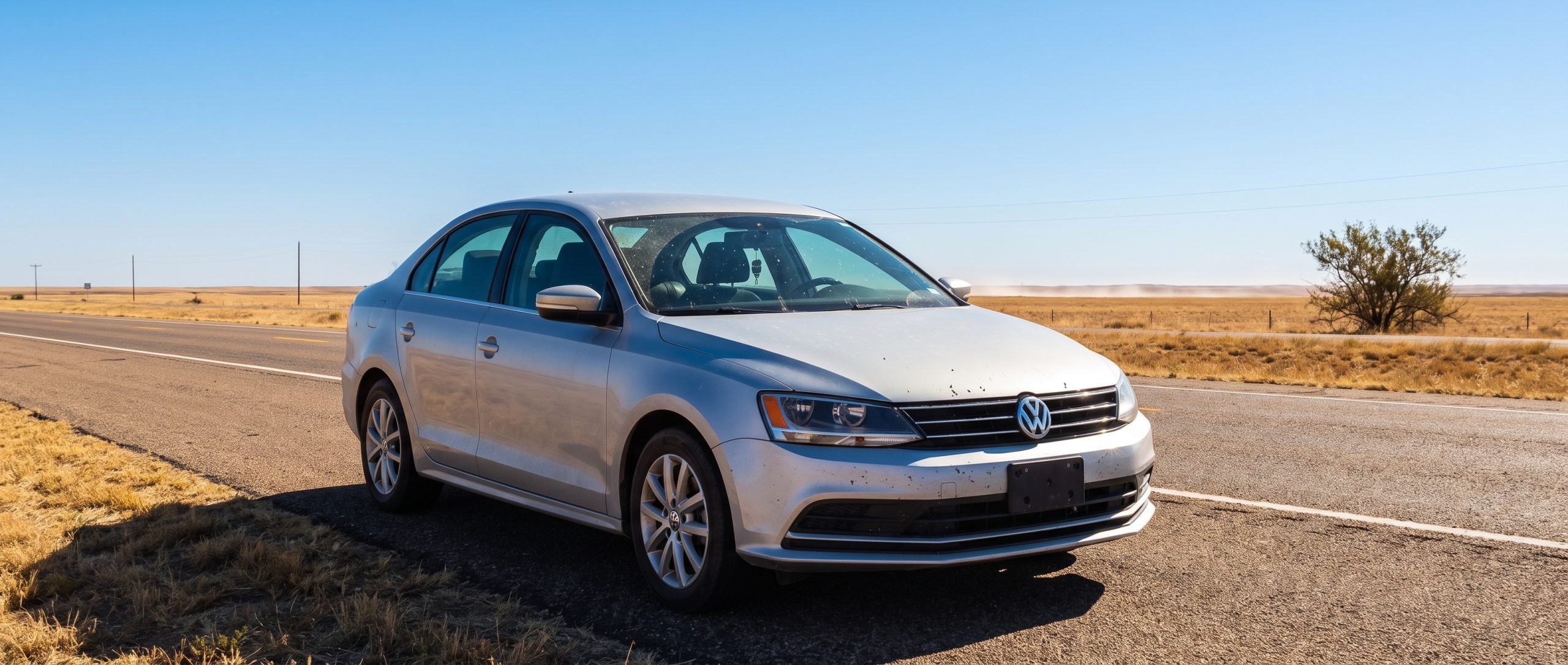
Volkswagen Jetta parked in Amarillo TX summer landscape ideal for daily commuting

Why the Volkswagen Jetta Is the Smarter Summer Commuter in Amarillo, TX

Summer in Amarillo, TX hits differently than almost anywhere else in Texas - triple-digit heat, relentless sun, and long stretches of open road that demand a reliable, fuel-conscious car. The Volkswagen® Jetta has earned a reputation as a practical commuter sedan for exactly these conditions, offering a comfortable cabin, solid fuel economy, and a proven powertrain that handles the demands of Panhandle summers without drama. If you're logging daily miles between neighborhoods, heading down I-40, or making the run out toward Canyon or Bushland, here's why the Jetta keeps coming up as a genuinely sensible choice. What Amarillo Summers Actually Do to Your Daily Driver Amarillo's summer climate is one of the more demanding in the country for daily commuters. Average high temperatures regularly sit above 95°F from June through August, with intense UV exposure and dry heat that accelerates wear on interiors, tires, and cooling systems alike. That matters for commuters more than most people realize. Extreme heat taxes your air conditioning system, strains your engine coolant, and degrades cabin materials faster than moderate climates. A car that handles this without constant attention is worth its weight in Panhandle dust. The Jetta's turbocharged 1.5-liter engine - paired with an 8-speed automatic transmission - is built to run efficiently under sustained heat load. It doesn't require premium fuel, which is a practical advantage when you're filling up multiple times per week in the Texas summer. Did you know? The Texas Panhandle averages over 260 sunny days per year, according to the National Weather Service - making UV protection for your cabin materials and dashboard a genuine long-term ownership concern, not just a comfort issue. Fuel Economy That Makes Sense for Panhandle Commutes The Jetta earns an EPA-estimated 29 mpg city and 43 mpg highway, making it one of the more efficient non-hybrid sedans in its class. For Amarillo commuters, that highway number is particularly relevant. Panhandle roads are long and flat - whether you're heading east on I-40, south on US-287 toward Claude, or running the loop around Coulter Drive and Bell Street during peak hours. A car that rewards highway driving pays off quickly when your daily commute involves sustained speeds rather than stop-and-go gridlock. Here's how the Jetta's fuel economy stacks up against typical commuter distances in the Amarillo area: Commute Route Avg. Round Trip Miles Weekly Fuel Cost at 29 mpg City Weekly Fuel Cost at 43 mpg Hwy Central Amarillo Loop 20-25 miles Lower cost, shorter fill cycle - Amarillo to Canyon, TX 40-50 miles - Significant savings over larger vehicles Amarillo to Bushland, TX 30-40 miles Mixed driving savings Strong highway efficiency Cross-town via I-27 25-35 miles Consistent fuel performance Benefits with light traffic Fuel cost estimates based on EPA ratings. Actual results vary by driving habits and conditions. The point is simple: the Jetta's efficiency isn't a headline number for a brochure. It's a figure that holds up on the actual roads Amarillo drivers use every day. Cabin Comfort When It's 100°F Before You Even Reach the Loop Long commutes in extreme heat come down to one thing: how quickly and how consistently your car keeps you comfortable. The Jetta's standard air conditioning system cools the cabin quickly and maintains temperature well - an important detail when your car has been sitting in surface parking lots near Westgate Mall or the open lots around Amarillo College during a full workday. The available leatherette seating resists heat absorption better than traditional leather, which means fewer unpleasant surprises when you drop into the seat after a full day in the Amarillo sun. Beyond cooling, the Jetta gives commuters: Available heated and ventilated seats for year-round Texas weather swings A driver-focused cockpit layout that keeps controls intuitive without distraction Rear seat legroom rated at 37.4 inches, which beats several popular competitors in its class IQ.DRIVE driver assistance tech with adaptive cruise control, making long Panhandle highway stretches less fatiguing 10-inch touchscreen display standard on higher trims, keeping navigation and audio accessible at a glance It's the kind of interior that doesn't feel like a compromise. You're not giving up comfort to get efficiency. How the Jetta Handles Amarillo's Road Conditions Amarillo roads have their own personality. You've got smooth interstate stretches, the constant construction zones near downtown, rougher patches on older surface streets, and the occasional hailstorm that reminds everyone what Texas weather is capable of. The Jetta's suspension is tuned for a balance between ride comfort and handling precision - which reads as confident without being stiff on less-than-perfect pavement. It's not an off-road vehicle, but it handles the everyday imperfections of Amarillo city streets and Panhandle highways without beating up the driver. Wind is also a real factor here. The Texas Panhandle regularly sees sustained winds of 15-25 mph, with gusts well above that during storm season. The Jetta's aerodynamic profile and stable wheelbase respond predictably in crosswind conditions - something drivers notice on open stretches like US-60 heading west toward Vega. Pro tip: If you commute on open Panhandle highways regularly, adaptive cruise control (available on Jetta SE and above) significantly reduces driver fatigue during gusty conditions by maintaining a steady speed without constant throttle adjustment. Jetta vs. Taos for the Amarillo Commuter: Choosing the Right Fit Some Amarillo drivers are deciding between the Jetta and the Volkswagen Taos™ - a compact SUV that offers more ground clearance and a higher seating position. It's a fair comparison, and the answer genuinely depends on your priorities. Strengths Jetta delivers better highway fuel economy (43 mpg hwy vs. 34 mpg hwy for the Taos FWD) Lower center of gravity means more confident handling in crosswind conditions Easier entry and exit in tight Amarillo parking areas (parking lots near the Amarillo National Center fill fast on event days) Lower price of entry with strong standard feature content Considerations Less cargo flexibility compared to the Taos for those who haul gear regularly Lower seating position isn't preferred by every driver, especially those coming from trucks or SUVs No AWD option if you travel through the Panhandle during winter ice conditions For a driver whose primary use is a daily work commute - especially on I-40, I-27, or the Bell Street corridor - the Jetta's efficiency advantage is meaningful over the course of a Texas summer. Browse our new inventory to see current Jetta and Taos trims available at the Amarillo lot. The Jetta GLI: When the Commute Should Actually Be Enjoyable Not everyone wants a commuter car that's purely utilitarian. If you'd rather look forward to the drive instead of just enduring it, the Jetta GLI™ is worth serious consideration. The GLI shares the Jetta's practical bones - same footprint, same efficiency-oriented design - but adds a 2.0-liter turbocharged engine producing 228 horsepower, available with either a 7-speed DSG automatic or a 6-speed manual transmission. On open Panhandle roads where you can actually use the power, it's a noticeably different experience. What the GLI keeps from the standard Jetta: Practical sedan dimensions that work in everyday Amarillo parking Similar interior comfort for long commutes Strong fuel economy for a performance-oriented sedan The same reliable VW engineering platform What it adds: Substantially more power for passing on US-287 or merging onto I-40 at highway speed Performance suspension tuning Sport front seats with better lateral support A driving character that makes the afternoon commute feel less like a chore The GLI doesn't require you to sacrifice practicality for engagement. That's a rare combination in this segment. Common Questions About the Volkswagen Jetta in Amarillo, TX Is the Volkswagen Jetta a good car for the Texas Panhandle heat? The Volkswagen Jetta holds up well in Texas Panhandle heat thanks to its efficient turbocharged engine, capable air conditioning system, and materials designed to resist UV degradation. Amarillo's 260-plus sunny days per year and summer temperatures regularly above 95°F make a car's cooling efficiency and material durability important long-term factors, and the Jetta addresses both without requiring extra maintenance steps in hot climates. How does the Jetta's fuel economy compare to similar cars driven in Amarillo? With EPA ratings of 29 mpg city and 43 mpg highway, the Jetta ranks among the more efficient non-hybrid sedans in its segment. For Amarillo commuters who spend significant time on flat Panhandle highways like I-40 or I-27, the 43 mpg highway figure translates to real savings week over week compared to compact SUVs or older sedans with lower highway ratings. Does the Volkswagen Jetta handle Amarillo's wind and open road conditions well? The Jetta performs reliably in Amarillo's frequent crosswind conditions due to its aerodynamic shape and stable chassis tuning. The Texas Panhandle regularly experiences sustained winds of 15-25 mph, which affects lighter or taller vehicles more noticeably. The Jetta's low center of gravity and predictable handling behavior make open highway driving in windy conditions more manageable than many of its taller competitors. What's the difference between the Jetta and the Jetta GLI for Amarillo drivers? The standard Jetta prioritizes fuel efficiency, affordability, and everyday comfort - making it well-suited for Amarillo commuters focused on practical ownership costs. The Jetta GLI offers a 2.0-liter turbocharged engine with 228 horsepower for drivers who want a more engaging driving experience without giving up the sedan's practical footprint. Both are solid commuter options; the GLI adds performance character for those who spend significant time on open Panhandle roads. Where can I test drive a Volkswagen Jetta near Amarillo, TX? You can test drive the Jetta at Street Volkswagen of Amarillo, which serves drivers throughout the Amarillo area including Canyon, Bushland, and surrounding Panhandle communities. Scheduling a test drive gives you a chance to evaluate the cabin cooling, ride comfort, and highway performance firsthand before making a decision. Is the Jetta or the Taos a better choice for Amarillo summer commuters? For pure commuting efficiency, the Jetta has the advantage - particularly its superior highway fuel economy and lower cost of entry. The Taos makes more sense for drivers who need additional cargo space, a higher seating position, or prefer an SUV form factor. If your primary use is a daily work commute in and around Amarillo, the Jetta's efficiency numbers and comfortable highway behavior give it a practical edge for summer driving. Making the Right Call for Your Amarillo Commute The Volkswagen Jetta earns its reputation as a summer commuter sedan not through flashy claims but through real-world practicalities: strong fuel economy on Panhandle highways, a cabin that cools quickly and stays comfortable, a powertrain that handles sustained Texas heat, and a size that fits Amarillo's parking reality. Whether you're commuting through central Amarillo, heading out toward Canyon, TX, or putting in highway miles on I-40, the Jetta gives you a straightforward, capable ownership experience without requiring compromise. The team at Street Volkswagen of Amarillo knows these roads and can help you find the trim and configuration that fits your specific commute and budget. View New Inventory Schedule a Service Street Volkswagen of Amarillo 8707 Pilgrim Dr, Amarillo, TX 79119 (864) 288-8300

Read More

Volkswagen Service Checklist Before Driving from Amarillo, TX to Albuquerque

The drive from Amarillo, TX to Albuquerque, NM covers roughly 285 miles of high-desert highway - and a surprising amount of it passes through areas where the nearest help is a long wait away. Before you load up your Volkswagen® and head west on I-40, a quick pre-trip service check can be the difference between a smooth trip and an unwanted roadside stop somewhere between Tucumcari and Santa Rosa. This checklist was built specifically for that route and the conditions your VW will face along the way. Why the Amarillo-to-Albuquerque Route Demands More Than a Quick Glance This is not a forgiving stretch of road for an underprepared vehicle. The I-40 corridor from Amarillo climbs steadily in elevation as you push west - Albuquerque sits at roughly 5,300 feet above sea level, compared to Amarillo's 3,600 feet. That elevation change affects engine performance, tire pressure, and cooling systems in ways that most drivers don't think about until something goes wrong. The Panhandle climate adds another layer of complexity. Temperatures can swing dramatically between morning and afternoon, especially during spring and fall. Wind along the Texas Panhandle is consistent and strong - anyone who has driven near Cadillac Ranch or along the stretches past Wildorado knows exactly what that feels like pushing against the side of a vehicle at highway speed. And then there's the distance between services. Once you clear Adrian (the geographic midpoint of old Route 66), your options thin out significantly until you reach New Mexico towns. Planning ahead is not optional on this drive - it's practical. The Pre-Trip Volkswagen Service Checklist Run through each of these before departure. Some items you can check yourself in the driveway. Others are worth having a technician confirm, especially if your VW is due for scheduled maintenance. Fluid Levels Engine oil - check level and condition; dark, gritty oil needs changing before a long haul Coolant - critical given elevation changes and potential temperature swings Brake fluid - especially important on mountain descents approaching Albuquerque Windshield washer fluid - dust and bug splatter on I-40 is relentless Power steering fluid (if applicable to your model) Tires Check tire pressure cold, before driving - elevation changes cause pressure fluctuations Inspect tread depth on all four tires, including the spare Look for sidewall cracking, bubbling, or uneven wear patterns Confirm the spare is inflated and the jack is accessible Brakes Listen for squealing or grinding during normal stops around Amarillo before departure Check brake pad thickness if you can visually inspect through the wheel spokes Note any pulling to one side during braking - have it evaluated Lights and Electrical Confirm all exterior lights work: headlights, taillights, brake lights, and turn signals Test hazard lights Check battery terminals for corrosion, especially after a cold Amarillo winter Belts, Hoses, and Filters Inspect serpentine belt for cracking or fraying Check coolant hoses for soft spots or leaks Replace cabin air filter if it has been more than 15,000 miles since the last change Pro tip: Volkswagen recommends checking tire pressure monthly and before any long trip. The correct PSI for your specific VW model is printed on the sticker inside the driver's door jamb - not on the tire sidewall. Using the sidewall number is one of the most common pressure mistakes drivers make. How Elevation Change Affects Your VW on This Specific Route Most drivers think of the Amarillo-to-Albuquerque drive as a flat interstate run. The truth is more interesting. While I-40 is not a dramatic mountain highway, the gradual elevation gain over 285 miles creates real mechanical stress that accumulates over the course of the trip. Your Volkswagen Tiguan™ or Taos™ engine management system adjusts air-fuel mixture automatically as altitude increases and oxygen thins. This is normal, and modern VW engines handle it well. What it does mean is that your engine is working somewhat harder in the final stretch approaching Albuquerque - which is precisely the wrong time to have a cooling system that is already operating at the edge of its capacity. System Effect of Elevation Gain What to Check Before You Leave Engine Cooling Higher elevation reduces cooling efficiency slightly Coolant level and condition Tire Pressure Pressure increases as altitude rises and temps change Set pressure cold at Amarillo PSI spec Fuel Economy Engine works harder at altitude, MPG may dip Full tank before departure Brakes Descent into Albuquerque basin increases brake load Pad thickness and fluid condition Transmission More load on climbs affects fluid temp Check fluid, especially on older models Drivers heading out from neighborhoods near Wolflin Village or the south Amarillo corridor along I-27 often make the mistake of checking fluids right after the car has been running. Always check engine oil and coolant when the engine is cold for an accurate reading. Battery and Electrical - The Overlooked Part of Every Pre-Trip Check A dead battery is among the most common reasons drivers get stranded, and it almost always happens at the worst possible moment. For Amarillo drivers, the Panhandle's temperature extremes are particularly hard on car batteries. Cold winters near the Canadian River corridor and the intense summer heat that bakes the city between May and September both accelerate battery wear. Most car batteries last between three and five years under normal conditions. If yours is approaching that range, have it load-tested before the trip - not just checked with a basic voltage meter. A battery can show adequate voltage at rest but fail under the actual load of starting the engine after sitting in the heat of a New Mexico rest stop. Did you know? Volkswagen vehicles use a battery management system (BMS) that monitors battery health and adjusts charging accordingly. If your VW battery is replaced without resetting the BMS through a diagnostic tool, the system may not charge the new battery correctly. This is one reason VW battery service is best handled by a trained technician rather than a quick swap. The Volkswagen Jetta™ and Jetta GLI are especially popular for this kind of highway run given their fuel efficiency, and their electrical systems are straightforward - but they still benefit from a battery check before any 285-mile trip. What to Pack in Your VW for This Route The stretch of I-40 between Amarillo and Albuquerque is beautiful and largely empty. Cell coverage is inconsistent through parts of eastern New Mexico, and services are sparse between some exits. Packing a few basics takes five minutes and can save hours of frustration. Roadside Essentials to Keep in Your Volkswagen Emergency reflective triangles or road flares Jumper cables or a portable jump starter Basic tool kit (screwdrivers, pliers, zip ties) Flashlight with fresh batteries First aid kit Blanket - temperatures drop fast in the high desert after sundown Water (at minimum one gallon per person) Phone charger and a portable power bank If you are driving an ID.4™ or planning a trip in a VW electric vehicle, the charging infrastructure along this specific corridor requires deliberate planning. Confirm charging station locations along your route before departure and know your range at highway speeds, which is typically 10-15% lower than city estimates. Timing Your Service Appointment Before the Trip If your Volkswagen is within 1,500 miles of a scheduled maintenance interval, go ahead and handle it before the drive rather than after. Coming back from Albuquerque with a car that is overdue for an oil change adds unnecessary wear to a trip that already puts meaningful miles on your vehicle. Here is a practical way to think about timing: Check your maintenance reminder on the instrument cluster or through the VW app if your model supports it Book service at least one week before departure to allow time for any parts that might be needed Request a multi-point inspection alongside any scheduled service - this catches things a standard oil change won't Ask specifically about the drive belt and cooling system given the elevation and heat factors involved in this route Confirm tire condition with a tread depth check - most service technicians can do this in minutes Drivers coming in from Canyon, TX or the Palo Duro Canyon area often have similar service needs before summer road trips, and scheduling ahead avoids the last-minute rush that tends to build in late spring. When you're ready to book, it's easy to schedule service directly and get your VW road-ready before departure day. Common Questions About VW Service Before Driving to Albuquerque from Amarillo, TX How far in advance should I have my Volkswagen serviced before a long road trip from Amarillo? Schedule your Volkswagen service at least five to seven days before your planned departure. This gives the service team enough time to order any needed parts and complete a proper multi-point inspection. If your VW is within 1,000 to 1,500 miles of a scheduled interval, completing that service before the trip is a smart call rather than waiting until you return. Does the elevation change between Amarillo, TX and Albuquerque affect my VW's performance? Yes, there is a measurable effect. The roughly 1,700-foot elevation gain between Amarillo and Albuquerque causes your VW engine to adjust its air-fuel mixture for thinner air, which can slightly reduce power output and fuel economy. Modern Volkswagen engines manage this well, but a properly maintained cooling system and fresh engine oil make a real difference in how smoothly your vehicle handles the transition. What tire pressure should I use for a Volkswagen driving from Amarillo to Albuquerque? Set your tire pressure to the manufacturer's recommended PSI listed on the driver's door jamb sticker before you leave Amarillo, with the tires cold. As outside temperatures rise and altitude increases during the drive, tire pressure will naturally increase slightly. Do not bleed air from hot tires mid-trip - the elevated pressure at temperature is expected and within normal operating range. Is the Volkswagen ID.4 practical for the Amarillo to Albuquerque drive? The Volkswagen ID.4 has a real-world highway range that requires advance planning on this route. Charging infrastructure along I-40 in eastern New Mexico is present but not as dense as in urban corridors. Plan your charging stops before departure, factor in that highway driving at 75-80 mph reduces range compared to city estimates, and account for elevation-related range changes. With proper planning, the trip is doable in an ID.4. Where can I get my Volkswagen serviced in Amarillo, TX before heading to New Mexico? Volkswagen-trained technicians in Amarillo have direct access to OEM parts and the diagnostic tools specific to VW vehicles. A dealership service center is the most reliable choice for pre-trip inspections because the technicians work exclusively on Volkswagen models and can access your vehicle's service history. This matters especially for newer models with complex driver assistance and battery management systems. Does Volkswagen recommend any specific pre-trip checks for the Tiguan or Atlas before highway driving? Volkswagen's general maintenance guidelines recommend checking tire pressure, fluid levels, and wiper blades before any extended highway trip. For the Volkswagen Atlas™ and Tiguan, the cooling system and transmission fluid are worth specific attention on high-desert routes like I-40, where temperatures and load vary more than typical city driving. If either vehicle is equipped with 4MOTION all-wheel drive, confirm that system is functioning properly before the trip. Ready to Head West with Confidence A little preparation before you leave Amarillo goes a long way on a 285-mile desert highway run. The I-40 corridor is a great drive when your VW is road-ready - open skies, manageable traffic, and that long steady pull toward the Sandia Mountains on the horizon as Albuquerque comes into view. Getting there without a detour into a service situation you did not plan for is the whole point of this checklist. The team at Street Volkswagen of Amarillo is here to make sure your vehicle is in solid shape before you head out, and that you come back just as easily as you left. Schedule a Service View New Inventory Street Volkswagen of Amarillo 8707 Pilgrim Dr, Amarillo, TX 79119 (864) 288-8300
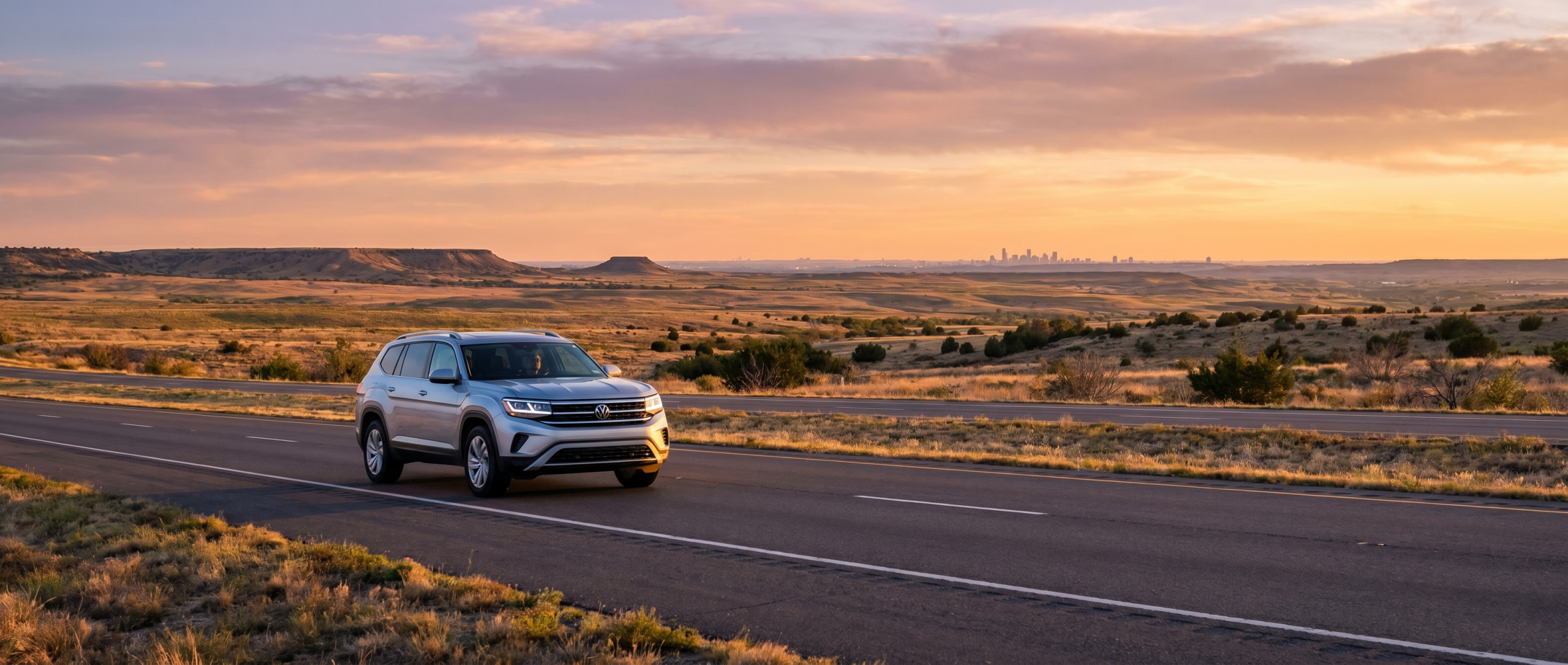
Volkswagen Atlas on a Texas highway road trip from Amarillo TX to Austin TX

Best Volkswagen Features for Road Trips from Amarillo to Austin, TX

The drive from Amarillo, TX to Austin covers roughly 450 miles of Texas highway - and how well your vehicle handles that distance makes all the difference between a trip you remember fondly and one you'd rather forget. Amarillo drivers know flat, open stretches on I-27 and I-40 give way to rolling Hill Country terrain as you push south, and the right Volkswagen® features can turn that long haul into something genuinely enjoyable. This guide breaks down exactly what to look for - and which models deliver it. Why the Amarillo-to-Austin Drive Demands More from Your Vehicle Covering 450-plus miles in a single day puts real demands on a vehicle that a short commute around Amarillo never would. You're dealing with sustained highway speeds, varying elevation as the landscape transitions from the Texas Panhandle plains to the Edwards Plateau, significant wind exposure across the open stretches south of Amarillo, and the kind of driver fatigue that builds slowly over hours behind the wheel. Texas Panhandle wind gusts frequently exceed 30 mph on open highway, which affects fuel efficiency and requires constant steering correction in vehicles that aren't well-tuned for highway stability. That's not a minor inconvenience - it's the difference between arriving in Austin relaxed or arriving worn out. Volkswagen's lineup addresses these specific challenges in ways worth understanding before you load up the car. The VW Features That Actually Matter on a Long Texas Drive Not every feature listed in a brochure earns its keep on a 450-mile haul. These are the ones that genuinely change the experience: Adaptive Cruise Control with Travel Assist The long, straight sections of US-287 and I-35 south of Abilene are where Travel Assist - available on several VW models - proves its value. It combines adaptive cruise control with lane-centering assistance, reducing the mental effort of maintaining speed and position for extended periods. On a drive this long, that matters more than most drivers expect until they've tried it. IQ.DRIVE Driver Assistance Suite Volkswagen's IQ.DRIVE package bundles together: Emergency Assist - monitors for driver unresponsiveness Lane Departure Warning with active lane-keeping Blind Spot Monitor - essential when merging on congested I-35 near Austin Front Assist with pedestrian detection Rear Traffic Alert for parking in Austin's packed lots These aren't luxury extras on a trip this long - they're legitimate fatigue management tools. Volkswagen Digital Cockpit Pro At highway speeds, minimizing how long your eyes leave the road matters. The Digital Cockpit Pro puts navigation, speed, and media information directly in the driver's sightline within the instrument cluster, so you're not hunting for information on a separate screen while doing 75 mph through open Texas countryside. Wireless Apple CarPlay and Android Auto Wiring fatigue is real. Having your phone stay in your bag while navigation runs wirelessly eliminates the cable management frustration that compounds on long drives, and keeps your charging port free. Pro tip: Before any Amarillo-to-Austin road trip, download offline maps for the stretch between Sweetwater and San Angelo. Cell coverage drops in parts of this corridor, and offline navigation keeps you on track without data. Matching the Right VW Model to Your Road Trip Style The best road trip vehicle isn't the same for everyone - it depends on who's in the car, what you're carrying, and what you prioritize over 450 miles. Traveler Type Best VW Match Key Advantage for This Drive Solo or couple, efficiency-focused Jetta or ID.4 Strong highway fuel economy, comfortable for two Family of four or five Tiguan or Atlas Third-row option, cargo space, passenger comfort Sporty driving focus Golf GTI or Jetta GLI Engaging drive on Hill Country roads, driver-first feel Larger group or gear-heavy Atlas Cross Sport Balanced cargo and passenger space in one package EV-curious traveler ID.4 Zero emissions, available DC fast charging along the route The Volkswagen Tiguan™ is worth a closer look for families doing this drive. With up to 73.5 cubic feet of cargo space behind the first row, it handles luggage, gear, and road trip extras without making passengers feel cramped. The available panoramic sunroof also opens up the cabin feel on those long open stretches south of Amarillo, where the Texas sky does something genuinely spectacular. The Atlas™ steps up when you're moving a larger group. Three rows, up to 96.8 cubic feet of cargo space behind the first row, and a cabin that genuinely accommodates adults in all three rows makes it one of the more practical choices for a multi-person Amarillo-to-Austin run. For drivers who want the Hill Country portion of the drive to feel like the point of the trip rather than just the last leg, the Golf GTI™ delivers a level of road engagement that makes the winding roads between Fredericksburg and Austin genuinely fun. How VW's Fuel Efficiency Plays Out Over 450 Texas Miles Fuel economy math is straightforward but often overlooked until you're standing at a pump in Coleman, TX wondering how many stops this trip requires. The Jetta™ achieves an EPA-estimated 38 mpg highway with the available turbocharged engine, which puts the Amarillo-to-Austin drive comfortably within a one-stop or even no-stop tank for many drivers depending on their starting fuel level. Did you know? The VW ID.4 has a range of up to 291 miles on a full charge in rear-wheel-drive configuration (EPA estimate). That means Austin is reachable with a single DC fast charge stop along the route - which, with the ID.4's 135 kW DC fast charging capability, can recover significant range in around 30 minutes. For road trippers planning to explore beyond Austin - Hill Country day trips, drives out to Fredericksburg or Luckenbach - having a vehicle with strong highway efficiency keeps the cost-per-mile down across the full trip, not just the Amarillo-to-Austin leg. Here's a rough comparison of how VW's lineup performs on the highway portion of this drive: Model EPA Highway MPG / Range Estimated Fuel Stops (Amarillo to Austin) Jetta (1.5T) 38 mpg highway 0-1 stops Tiguan (2.0T) 29 mpg highway 1 stop Atlas (2.0T) 24 mpg highway 1-2 stops ID.4 (RWD) 291 mi range 1 DC fast charge Golf GTI (2.0T) 36 mpg highway 0-1 stops Comfort and Cabin Features That Reduce Driver Fatigue Driver fatigue on a 7-to-8-hour drive is real, and cabin comfort has a direct effect on how you feel pulling into Austin. VW's available ergoComfort seats - found on higher Tiguan and Atlas trims - are certified by the Campaign for Healthier Backs (AGR), a German independent organization that evaluates seating for lumbar support and posture. On a drive this long, the difference between a well-designed seat and a basic one is measurable by hour five. Other features that matter after the first 200 miles: Three-zone climate control (Atlas) - passengers in every row can set their own temperature Rear seat USB-C ports - keeps everyone's devices charged and reduces arguments Ambient interior lighting - reduces eye strain during early morning or late evening driving Available Harman Kardon audio - makes the long open stretches more enjoyable The ID. Buzz™ also deserves mention here. Its upright seating position reduces the low, reclined posture fatigue that affects some drivers on long hauls, and its electric powertrain delivers that linear, quiet acceleration that takes a lot of the tension out of sustained highway driving. It's a different kind of road trip vehicle, but a genuinely comfortable one. Packing Smart: Cargo Space Across VW's Lineup How you load a vehicle affects passenger comfort, fuel efficiency, and driving stability - especially on a windy Panhandle highway. Before you leave Amarillo, consider these packing principles: Load heaviest items low and centered between the axles Distribute weight evenly side-to-side Keep frequently needed items in accessible positions, not buried under luggage Avoid overloading roof cargo carriers on high-wind days - aerodynamic drag increases fuel consumption noticeably at highway speeds Here's how VW's models compare for cargo capacity: Atlas: Up to 96.8 cu ft behind first row Atlas Cross Sport™: Up to 77.8 cu ft behind first row Tiguan: Up to 73.5 cu ft behind first row Taos™: Up to 65.9 cu ft behind first row ID.4: Up to 64.2 cu ft behind first row ID. Buzz: Up to 46.3 cu ft behind third row For families who frequent Palo Duro Canyon State Park before heading out on longer road trips - where gear like hiking boots, coolers, and trail supplies add up quickly - the Atlas and Tiguan offer enough space to carry everything without sacrificing rear passenger legroom. Planning Your Amarillo Departure for the Best Drive Timing your departure from Amarillo makes a meaningful difference in how the drive feels. Leaving from areas near Westgate Mall or Southwest Amarillo before 7 a.m. gets you past the I-27 and I-40 interchange before Amarillo's morning commute thickens. If you're coming from the Canyon area or near Palo Duro Canyon, you're already positioned well for an early southern departure via US-87. The stretch through Lubbock sees midday traffic that slows things down. An early Amarillo departure gets you through Lubbock before noon, which keeps the drive moving. The last 100 miles into Austin on I-35 can be unpredictable regardless of timing - the Travel Assist and navigation features mentioned earlier are particularly useful on this section. VW's navigation system on connected models shows real-time traffic data, so you can adjust your approach into Austin based on what's actually happening rather than what you expected. Pro tip: If you're making a stop in Lubbock before continuing south, the drive from Lubbock to Austin is still over 300 miles - so fuel, water, and a genuine stretch break matter before you continue. Common Questions About VW Road Trip Features in Amarillo, TX Which Volkswagen model is best for a long road trip from Amarillo to Austin with a family? The Volkswagen Atlas is a strong choice for family road trips from Amarillo to Austin, TX. With three rows of seating, available three-zone climate control, and cargo space that expands to 96.8 cubic feet behind the first row, it handles passengers and gear across 450 miles without compromising comfort. Travel Assist and the full IQ.DRIVE suite also reduce driver fatigue on the long open stretches of this drive. Does the VW ID.4 have enough range to make it from Amarillo to Austin, TX? The VW ID.4 in rear-wheel-drive configuration has an EPA-estimated range of 291 miles, which means a single DC fast charge stop is typically needed to complete the Amarillo-to-Austin drive. With 135 kW DC fast charging capability, a meaningful charge can be added in approximately 30 minutes, making the ID.4 a practical EV choice for this route with basic planning. What VW features help reduce driver fatigue on long Texas highway drives? Travel Assist (which combines adaptive cruise control with lane-centering) is the most impactful feature for reducing driver fatigue on long Texas highway drives. Paired with ergonomic seating on higher trims, three-zone climate control, and the Digital Cockpit Pro instrument display, these features collectively reduce the physical and mental effort of sustained highway driving between Amarillo and Austin. Is the VW Golf GTI a good choice for a road trip to Austin's Hill Country? The Golf GTI is genuinely well-suited for the Hill Country portion of the Amarillo-to-Austin drive. Its turbocharged 2.0-liter engine, sport-tuned suspension, and 36 mpg highway fuel economy make it an engaging and efficient choice on the winding roads between Fredericksburg and Austin. It's a better fit for two passengers than a full family given its cargo limitations. Where can I find a Volkswagen with Travel Assist or IQ.DRIVE in Amarillo, TX? Street Volkswagen of Amarillo carries Tiguan, Atlas, Atlas Cross Sport, and ID.4 models with IQ.DRIVE and Travel Assist across various trims. Visiting the showroom lets you explore exactly which trim levels include these features and compare them in person before committing. How does Panhandle wind affect fuel economy on the drive from Amarillo south? Headwinds or crosswinds above 20-25 mph can reduce highway fuel economy by 7-14% depending on the vehicle's aerodynamic profile, according to the U.S. Department of Energy. This is particularly relevant on the open Panhandle stretch south of Amarillo before the terrain provides more natural wind breaks. VW's more aerodynamic models like the Jetta and Golf GTI are less affected than larger SUVs in strong wind conditions. Ready to Make the Amarillo-to-Austin Drive Worth Looking Forward To A 450-mile road trip doesn't have to feel like an endurance test. The right Volkswagen - equipped with the right features for Texas highway driving - turns that drive into a genuine part of the trip rather than just the cost of getting there. Whether you're prioritizing space for the whole family, efficiency across those long open miles, or a more engaging drive once the Hill Country starts, there's a VW model that fits how you actually travel. The team at Street Volkswagen of Amarillo can help you find the one that makes your next Austin run feel easier, quieter, and a lot more enjoyable. Take a look at our new inventory to see what's available and ready to go. View New Inventory Schedule a Service Street Volkswagen of Amarillo 8707 Pilgrim Dr, Amarillo, TX 79119 (864) 288-8300
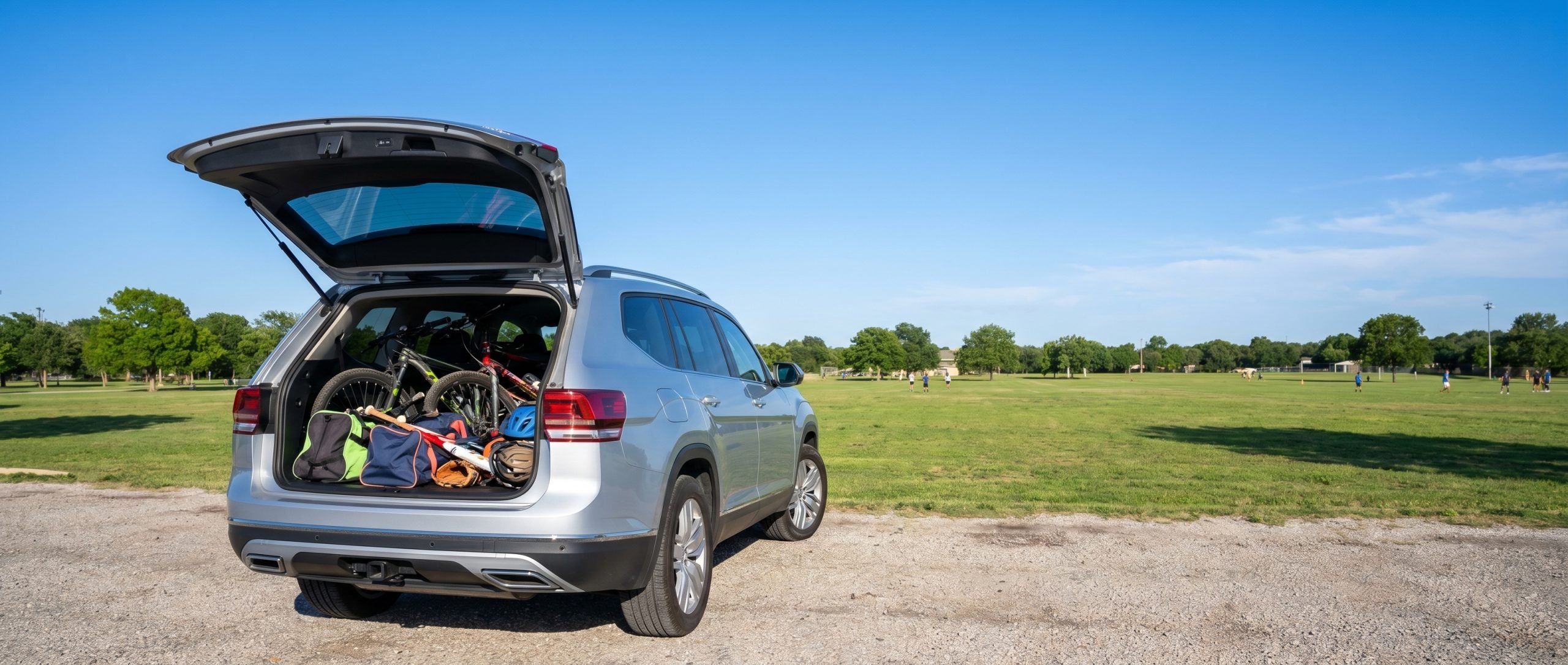
Volkswagen Atlas cargo space loaded with sports gear near John Stiff Memorial Park in Amarillo, TX

Volkswagen Atlas Cargo Room for Sports Gear Near John Stiff Memorial Park in Amarillo, TX

Hauling a full set of baseball bags, cleats, portable chairs, and a cooler to a tournament near John Stiff Memorial Park is not a theoretical challenge - it's a Saturday morning reality for a lot of Amarillo families. The Volkswagen Atlas® was built with exactly that kind of load in mind, offering up to 96.8 cubic feet of total cargo space that can flex around whatever gear your family brings to the field. If you've been squeezing equipment into a smaller SUV and wondering whether there's a better way, this is worth a close look. What 96.8 Cubic Feet Actually Means in Real Life The Atlas delivers 96.8 cubic feet of maximum cargo volume with both rear seat rows folded - making it one of the roomier three-row SUVs in its class. But raw numbers only tell part of the story. What matters more is how that space is shaped and accessed. The Atlas has a wide, low load floor that makes it easier to slide in gear bags, stroller frames, or equipment cases without fighting the opening. The rear liftgate opens wide, and the space behind the third row (20.6 cubic feet) is genuinely usable, not just a narrow slot. Here's what a typical Amarillo sports family can realistically fit in an Atlas: Full-size soccer bags for three or four players A folding canopy or pop-up tent A large rolling cooler Folding camp chairs (4-6) Backpacks and personal bags Cleats, water bottles, and miscellaneous smaller items With the third row folded flat, that list expands considerably - and the flat load floor makes organizing the space straightforward. Did you know? The Volkswagen Atlas was designed and developed at Volkswagen's facility in Chattanooga, Tennessee, partly to meet the specific needs of American families who prioritize cargo and passenger space over compact dimensions. How the Atlas Compares to Other VW Options for Gear Hauling If the Atlas feels like more vehicle than you need, Volkswagen offers other options worth knowing about. Here's a clear comparison to help you match the right model to your actual gear-hauling situation: Model Max Cargo (cu. ft.) Rows Best For Volkswagen Atlas 96.8 3 Large families, full tournament loads Atlas Cross Sport 77.8 2 Couples or smaller families with heavy gear Tiguan™ 73.5 2 (optional 3) Moderate gear, everyday versatility Taos™ 60.6 2 Light sports gear, solo or couple The Atlas Cross Sport™ is worth mentioning for Amarillo families who don't need that third row but still want serious cargo capacity. Its sportier roofline doesn't sacrifice as much space as you might expect, and it handles large bags and equipment cases with room to spare. The Tiguan® hits a practical middle ground if your typical load is a few bags and equipment for one sport rather than a full team's worth of gear. Many Amarillo families find it handles their regular weekend needs without the larger footprint of the Atlas. Packing for John Stiff Memorial Park and Beyond John Stiff Memorial Park sits on Amarillo's northwest side and serves as one of the city's busiest athletic hubs, hosting everything from youth baseball and softball leagues to soccer tournaments that draw families from across the Texas Panhandle. The parking areas are accessible, and the Atlas's turning radius makes navigating the lots straightforward even when they're busy on tournament weekends. Planning your packing strategy makes a real difference. A few practical tips: Load heaviest items first - Rolling coolers and equipment bags should go in deepest, against the seatback Use the Atlas's flat load floor - Items don't roll or shift on the flat surface the way they do in vehicles with spare tire humps Keep the third row accessible - If you're hauling passengers and gear, consider keeping one side of the third row up for a smaller player who can squeeze in Use the cargo cover - The retractable cargo cover keeps smaller items from sliding around and keeps the interior looking clean For families driving in from Canyon, TX or other Panhandle towns for larger tournaments at John Stiff, the Atlas also handles well on I-27 and the surrounding highway routes into Amarillo. It's a stable, comfortable ride even when loaded. Pro tip: The Atlas features a hands-free power liftgate available on upper trims - useful when your arms are full of gear bags and you need to pop the back open without setting everything down first. Cargo Management Features Worth Knowing About Raw space is one thing - how the Atlas helps you organize and secure that space is another conversation. Several features make the Atlas genuinely practical for active families: Cargo area lighting keeps the rear well-lit when you're loading or unloading at early morning practices or after evening games when parking lots are dim. The 60/40 split second-row and fold-flat third row let you configure the interior around your specific load. Need to carry five passengers and some gear? Different configuration than the one you'd use for maximum equipment transport with just two adults. Tie-down rings in the cargo floor give you anchor points for securing gear so it doesn't shift during the drive from your neighborhood to John Stiff or across town on Western Street or Coulter Avenue. The low load floor height is genuinely useful. Heavy bags and equipment cases don't need to be lifted as high to clear the bumper, which matters at the end of a long tournament day. Browse our new inventory if you want to see which Atlas trims are currently available and what cargo-related features come standard versus optional. Why Amarillo's Sports Culture Makes Cargo Space a Practical Priority Amarillo, TX isn't a city where recreational sports are a casual side activity - they're central to a lot of family life here. Between the youth leagues organized through the city's parks and recreation programs, the club sports scene, and the outdoor activities that the Texas Panhandle climate supports much of the year, families routinely move significant amounts of gear. The relatively mild winters compared to northern climates mean sports seasons run long, and the wide-open landscape around Amarillo invites activities beyond organized sports - camping gear headed toward Palo Duro Canyon, fishing equipment, mountain bikes for trails in and around the city. Sports and Activities That Push Cargo Demands in Amarillo: Youth baseball and softball (bats, helmets, bags, coolers, chairs) Soccer (bags, balls, cones, nets, canopies) Football (pads, helmets, equipment bags) Camping and canyon trips (gear, food, tents, sleeping bags) Cycling (bikes require rear cargo or rack systems plus helmets and gear bags) For families juggling multiple kids in multiple sports - a very common situation in Amarillo - having a vehicle that can absorb the gear load without requiring a trailer or roof rack becomes genuinely valuable rather than a nice-to-have. Common Questions About Volkswagen Atlas Cargo Room in Amarillo, TX How much cargo space does the Volkswagen Atlas have behind the third row? The Volkswagen Atlas offers 20.6 cubic feet of cargo space behind the third row, which is enough for several gear bags or a cooler and equipment for a weekend game. Fold the third row flat and that number jumps to 55.5 cubic feet, and with both rows folded you reach the maximum 96.8 cubic feet. Is the Volkswagen Atlas a good vehicle for Amarillo families with heavy sports gear loads? The Atlas is a strong fit for Amarillo families who regularly haul gear to parks like John Stiff Memorial Park or travel to tournaments across the Texas Panhandle. Its flat load floor, wide liftgate opening, and flexible seating configurations make it easier to manage large or irregular gear loads compared to smaller SUVs. How does the Atlas Cross Sport compare to the Atlas for cargo in Amarillo, TX? The Atlas Cross Sport offers 77.8 cubic feet of maximum cargo space compared to the Atlas's 96.8 cubic feet. The Cross Sport is a two-row vehicle with a sportier profile, making it a solid choice for smaller Amarillo families or adults who carry heavy gear but don't need a third row of seating. Can the Volkswagen Atlas fit bikes inside the cargo area without a rack? With the rear seats folded and with some disassembly (typically removing the front wheel), standard adult bikes can fit inside the Atlas's cargo area. Families who regularly transport bikes for rides near Palo Duro Canyon or around Amarillo may still prefer a hitch-mounted rack, but the option to load inside the vehicle exists with the Atlas's large cargo volume. Where can I see the Volkswagen Atlas cargo space in person near John Stiff Memorial Park? Street Volkswagen of Amarillo serves the Amarillo area and is the local VW dealership where you can walk through the Atlas's cargo area, fold the seats yourself, and measure against your actual gear needs before making any decision. Does the Volkswagen Tiguan offer enough cargo space for youth sports gear in Amarillo? The Tiguan offers up to 73.5 cubic feet of maximum cargo space, which handles typical youth sports loads well for families with one or two kids in a single sport. If your Saturday mornings involve gear for multiple players or multiple sports simultaneously, the Atlas's additional space is likely worth the consideration. Making the Right Call for Your Amarillo Family Cargo space isn't the most glamorous feature on a vehicle spec sheet, but for Amarillo families heading to John Stiff Memorial Park every weekend with a trunk full of gear, it's one of the most practical ones. The Atlas earns its place in the conversation because it delivers real, usable volume - not just impressive numbers on paper. The team at Street Volkswagen of Amarillo can walk you through the Atlas and other Volkswagen models in person so you can measure your own gear against the actual space and make a decision that works for your family's specific load. View New Inventory Schedule a Service Street Volkswagen of Amarillo 8707 Pilgrim Dr, Amarillo, TX 79119 (864) 288-8300
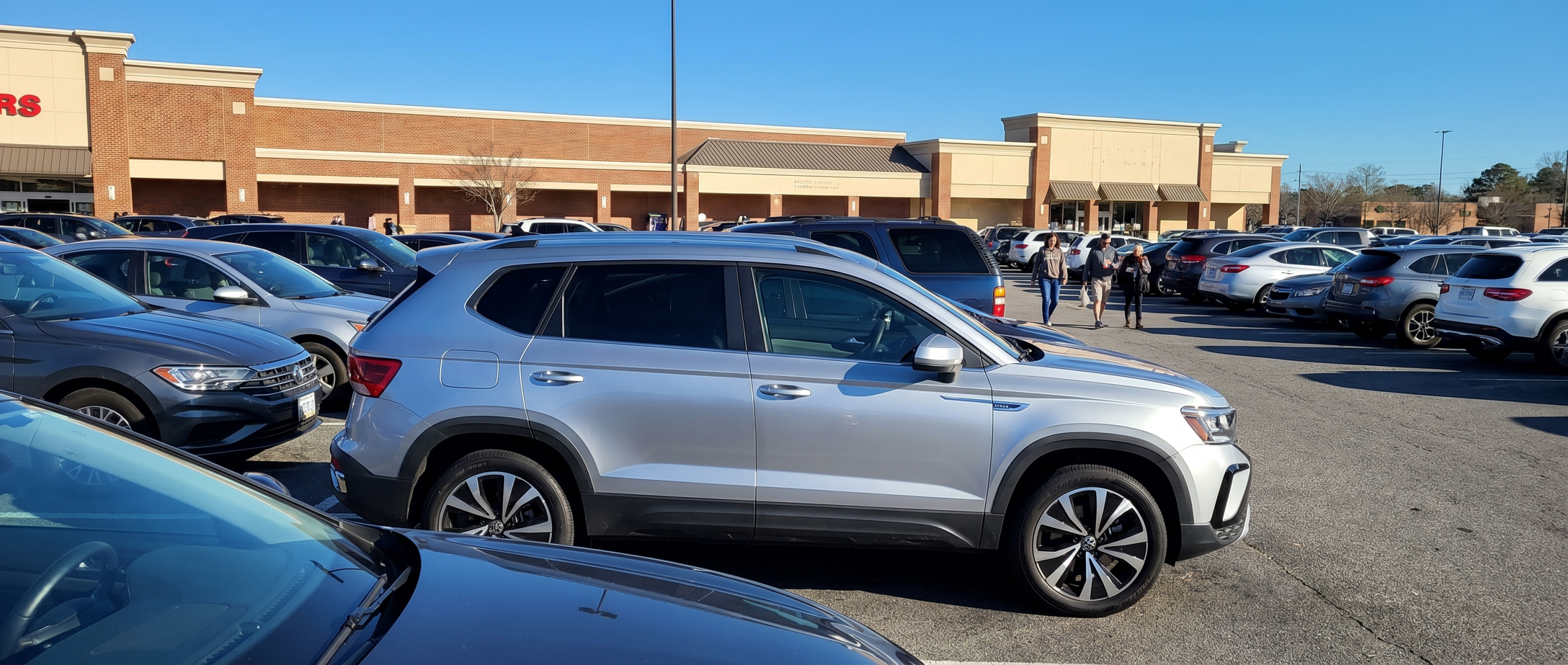
Volkswagen Taos parked near Soncy Road shopping center in Amarillo, TX

How the Volkswagen Taos Fits Weekend Errands Around Soncy Road in Amarillo, TX

Saturday morning in Amarillo, TX looks a lot like this: a loose list of stops, a full cup of coffee, and Soncy Road stretching out ahead of you with a dozen places to hit before noon. The Volkswagen® Taos™ has quietly become one of the more practical choices for exactly this kind of day - compact enough to slot into tight parking spots near the Westgate Mall area, but roomy enough to haul groceries, gym bags, and a weekend's worth of odds and ends without feeling cramped. Why Soncy Road Is the Weekend Errand Capital of Amarillo If you've lived in Amarillo long enough, you already know that Soncy Road is where weekends happen. This stretch running through west Amarillo is lined with grocery stores, home improvement retailers, restaurants, fitness centers, and specialty shops that draw residents from Wolflin Village all the way out toward the Canyon area. The traffic on Soncy Road - especially between Coulter Street and Western Street - moves in that particular rhythm of weekend shopping: stop-and-go bursts mixed with steady flow. You need a vehicle that's responsive enough to keep pace without burning through fuel every time the light turns green. The Taos earns its keep here in a pretty direct way. Its turbocharged 1.5-liter engine delivers enough pull to merge confidently onto Soncy from a side street or navigate a crowded Costco parking lot exit, without the bulk of a larger SUV that can make tight turns feel like a production. Did you know? The Taos is built on Volkswagen's MQB A0 platform, the same architecture used across several of VW's most popular compact models globally - designed specifically to balance interior space with a shorter exterior footprint. Cargo Space That Actually Makes Sense for Weekly Runs The Taos offers 27.9 cubic feet of cargo space behind the rear seats - and that number matters more than it sounds on a Saturday errand run. Here's what fits comfortably in that cargo area without rearranging the interior: Four to six full grocery bags standing upright A medium-sized flat-pack furniture box from a home goods store Two gym bags plus a reusable shopping tote A small portable cooler for the drive home from the farmers market A rolled-up yoga mat or folded stroller Fold down the rear seats and that number jumps to 65.9 cubic feet - enough to handle bigger loads from hardware stores or a quick run to pick up a piece of furniture from a local shop off Western Street. Compared to a standard sedan like the Jetta, which offers a fixed trunk rather than a flexible cargo floor, the Taos gives you genuine loading versatility without stepping up to a larger SUV like the Tiguan. That middle ground is exactly what makes it work well for the kind of mixed-use errands that define a typical Amarillo Saturday. Parking and Maneuverability Along the Soncy Corridor Parking near Soncy Road on a weekend morning takes patience in any vehicle. The shopping centers along this corridor tend to fill up fast, and the lot layouts at some of the older retail centers require sharper turns to navigate between spaces. The Taos has a turning radius that works in its favor here. At just over 180 inches in overall length, it fits comfortably in standard parking spaces where a three-row SUV would require a second attempt. Shopping Area on Soncy Road Typical Parking Challenge Taos Advantage Westgate Mall vicinity Wide lots but crowded on weekends Compact footprint fits tight rows Neighborhood grocery stores Narrow internal lanes Short turning radius helps Home improvement retailers Large carts, wide load zones Rear lift gate opens easily Fitness centers and strip plazas Smaller dedicated lots Easy pull-through options Restaurant row near Coulter Shared parking with high turnover Quick to maneuver and exit The available rear parking sensors and rearview camera on higher Taos trims take a lot of the guesswork out of backing into a spot near a shopping cart return. Small conveniences like that matter when you're making your fourth stop of the morning. Fuel Efficiency That Adds Up Over West Amarillo Driving Most Amarillo residents aren't thinking about fuel economy when they're running errands, but it adds up over a few weekends of Soncy Road loops. The Taos returns an EPA-estimated 28 mpg city and 36 mpg highway in front-wheel drive configuration. For short-hop errand driving - the kind that rarely gets above 45 mph between stops - that city rating is the one that applies. And 28 mpg city is genuinely good for a compact SUV carrying real cargo. Pro tip: If your weekend errands involve a lot of cold starts and short trips under two miles, give the Taos a few minutes to reach operating temperature before heavy acceleration. Short-trip driving is harder on fuel economy and the engine than most people realize. For comparison, drivers upgrading from older sedans or larger SUVs often notice a difference in how often they're stopping at a gas station near Wolflin Avenue. The Taos won't make your fuel costs disappear, but it handles the stop-and-go rhythm of west Amarillo traffic without the fuel penalty of a heavier vehicle. Driver Comfort During Multi-Stop Errand Days An errand run that stretches across three hours and eight stops is its own kind of fatigue. The Taos manages this in a few practical ways that are easy to overlook until you've spent a full Saturday in the driver's seat. What makes the Taos comfortable during extended errand sessions: The seating position is elevated enough to provide good visibility through busy intersections without feeling like you're high off the ground The 8-inch touchscreen with wireless Apple CarPlay and Android Auto means your shopping list app or navigation stays accessible without fumbling with a mount Responsive climate control keeps the cabin comfortable as temperatures shift throughout a Texas morning - something Amarillo drivers understand well, given how quickly spring afternoons can turn warm The driver's seat on Sport and SEL trims includes height adjustment, which helps reduce lower back strain during the kind of frequent get-in, get-out routine that comes with multiple stops The Tiguan, which is a step up in size from the Taos, offers more passenger space but can feel like more vehicle than necessary when you're solo or with one other person running weekend errands. For a single driver or a couple, the Taos keeps things right-sized. What Drivers Near Amarillo Are Using the Taos For The Taos shows up in a few consistent patterns among west Amarillo drivers - and they're all worth noting if you're trying to figure out whether it fits your own routine. Common use cases among Taos owners in the Amarillo area: Weekly grocery runs along Soncy Road combined with a stop at a pharmacy or pet supply store Fitness routines that involve hauling gear to gyms or athletic facilities on the west side of town Home project pickups at hardware and home goods stores, where the folding rear seat extends the load floor Day trips to Palo Duro Canyon State Park, where the Taos handles TX-217 comfortably and offers enough cargo room for hiking gear and a picnic setup School and activity transport for parents managing pickups and drop-offs that run through multiple neighborhoods before circling back to west Amarillo That last point connects to something the Taos handles quietly well - the LATCH system for child safety seats, rear door opening angle that makes loading easier, and enough rear legroom to keep passengers comfortable during short in-town trips. Take a look at our new inventory if you want to see which Taos trims are currently available and how the feature sets break down across configurations. Common Questions About the Volkswagen Taos in Amarillo, TX Is the Volkswagen Taos a good fit for Amarillo's west side errand routes? The Volkswagen Taos is a solid fit for the west Amarillo errand corridor, particularly around Soncy Road and the shopping areas near Coulter Street. Its compact footprint handles crowded weekend parking, its cargo area accommodates a full grocery run, and its fuel efficiency holds up well under stop-and-go driving conditions that are common in that part of the city. How much cargo space does the Taos have compared to other Volkswagen SUVs in Amarillo, TX? The Taos offers 27.9 cubic feet of cargo space behind the rear seats and 65.9 cubic feet with the rear seats folded. The Tiguan offers more cargo room at 37.6 cubic feet behind the second row, making it the better option for larger or more frequent hauling. For most single-driver or two-person errand runs common around Amarillo, the Taos cargo area is sufficient. Does the Volkswagen Taos handle Texas heat well in Amarillo? The Taos is equipped with standard automatic climate control and available dual-zone climate on higher trims, which manages the interior temperature effectively during Amarillo's warm spring and hot summer months. The cabin cools down relatively quickly, and the system maintains a consistent temperature without requiring constant manual adjustment - useful when you're stepping in and out of a warm vehicle throughout the day. Where can Amarillo drivers test drive the Volkswagen Taos near Soncy Road? Street Volkswagen of Amarillo serves drivers across the west Amarillo area, including residents near Soncy Road and the Westgate Mall corridor. Scheduling a test drive through the dealership gives you a chance to put the Taos through the kind of parking-lot and surface-street driving that actually reflects what you'll use it for on weekends. Is the Taos available with all-wheel drive for Amarillo drivers? Yes, the Taos is available in a 4Motion all-wheel drive configuration, which adds traction on wet pavement and provides extra confidence during the occasional winter weather events that move through the Texas Panhandle. For drivers who primarily stay in Amarillo on paved roads, the front-wheel drive version handles most conditions well, but AWD is available if that added security matters to you. How does the Taos compare to the Volkswagen Tiguan for weekend errands? The Taos and Tiguan both handle errand driving well, but they suit different priorities. The Taos is more compact, easier to park in tighter lots along Soncy Road, and returns better fuel economy in city driving. The Tiguan offers a larger interior, optional third-row seating, and more cargo capacity. For solo or couple errand runs, the Taos is often the more practical choice. Families who regularly carry more passengers or gear tend to prefer the Tiguan's additional room. Making the Most of Your Saturdays in Amarillo A well-planned errand run through west Amarillo should feel easy, not like work. The Volkswagen Taos fits into that kind of Saturday without making you think twice about parking, loading, or fuel - which is exactly the point. It handles Soncy Road the way a good everyday vehicle should: quietly, efficiently, and without making the drive the hard part of your day. The team at Street Volkswagen of Amarillo knows this part of town and the way Amarillo residents actually use their vehicles. Whether you're doing a quick loop from Wolflin Village to the Westgate area or making a longer run out toward Palo Duro Canyon afterward, it's worth experiencing how the Taos drives before making a decision. View New Inventory Schedule a Service Street Volkswagen of Amarillo 8707 Pilgrim Dr, Amarillo, TX 79119 (864) 288-8300
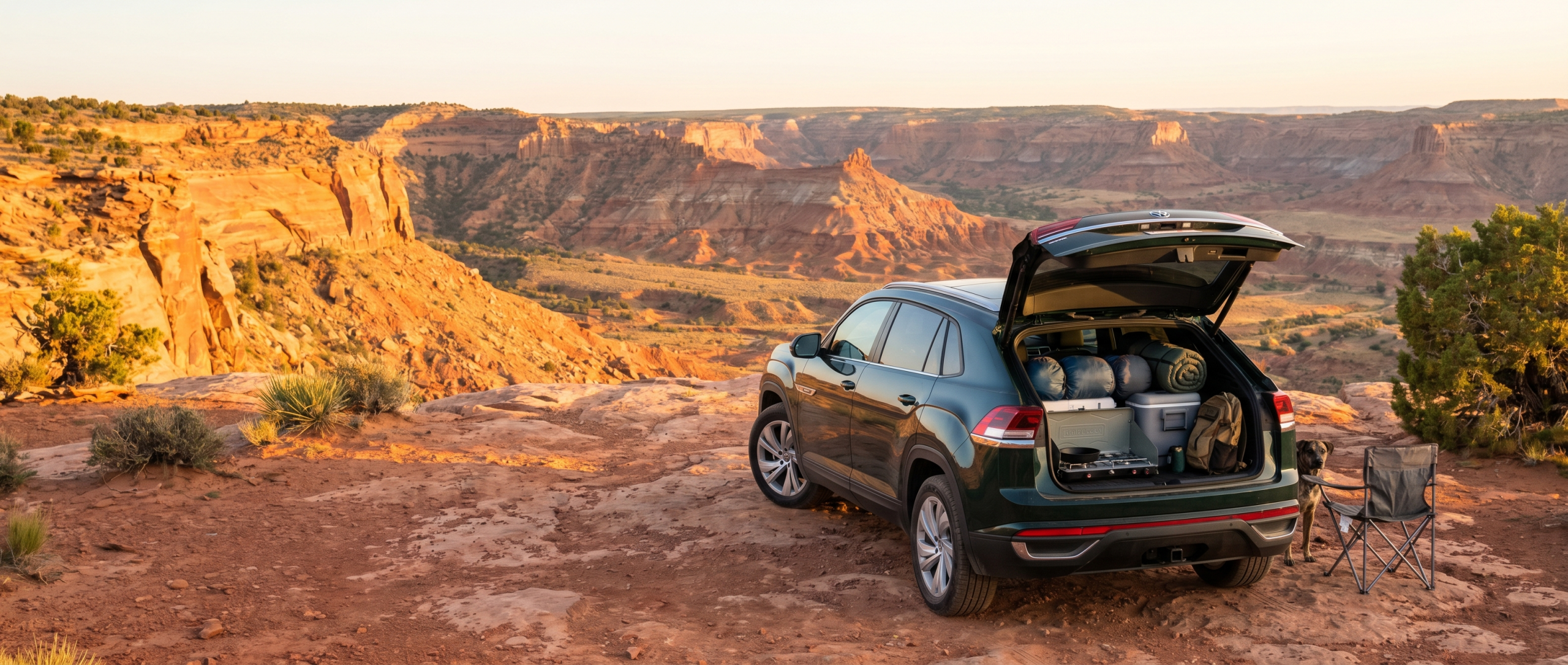
Volkswagen Atlas loaded with camping gear at Palo Duro Canyon State Park near Amarillo, TX

Best Volkswagen Models for Camping Trips Near Palo Duro Canyon in Amarillo, TX

Palo Duro Canyon drops 800 feet into the Texas Panhandle floor without warning - and getting there with the right vehicle makes all the difference between a trip you'll remember and gear you'll wish you'd left at home. If you're planning a camping trip near Palo Duro Canyon from Amarillo, TX, the Volkswagen® lineup has several models that handle the ranch roads, canyon rims, and highway stretches better than most people realize. This guide breaks down which VW models make the most practical camping companions and why, so you can make a confident call before your next trip. Why Palo Duro Canyon Puts Your Vehicle to Work Palo Duro Canyon State Park sits about 26 miles southeast of Amarillo off Highway 217, and the road conditions between the city and the campgrounds cover a surprising range of terrain. You'll cruise smooth stretches of the TX-217, drop into the canyon floor via a steep winding descent, and park on gravel sites that aren't exactly level. Add Texas Panhandle wind - which averages around 14 mph annually, with gusts that can push an empty SUV around on the highway - and you want a vehicle with stability, solid cargo management, and enough ground clearance to handle unpaved access roads without scraping. The campgrounds at Palo Duro offer everything from primitive tent sites to RV hookups, meaning your gear load can vary dramatically. That's worth thinking about before you choose which VW to take. The Atlas: Most Cargo Room for Serious Campers The Volkswagen Atlas™ is the strongest choice for families or groups planning multi-night camping trips near Palo Duro Canyon. With up to 96.8 cubic feet of cargo space when the second and third rows are folded, it's one of the roomiest three-row SUVs in its class - and that space becomes very real when you're loading a cooler, two tents, sleeping bags, camp chairs, and enough firewood to get through a Texas panhandle night. The Atlas also comes with available 4MOTION® all-wheel drive, which gives you confident traction on the canyon's gravel roads and the occasional patch of Texas caliche that gets slick after rain. Standard towing capacity on properly equipped Atlas trims reaches up to 5,000 pounds, so if you're thinking about pulling a small camp trailer, the math works. Here's what makes the Atlas worth considering for canyon camping specifically: Third-row flexibility - fold it flat for cargo, use it for passengers on the drive out Available 4MOTION AWD - traction on gravel, mud, and loose canyon road surfaces Roof rail system - add a cargo box or kayak carrier for gear overflow Driver assistance features - helpful on the steep canyon descent road off TX-217 Up to 5,000-lb towing capacity - supports a small camp trailer if needed Did you know? The Volkswagen Atlas was designed with North American buyers specifically in mind. It was engineered and developed with feedback from U.S. and Canadian drivers, which is why its interior dimensions are notably larger than many VW models sold in Europe. Atlas Cross Sport vs. Tiguan: Which Two-Row SUV Fits Your Camp Style? Not every camping trip requires a three-row vehicle. If you're heading to Palo Duro with one or two people, or your gear list runs lean, the two-row SUVs in the VW lineup deserve a look. Feature Atlas Cross Sport Tiguan Cargo space (seats up) 40.3 cu ft 33.0 cu ft Max cargo (seats folded) 77.8 cu ft 65.7 cu ft Available AWD Yes (4MOTION) Yes (4MOTION) Towing capacity Up to 5,000 lbs Up to 1,500 lbs Passenger capacity 5 7 (optional 3rd row) Best for Couples/small groups with gear Families needing flexibility The Atlas Cross Sport runs with a sportier roofline but still manages nearly 78 cubic feet of cargo room with the rear seats folded - more than enough for a weekend at Palo Duro. It shares the Atlas's available 4MOTION AWD and 5,000-lb tow rating, making it a capable option for those who want a smaller footprint without sacrificing hauling ability. The Tiguan gives you an optional third row for a tight fit of seven, but its real strength for camping is a practical cargo area and a more maneuverable size for tighter canyon parking areas. Explore our new inventory if you want to compare current Atlas Cross Sport and Tiguan configurations side by side. Pro tip: When you're parking at Palo Duro campground sites, shorter wheelbase vehicles are noticeably easier to position on uneven gravel pads. The Tiguan's compact length is a quiet advantage here. The ID. Buzz: An Unexpected but Capable Canyon Companion The Volkswagen ID. Buzz™ might not be the first vehicle that comes to mind for a canyon camping trip, but it earns a serious look. This all-electric van carries a 91 kWh battery pack and delivers an EPA-estimated 234 miles of range, with seating for up to seven passengers in the three-row configuration. For a camping trip from Amarillo to Palo Duro - a round trip of roughly 52 miles - the range concern most people worry about simply doesn't apply. You'll return to Amarillo with plenty of charge remaining. The ID. Buzz's flat cargo floor, high roof, and flexible seating layout make it genuinely useful for hauling camping gear, and it's surprisingly practical for loading and unloading at a campsite. Strengths for camping near Palo Duro: Generous interior volume with flat cargo floor Quiet operation - no engine noise at the campsite Regenerative braking handles the canyon descent road naturally Vehicle-to-load (V2L) capability on compatible configurations lets you power small devices at camp Considerations before you go: No AWD on current U.S. configurations - front-wheel drive only Lower ground clearance than the Atlas means primitive roads need more care Charging planning required for any extended detours Taos: The Compact Option That Punches Above Its Size The Volkswagen Taos™ is a compact SUV, but dismissing it for camping trips would be a mistake. With available 4MOTION AWD, 27.9 cubic feet of cargo space behind the rear seats, and a fuel-efficient turbocharged four-cylinder engine, the Taos is a legitimate choice for solo campers or couples traveling light. On the highway run southeast out of Amarillo toward the canyon, the Taos earns EPA-estimated ratings of up to 28 city / 36 highway mpg with the front-wheel-drive configuration. That efficiency matters on a road trip - and it matters even more if your camping plans extend beyond Palo Duro to spots like Lake Meredith National Recreation Area north of Amarillo or the Caprock Canyons State Park further south. Pack efficiently, and the Taos handles a camping weekend without complaint. Rooftop cargo bags paired with the available roof rails add meaningful storage without requiring a larger vehicle. Matching Your Camping Style to the Right VW Different camping setups call for different vehicles. Here's a straightforward way to think about which model fits your specific trip: Camping Style Best VW Match Key Reason Family group, multi-night, full gear Atlas Most cargo + seating, AWD, towing Couple, moderate gear, sporty feel Atlas Cross Sport High cargo, AWD, towing without 3rd row Family needing flexible seating Tiguan Optional 3rd row, maneuverability Eco-conscious, light gear, short range ID. Buzz Zero emissions, flat floor, quiet Solo or couple, fuel efficiency first Taos Compact efficiency, available AWD What to Know About Driving Into Palo Duro Canyon The park entrance road drops sharply from the canyon rim to the floor - and that descent, while paved, is steep enough that first-time visitors often grip the wheel a little tighter. Every VW in this lineup handles it without issue, but a few driving habits help: Use engine braking - downshift or activate sport mode to let the engine slow you on descents instead of riding the brakes Watch the crosswinds on TX-217 - the flat Texas Panhandle approach to the canyon can push vehicles in strong gusts; keep both hands on the wheel Check tire pressure before you go - the temperature swings between Amarillo mornings and canyon afternoons in spring and fall can drop tire pressure by 2-3 PSI Scan for wildlife at dusk - mule deer are active near the canyon floor roads at low light The canyon also hosts the outdoor musical drama "TEXAS" each summer at the Pioneer Amphitheater - if your camping trip overlaps with a performance night, the parking areas get busy. Arriving earlier in the day gives you a calmer exit from the park. Common Questions About VW Models for Camping Near Palo Duro Canyon, Amarillo TX Which Volkswagen has the most cargo space for camping gear? The Volkswagen Atlas offers the most cargo space in the VW lineup, with up to 96.8 cubic feet when the second and third rows are folded flat. For camping trips to Palo Duro Canyon from Amarillo, that means room for a full family's tent, sleeping bags, coolers, and camp chairs without compromise. Is the VW Atlas good on the canyon roads near Amarillo, TX? The Atlas handles Palo Duro Canyon's roads well, especially with available 4MOTION all-wheel drive. The paved park entrance road and gravel campground surfaces are within easy range of the Atlas's capability, and its stability control system keeps things composed on the steep canyon descent off TX-217. Can I take a Volkswagen ID. Buzz camping near Palo Duro Canyon? Yes - the round trip from Amarillo to Palo Duro Canyon and back is roughly 52 miles, well within the ID. Buzz's EPA-estimated 234-mile range. The flat cargo floor and flexible seating make it practical for gear hauling, though you'll want to stick to paved park roads given the front-wheel-drive setup. Which VW is best for camping if I'm going solo or with one other person? The Taos is a strong choice for solo campers or couples who pack efficiently. Its available 4MOTION AWD handles varied road conditions, it earns solid highway fuel economy, and its cargo area is sufficient for a weekend camping kit. The Tiguan also works well if you want a bit more room without moving to a full-size SUV. Does VW offer any models with towing capacity for a small camp trailer? Both the Atlas and Atlas Cross Sport offer towing capacity of up to 5,000 pounds on properly equipped trims, making them capable of pulling a small camp trailer or teardrop camper to Palo Duro Canyon. The Tiguan's towing capacity is considerably lower, and the Taos and ID. Buzz are better suited for cargo-only camping setups. Where can I find a Volkswagen SUV in Amarillo, TX for a test drive before my camping trip? Street Volkswagen of Amarillo carries the Atlas, Tiguan, Taos, ID. Buzz, and Atlas Cross Sport available for test drives. Stopping in before your Palo Duro trip lets you get a feel for cargo space and seating in person - things that matter more on a camping trip than any spec sheet can fully communicate. Ready to Hit the Canyon? Here's How to Start Palo Duro Canyon is one of the most genuinely impressive natural landmarks in the Texas Panhandle, and it deserves a vehicle that can handle the drive, the terrain, and the gear load without turning the experience into a chore. Whether you land on the Atlas for maximum family capacity, the Atlas Cross Sport for a sportier capable hauler, the Taos for efficient solo adventures, or the ID. Buzz for a quieter, cleaner trip to the canyon floor - Volkswagen has a legitimate answer for how you camp. The team at Street Volkswagen of Amarillo knows these roads, understands what canyon camping actually demands from a vehicle, and can help you find the right fit from the current lineup. Check out our new inventory to see what's available and get closer to your next Palo Duro trip. View New Inventory Schedule a Service Street Volkswagen of Amarillo 8707 Pilgrim Dr, Amarillo, TX 79119 (864) 288-8300
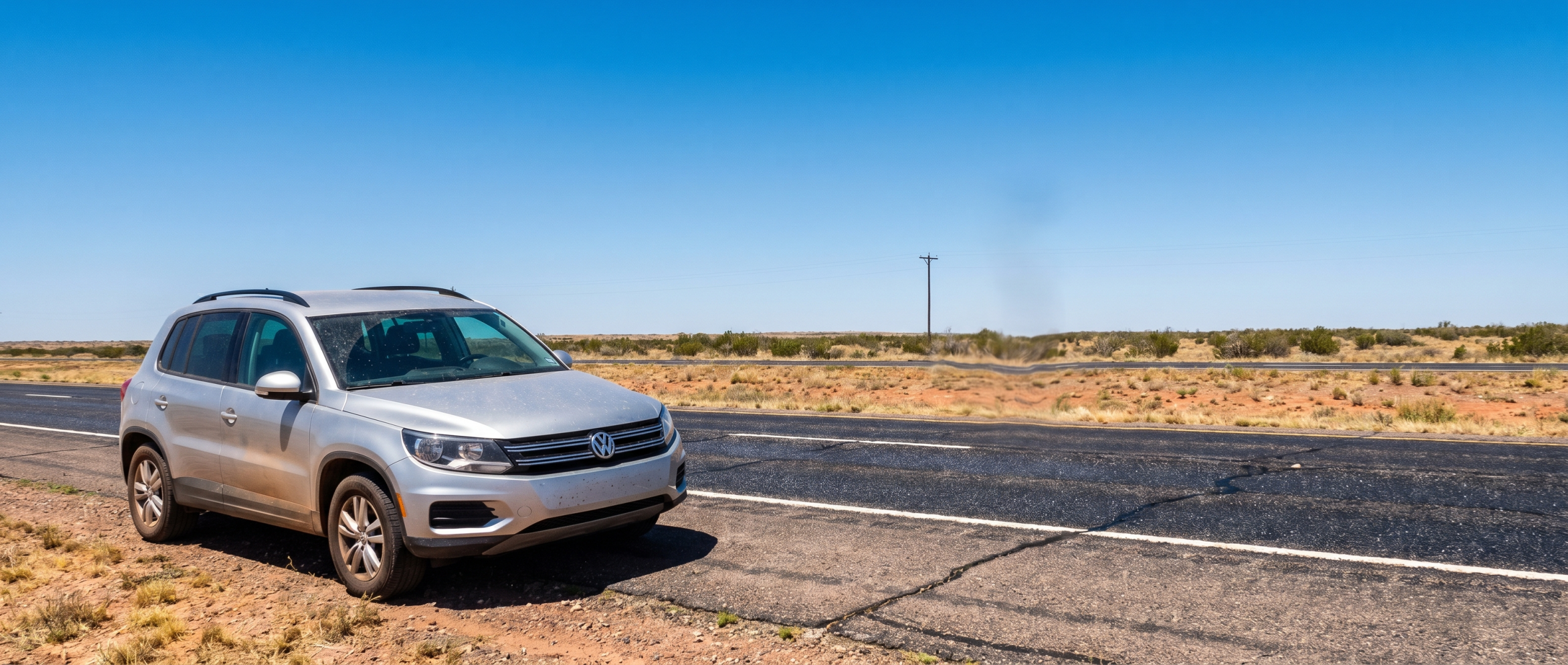
Volkswagen Tiguan tire care on hot pavement near Loop 335 in Amarillo, TX

Volkswagen Tire Care for Hot Pavement Around Loop 335 in Amarillo, TX

Asphalt surface temperatures in Amarillo, TX can exceed 150°F on a clear summer afternoon - and that kind of heat does things to your tires that most drivers never see coming until something goes wrong. If you regularly drive Loop 335, the stretch connecting the south side near Westgate Mall to the northwest corridor past Thompson Park, or anywhere across the Panhandle where exposed blacktop bakes under relentless sun, your tires are absorbing punishment with every mile. This guide covers exactly what that heat does to your Volkswagen 's tires, how to stay ahead of the wear, and what signs to look for before a small issue turns into a roadside problem. Why the Texas Panhandle Is Particularly Hard on Tires The Panhandle's combination of intense UV radiation, extreme heat differentials, and long straight roads at highway speeds creates one of the harshest tire environments in the country. Amarillo averages over 270 sunny days per year, and summer road surface temperatures consistently outpace air temperatures by 40 to 60 degrees. That gap matters because tire rubber compounds are designed with specific temperature tolerance ranges - and the harder you push those limits, the faster the rubber degrades. What makes Loop 335 specifically demanding is the driving pattern it encourages. Long cruising stretches at speed build heat inside the tire. Then you slow for a light, the tire cools slightly, then accelerates again. That repeated thermal cycling - heat up, cool down, heat up again - breaks down the internal bonding of the rubber compound faster than consistent highway driving alone. Drivers heading out to Palo Duro Canyon State Park on summer weekends face similar conditions: high-speed Panhandle highway driving with sustained heat exposure before reaching the canyon rim. Your tires carry that stress the whole way. Did you know? The NHTSA recommends checking tire pressure when tires are "cold" - meaning the vehicle has been parked for at least three hours or driven less than one mile. In Amarillo's summer heat, even a short pre-trip drive can artificially raise your pressure reading by 4 to 6 PSI. How Heat and Hot Pavement Damage Tires - What's Actually Happening Heat is the primary enemy of tire longevity, and hot pavement accelerates every form of tire wear simultaneously. Here is what is actually occurring inside your tire when Amarillo's summer roads start cooking: Pressure expansion: Air inside a tire expands as it heats. For every 10°F rise in temperature, tire pressure increases roughly 1 PSI. On a 100°F day with 150°F road surface, your tires can run significantly overinflated compared to their cold-check baseline. Tread compound softening: Rubber softens under heat, making it more susceptible to abrasion from rough or aggregate-heavy surfaces like much of the asphalt you find along the Loop 335 commercial corridors. Sidewall stress: Heat weakens the sidewall's internal structure over time. Potholes, sharp lane edge transitions, and the occasional rough railroad crossing near downtown Amarillo all hit harder when the rubber has already been softened by sustained road heat. Dry rot acceleration: UV exposure and ozone from Panhandle wind combine with heat to oxidize the rubber, causing dry rot to appear years earlier than it would in cooler climates. Blowout risk: Sustained highway heat combined with even slightly low inflation pressure creates the conditions for a heat-induced blowout. This risk is highest on long straight drives at consistent speed. Understanding these mechanisms is the difference between reactive and proactive tire care. Once you know what to watch for, the warning signs become visible well before they become dangerous. Tire Pressure Management in Amarillo's Heat - The Right Approach Managing tire pressure correctly in Amarillo's climate is not as simple as checking the number on the sidewall. That number is actually the maximum pressure the tire can hold - not the recommended operating pressure. The correct pressure for your specific Volkswagen is on the driver's door jamb sticker, and that number is what you should be targeting. Here is the pressure management routine that holds up well in the Texas Panhandle summer: Check pressure in the morning before the vehicle has moved. Amarillo mornings, even in summer, are cooler and give you the most accurate cold reading. Use a quality digital gauge rather than the gas station air pump gauge, which are notoriously inconsistent and often read high. Account for seasonal baseline shift. Many Amarillo drivers inflate to the correct pressure in spring, then never revisit it. By August, ambient temperatures are 30 to 40 degrees higher, and daily thermal cycling has shifted your baseline. Check pressure before long highway drives, especially before heading out on I-40 or US-87 where you will hold speed for extended stretches. Do not deflate hot tires to reach the target number. If you check pressure mid-afternoon after driving Loop 335 and it reads high, wait until the tires cool before making adjustments. Pro tip: For Volkswagen models like the Tiguan™ and Atlas™, the Tire Pressure Monitoring System (TPMS) is calibrated to alert you when pressure drops 25% below the recommended level - but that threshold is a safety floor, not a comfort zone. Check manually on a monthly schedule regardless of whether your TPMS light is on. Matching Your Volkswagen Model to the Right Tire Type for Panhandle Conditions Not every tire performs the same way on Amarillo's roads, and the model you drive should influence what kind of replacement tire you choose when the time comes. The table below matches common Volkswagen models to the tire characteristics that work best under Panhandle driving conditions. VW Model Primary Use in Amarillo Recommended Tire Priority Heat Resistance Need Tiguan Family hauling, Loop 335 daily driving All-season touring, wear-rated tread High Atlas Highway family trips, I-40 corridor Grand touring all-season, load-rated High Atlas Cross Sport™ Mixed highway and city Performance all-season High Jetta™ Daily commuting, city driving Standard touring all-season Moderate-High Jetta GLI™ Sport commuting, spirited driving High-performance summer or all-season High Taos™ Urban and suburban daily driving Touring all-season, fuel-efficient compound Moderate ID.4™ EV daily driver, Loop 335 and beyond EV-specific touring tire, low rolling resistance High EV drivers in particular should pay attention here. The ID.4 runs heavier than a comparable gas-powered crossover due to its battery pack, which puts more load on tires at every temperature. EV-specific tires are reinforced to handle that weight and are formulated with compounds that manage heat from both the road surface and the regenerative braking system. Rotation, Alignment, and Tread Checks - The Summer Maintenance Cycle Tire care in Amarillo's heat is not a once-a-year job. The combination of temperature stress, wind-driven road debris from the surrounding plains, and the stop-and-go conditions along Bell Street and Coulter Drive means your tires need consistent attention through the summer months. Tire Rotation should happen every 5,000 to 7,500 miles under normal driving conditions. In a Panhandle summer, the front tires of a front-wheel-drive vehicle like the Jetta do significantly more work - steering, braking, and driving simultaneously. Without regular rotation, you will see front tires wear down noticeably faster, which is both a safety concern and a cost concern since uneven wear across an axle means replacing tires before their full potential tread life is reached. Alignment checks matter more than most drivers realize. Amarillo's roads, particularly near construction zones along Loop 335 and the utility corridor patches throughout midtown, take a toll on alignment over time. A vehicle that is even slightly out of alignment puts asymmetric pressure on the tire contact patch, and on 150°F pavement, that uneven stress accelerates tread wear rapidly. Here is a practical summer tire inspection checklist to run monthly: ✓ Check tread depth with a quarter test (if Washington's head is fully visible, tires need attention) ✓ Inspect sidewalls for bulges, cracking, or surface dry rot ✓ Look for uneven wear patterns across the tread width ✓ Check valve stems for cracks or missing caps ✓ Look for embedded objects like screws or gravel in the tread ✓ Verify TPMS sensors are functioning correctly It is worth mentioning that it's easy to schedule service at a Volkswagen dealership that understands these specific Panhandle driving demands when you want someone else to run through this checklist properly. Signs Your Tires Are Struggling in the Amarillo Heat Hot pavement wear does not always announce itself dramatically. More often, it builds gradually until a combination of stress factors triggers a problem at the worst possible time - like on I-27 heading south toward the Texas Tech University Health Sciences Center area during heavy traffic. Watch for these warning signs that your Volkswagen's tires are being pushed beyond their safe operating condition: Vibration at highway speed that was not there previously, especially noticeable above 60 mph on Loop 335 Pulling to one side on a straight, flat road - a signal of uneven wear or alignment drift Visible tread wear indicators appearing level with the surrounding tread blocks Cracking or crazing on the sidewall - even fine surface cracks are a sign of UV and heat oxidation A persistent slow leak that requires you to add air every week or two Uneven wear across the tread width - wear on the outer edges only (underinflation) or center only (overinflation) The Atlas Cross Sport and Tiguan, with their taller sidewalls compared to lower-profile performance tires, are actually somewhat more forgiving of Panhandle road imperfections. That said, taller sidewalls do not eliminate the need for regular inspection - they just change how damage tends to present itself. Did you know? According to NHTSA data, tire failure is a contributing factor in approximately 11,000 crashes annually in the United States. Heat is one of the primary accelerators of the conditions that lead to tire failure - making summer inspection habits particularly important for drivers in high-heat regions like the Texas Panhandle. Common Questions About Volkswagen Tire Care for Hot Pavement in Amarillo, TX How often should I check my Volkswagen's tire pressure during Amarillo summers? Check your Volkswagen's tire pressure at least once a month during summer, and before any long highway drive on roads like I-40 or US-87. Amarillo's summer temperatures cause tire pressure to fluctuate more than in cooler climates - always check when tires are cold, meaning the vehicle has been parked for at least three hours. Use the pressure on your driver's door jamb sticker as your target, not the number on the tire sidewall. What tire pressure should I use for my Volkswagen in Amarillo's heat? Use the manufacturer-recommended pressure found on the driver's door jamb sticker of your specific Volkswagen. This pressure accounts for the vehicle's weight and load rating and is the correct operating target regardless of ambient temperature. Do not use the number printed on the tire sidewall, which is the maximum pressure, not the recommended pressure. Adjustments should always be made when tires are cold for an accurate reading. Why do my Volkswagen's tires wear faster in the summer around Loop 335? Hot pavement softens the tire's rubber compound, making it more susceptible to abrasion and wear. The stop-and-go driving pattern along Loop 335's commercial corridors - accelerating and braking repeatedly on 140-150°F road surfaces - creates thermal cycling stress that degrades tires faster than consistent highway driving. Combined with Amarillo's UV exposure and the road texture on heavily trafficked sections, summer tread wear can outpace what the same tires would experience in cooler climates by a notable margin. When should I replace my Volkswagen's tires in the Panhandle? Replace your Volkswagen's tires when the tread depth reaches 2/32 of an inch, when sidewall cracking or dry rot is visible, or when tires are more than six years old regardless of remaining tread. In Amarillo's climate, the combination of UV exposure, heat, and ozone from Panhandle wind accelerates rubber oxidation - meaning age matters even if tread depth looks acceptable. A six-year-old tire with decent tread in Amarillo may be structurally compromised in ways that are not immediately obvious. Does my Volkswagen ID.4 need special tires for Amarillo's heat? The ID.4 benefits specifically from EV-rated tires rather than standard all-season replacements. EV-rated tires are engineered for the ID.4's higher curb weight from its battery pack, the increased torque that electric motors deliver instantly, and the heat generated through regenerative braking. On Amarillo's summer roads, using a tire not rated for EV use can lead to faster-than-expected wear and compromised performance. Check with a Volkswagen service technician before selecting replacement tires for your ID.4. Is it safe to drive on Amarillo roads to Palo Duro Canyon with older tires in summer? Driving to Palo Duro Canyon State Park in summer with tires that have visible sidewall cracking, low tread depth, or a history of slow leaks carries meaningful risk. The drive involves sustained highway speed on sun-exposed roads before reaching the canyon, which builds internal tire heat significantly. If tires are borderline on any inspection point, have them professionally evaluated before making the trip. The canyon drive is rewarding - it is not worth taking on roads if your tires cannot handle the heat exposure. Keeping Your Volkswagen Rolling Through Amarillo's Summers Hot pavement is simply part of life in the Texas Panhandle, and tires are where that reality meets the road most directly. Staying ahead of pressure checks, keeping up with rotation schedules, and knowing what early wear signs look like means your Volkswagen handles the Loop 335 summer commute, the run out to the Westgate Mall corridor, or the weekend drive to Palo Duro Canyon with confidence. The team at Street Volkswagen of Amarillo is equipped to help you evaluate your tire health, make the right replacement choices for Panhandle conditions, and keep your service schedule on track before the heat becomes a problem. Schedule a Service View New Inventory Street Volkswagen of Amarillo 8707 Pilgrim Dr, Amarillo, TX 79119 (864) 288-8300

Volkswagen Golf GTI on open highway near Amarillo TX with Texas Panhandle landscape

Why the Volkswagen Golf GTI Is Fun on Open Roads Near Amarillo, TX

There is something about the Texas Panhandle that changes how a car feels. The roads stretch out long and flat, the horizon sits impossibly far away, and you can actually use what a performance car is built to do. The Volkswagen® Golf GTI is genuinely fun on open roads near Amarillo, TX - not because the marketing says so, but because the Panhandle's driving environment plays to nearly every strength this car has. What Makes the Golf GTI Built for This Kind of Road The Golf GTI™ was engineered with a specific driving philosophy: real performance wrapped in everyday usability. That combination matters a lot when you live somewhere like Amarillo, where a drive to Palo Duro Canyon or a weekend run toward Tucumcari, NM can put real miles under you in a short amount of time. Under the hood, the GTI carries a turbocharged 2.0-liter four-cylinder engine producing 241 horsepower. That number feels honest at highway speeds - there is pull available when you want it, and the car settles into a comfortable cruise when you do not. The available six-speed manual transmission gives drivers actual control over how the car behaves, something increasingly rare in this segment. A few things that define what the GTI brings to a long stretch of road: Turbocharged 2.0L engine with 241 horsepower and 273 lb-ft of torque Available six-speed manual or seven-speed DSG dual-clutch automatic Sport-tuned suspension that stays composed without punishing your spine Electronic limited-slip differential for confident cornering when the road does bend EPA-estimated 25 city / 33 highway mpg with the DSG automatic That highway figure matters more here than almost anywhere. When you are running Route 66 corridors or heading south on Highway 87, fuel efficiency and sustained highway performance are not luxury features - they are practical requirements. The Panhandle Road Network Is Genuinely GTI Territory West Texas driving gets a reputation for being monotonous, but that misses what actually happens behind the wheel of a capable car on these roads. The long sight lines of I-40, the smooth lanes of US-60 heading east toward Canyon, TX, and the sweeping approaches to Palo Duro Canyon State Park create a driving environment where the GTI's chassis tuning finally has room to breathe. The GTI does not need a mountain road to be engaging. The Panhandle rewards throttle control and stability, two things the GTI handles with more precision than most cars in its price range. On a clear morning heading out on US-87 toward Claude, TX, the combination of open space, light traffic, and a car that responds honestly to your inputs is a genuinely satisfying experience. Did you know? Palo Duro Canyon - often called the "Grand Canyon of Texas" - sits just 25 miles southeast of Amarillo. The approach roads leading to the canyon's rim offer some of the most scenic driving in the Texas Panhandle, with gradual elevation changes that give the GTI's suspension a real workout. Drivers coming in from Lubbock, TX on US-84 will also notice how the GTI maintains composure across longer interstate stretches where wind becomes a real factor. The Panhandle is consistently among the windiest regions in the country, and the GTI's low, compact profile cuts through crosswinds with noticeably less drama than taller vehicles. Comparing the GTI to Its Sibling: When the Golf R Makes Sense Instead The Golf GTI sits in an interesting spot in the Volkswagen lineup. It is the approachable performance choice - but it is worth knowing how it differs from the Golf R™ if you are deciding between the two. Feature Golf GTI Golf R Horsepower 241 hp 315 hp Drivetrain FWD 4MOTION AWD 0-60 mph ~6.3 seconds ~4.7 seconds Best for Daily driving + fun Maximum performance Manual available Yes Yes Suspension Sport-tuned Adaptive DCC standard Price positioning More accessible Premium performance For most Amarillo drivers who want something that performs well on open highway runs, handles responsibly in crosswind conditions, and still fits in a normal parking space at Westgate Mall or outside a restaurant on Georgia Street, the GTI covers the brief with less compromise than you might expect. The Golf R earns its place for drivers who want all-weather confidence - particularly those making regular runs to Santa Fe, NM or through the mountains west of Albuquerque where conditions shift quickly. But for daily Panhandle driving with weekend road runs built in, the GTI earns its reputation the honest way. What Driving the GTI Actually Feels Like Day to Day in Amarillo Performance cars often come with a catch: they are exciting on weekends and exhausting the rest of the time. The GTI breaks that pattern in a way that genuinely matters for someone living in Amarillo. Morning commutes on Loop 335 or cutting across Coulter Drive to get downtown feel relaxed in the GTI. The ride quality is firm but not stiff - you feel the road without feeling punished by it. The cabin is well-insulated from wind noise, which is more relevant here than in most parts of the country. What the GTI gets right for daily use: Seats that hold you in place during spirited driving but do not fight you on a long commute A turbocharged engine that produces useful torque low in the rev range, so you are not hunting for power in normal traffic Cargo space that accommodates real life - gear for Palo Duro, weekend bags, or a Costco run Technology integration that does not require a tutorial, including wireless Apple CarPlay and Android Auto Pro tip: The GTI's Drive Mode selector lets you switch between Comfort, Normal, Sport, and Custom settings. For Amarillo highway driving on I-40, Normal handles most situations well. Switch to Sport when you want the throttle response and steering weight to sharpen up. The Jetta GLI™ deserves a mention here for drivers who want a similar performance philosophy in a traditional sedan. It shares the same turbocharged engine family as the GTI and offers a noticeably larger trunk, which can matter for longer road trips. However, for sheer driving engagement on open Texas roads, the GTI's hatchback format and chassis tuning keep it a step ahead. The Golf GTI and Texas Wind: A Relationship Worth Understanding Most vehicle reviews are written by people who never drove in a place where sustained 30 mph crosswinds are a Tuesday afternoon. Amarillo consistently ranks among the windiest cities in the United States, with average wind speeds that would qualify as a breezy anomaly in most other markets. The GTI handles wind better than most compact performance cars for a straightforward reason: it is low, relatively wide for its length, and uses a weighted steering setup that does not require constant correction in crosswind conditions. This is not a small thing when you are on I-40 heading toward Vega, TX or running south on US-87 with a steady south wind pushing against the driver's side. Taller SUVs and crossovers struggle more noticeably in these conditions, which is part of why so many Panhandle drivers eventually appreciate having a lower-profile option in the household. The Taos™ and Tiguan™ are practical choices for families and hauling, but on a windy driving day, the GTI's profile simply creates less surface area for the wind to work against. Common Questions About the Golf GTI in Amarillo, TX Is the Volkswagen Golf GTI a good daily driver in Amarillo, TX? The Golf GTI is a strong daily driver in Amarillo. It balances performance capability with genuine comfort, handles the Panhandle's highway-heavy driving environment well, and returns solid fuel economy on the long stretches between towns. The turbocharged engine provides confident passing power without the weight penalty of a larger vehicle. How does the Golf GTI handle crosswind conditions on Panhandle highways? The GTI handles crosswinds better than most compact cars because of its low roofline, wide stance for its size, and weighted steering calibration. Drivers traveling I-40 or US-87 on windy days will notice less lane drift and less steering correction required compared to taller vehicles. It is not immune to strong gusts, but it manages them with more composure than most. What is the difference between the Volkswagen Golf GTI and Golf R for Texas driving? The Golf GTI offers front-wheel drive with 241 horsepower and is well-suited to open Texas highway driving and daily use. The Golf R adds 4MOTION all-wheel drive and 315 horsepower, making it the stronger choice for mixed-terrain or high-performance driving. For most Amarillo residents, the GTI's balance of performance and accessibility makes it the more practical pick. Can the Golf GTI make long highway trips comfortably? Yes. The Golf GTI's cabin insulation, supportive seats, and highway fuel efficiency make it a capable road trip car. On runs from Amarillo to Lubbock, TX or toward Santa Fe, NM, the car maintains composure at highway speeds without driver fatigue setting in faster than it would in a larger sedan or SUV. Does Street Volkswagen of Amarillo carry the Golf GTI in stock? The best way to check current availability is to browse our new inventory on the Street Volkswagen of Amarillo website, where you can filter by model, trim, and color to see what is on the lot before making the trip in. Is the Golf GTI worth it for someone who drives mostly around Amarillo city streets? It is, though the car's strengths show up most clearly on open roads. City driving in Amarillo - around Westgate Mall, along Georgia Street, or near West Texas A&M University in Canyon - is perfectly manageable in the GTI. The engine's low-end torque makes it responsive in stop-and-go situations, and the compact footprint makes parking straightforward. The Open Road Is Already Out There - The GTI Gives You a Reason to Use It Amarillo sits at the center of some of the most open, accessible driving in the country. Long highways heading in every direction, a dramatic state park less than half an hour away, and wind conditions that separate capable cars from mediocre ones every single day of the week. The Golf GTI was not designed with the Texas Panhandle specifically in mind, but it fits here remarkably well. If you have been curious about what this car actually feels like on roads you already know, the team at Street Volkswagen of Amarillo can put you in one. Browse our new inventory to see which GTI trims and configurations are currently available, and schedule a test drive that takes you out where the car can actually show you what it is built to do. View New Inventory Schedule a Service Street Volkswagen of Amarillo 8707 Pilgrim Dr, Amarillo, TX 79119 (864) 288-8300
Volkswagen Atlas safety features for family road trip from Amarillo TX to New Mexico

Volkswagen Atlas Safety Features That Make Family Road Trips to New Mexico a Better Experience in Amarillo, TX

Every year, thousands of Texas Panhandle families load up and head west on I-40 toward New Mexico - and the Volkswagen Atlas ® was practically built for exactly that drive. If you're planning a family road trip from Amarillo, TX to Santa Fe, Albuquerque, or anywhere in between, knowing what safety technology is working on your behalf makes the whole trip feel different. This guide breaks down the Atlas safety features that matter most on long stretches of open highway, mountain passes, and high-desert roads. Why the Amarillo to New Mexico Drive Demands More From Your Family Hauler The I-40 corridor west of Amarillo, TX is deceptively demanding for drivers. It looks straightforward - wide lanes, long sight lines, minimal traffic compared to Dallas or Houston - but it presents a specific set of challenges that families deal with on every trip. Crosswinds through the Panhandle can be intense, especially between Amarillo and the New Mexico state line. Sudden weather changes are common. And then there's driver fatigue: once you've passed through the Texas Panhandle and climbed into the higher elevations around Tucumcari and Santa Rosa, the monotony of the drive can wear on even experienced road-trippers. That's exactly where the Atlas earns its reputation with families. Rather than relying entirely on the driver to stay sharp for 300-plus miles, the Atlas brings a suite of driver assistance systems that actively monitor the road and the vehicle's position. The specific challenges on this route include: Extended highway segments with minimal exits requiring sustained attention Elevation changes as the road climbs toward the New Mexico plateau Wildlife crossings that become especially active at dawn and dusk Strong prevailing crosswinds across flat Panhandle terrain west of Amarillo Knowing your vehicle is monitoring these conditions alongside you changes the confidence level of the trip. Standard Safety Features on the Volkswagen Atlas That Families Rely On The Atlas comes equipped from the factory with a collection of driver assistance systems that work together rather than operating as isolated features. Did you know? The Volkswagen Atlas has received a Top Safety Pick designation from the Insurance Institute for Highway Safety (IIHS), making it one of the higher-rated three-row family SUVs in its class for structural performance. Here's what comes standard across Atlas trims: Forward Collision Warning with Autonomous Emergency Braking - detects vehicles, pedestrians, and cyclists ahead and can apply brakes automatically Blind Spot Monitor - particularly useful when passing slower traffic on I-40's two-lane stretches in New Mexico Rear Traffic Alert - alerts you to crossing traffic when reversing, helpful at busy rest stops and gas stations along the route Lane-Keeping Assist - provides gentle steering input if the vehicle begins drifting from its lane without a turn signal Adaptive Cruise Control with Stop & Go - maintains set following distance and can bring the vehicle to a complete stop in traffic These systems are especially useful on the I-40 run from Amarillo toward Albuquerque, where long highway segments can lead to microsleep risk for drivers who haven't taken breaks. Pro tip: Adaptive Cruise Control with Stop & Go isn't just a highway luxury - it actively reduces the fatigue that builds on long drives through the Panhandle flatlands. Taking short breaks at the rest area near Adrian, TX still matters, but having ACC engaged means your foot gets a break too. How the Atlas Handles Long-Distance Family Driving Conditions The Atlas was engineered with three-row families in mind, and that focus shows in how its safety systems account for real-world family driving rather than test-track scenarios. Driver Activity Monitoring watches for behavioral signs of fatigue - erratic steering inputs, lane departures without signaling - and suggests a rest break when patterns suggest the driver's attention is compromised. On a drive from Amarillo's Westgate Mall area out past Vega and into New Mexico, it's easy to stay on the road longer than you should without realizing you've drifted. The 4MOTION All-Wheel Drive system, available on select trims, adjusts torque distribution based on road conditions. If you're heading north from Albuquerque into Santa Fe on I-25 in winter conditions, or if late-season snow catches your route on the way back into the Panhandle, this system works continuously in the background without requiring driver input. The Atlas also benefits from a high-strength steel structure designed to manage crash energy in multiple impact scenarios. This matters for families because the rear two rows - where the kids sit - are designed to receive protection from front and side impacts alike. Atlas vs. Atlas Cross Sport: Choosing the Right Model for Your New Mexico Family Trip Both the Atlas and the Atlas Cross Sport ™ make strong cases for family road trips out of Amarillo, but they serve slightly different needs. Here's how they compare across the factors that matter most to traveling families: Feature Atlas Atlas Cross Sport Seating Capacity 7-8 passengers 5 passengers Third Row Yes No Cargo Space (behind 2nd row) 55.5 cu ft 40.3 cu ft Cargo Space (behind 3rd row) 20.6 cu ft N/A Standard Safety Tech Full suite Full suite 4MOTION AWD Available Yes Yes Best For Larger families, extended road trips Couples or smaller families wanting more cargo If you're traveling with three kids, grandparents, or coordinating a multi-family road trip out of the Amarillo area, the Atlas with its third row is the practical choice. If your crew is smaller but you're hauling more gear - camping equipment for Palo Duro Canyon before the trip or ski gear heading to Taos, for example - the Atlas Cross Sport's larger continuous cargo area gives you more flexibility. Both models carry the same core safety technology, so the choice really comes down to how many people and how much gear you're moving. Navigating Mountain Roads and New Mexico Terrain Safely The drive from Amarillo toward Santa Fe or Taos changes character significantly once you enter New Mexico's higher elevations. Grades get steeper. Roads narrow in places. And weather conditions can shift faster than the Panhandle's famously unpredictable weather patterns. The Atlas handles this transition well, largely because of how its stability control and traction management systems respond to changing road surfaces. Electronic Stability Control (ESC) continuously compares driver steering input to actual vehicle direction. On curved mountain descents or sections of road with loose gravel, ESC can apply individual wheel brakes to correct oversteer or understeer before it becomes a handling problem. Hill Descent Assist is another underappreciated feature for New Mexico mountain driving. It maintains a controlled speed on steep descents without requiring constant brake pedal pressure - a real benefit when you're managing kids in the back seat and trying to navigate an unfamiliar switchback road near Taos or the Santa Fe National Forest. Families exploring the area around Palo Duro Canyon State Park before heading west should also note that the Atlas's ground clearance and AWD capability handle the unpaved sections around the park's outer access roads without issue. What to Pack and Prepare Before Leaving Amarillo for New Mexico Beyond the vehicle's built-in safety systems, some preparation before you leave Amarillo makes a meaningful difference on a New Mexico road trip. Before you leave, verify: Tire pressure checked (Amarillo's elevation and New Mexico's altitude affect pressure readings) Washer fluid topped off - desert driving kicks up significant road dust All passenger restraints checked, including third-row seat belts Cargo properly secured so nothing shifts during mountain driving First aid kit accessible without digging through cargo Emergency kit including jumper cables, reflective triangles, and water for desert stretches Phone chargers and backup power banks for each family member The stretch of I-40 between Amarillo and Albuquerque has service options, but they're spaced far apart. The Tiguan ™ and Atlas both have available navigation systems that display fuel range and can help you plan fuel stops before you're running low in a remote area. Check out our new inventory to see which Atlas trim level and configuration is currently available before your trip planning gets too far along - trim selection affects which driver assistance features come standard. Common Questions About Volkswagen Atlas Safety Features for Families in Amarillo, TX Does the Volkswagen Atlas have a five-star safety rating for family road trips? The Volkswagen Atlas has earned strong safety recognition from the IIHS, including Top Safety Pick status in testing that evaluates front crash prevention, headlights, and structural performance. Families in Amarillo, TX planning long drives to New Mexico should look at the IIHS website directly for the most current model year ratings, as results can vary by trim and headlight configuration. What Atlas safety features help most on the I-40 drive from Amarillo to Albuquerque? Adaptive Cruise Control with Stop & Go, Lane Assist, and Driver Activity Monitoring are the most useful features on the I-40 corridor from Amarillo, TX toward New Mexico. These systems directly address the primary risks of long-haul highway driving - fatigue, lane drift, and inconsistent following distance - which are the most common factors in highway incidents on flat, repetitive routes. Is the Volkswagen Atlas a good choice for families with young children traveling long distances? Yes, the Atlas is well-suited for families with young children on extended road trips. It offers ISOFIX/LATCH anchor points in all compatible seating positions, a third row for larger families, and a rear-seat reminder system that alerts the driver when the rear door was opened before the trip. For Amarillo, TX families making the run to Santa Fe or Ruidoso, the combination of space and safety technology makes it a practical choice. How does the Atlas perform in New Mexico's mountain driving conditions? The Atlas handles mountain driving reliably through its Electronic Stability Control, Hill Descent Assist, and available 4MOTION All-Wheel Drive. These systems work together on grades and curves common to New Mexico routes like the climb toward Santa Fe on I-25 or the mountain roads near Taos. Drivers transitioning from Amarillo's flat terrain should allow time to adjust to mountain driving regardless of vehicle capability. Can I test drive the Volkswagen Atlas at Street Volkswagen of Amarillo before my trip? Yes, Street Volkswagen of Amarillo offers test drives on the Atlas so families can experience the driver assistance features firsthand before committing to a purchase. A test drive specifically designed to explore safety technology - activating Lane Assist, testing Adaptive Cruise Control, and getting familiar with the blind spot monitoring display - is a worthwhile step before a long family road trip. Does the Volkswagen Atlas Cross Sport have the same safety features as the three-row Atlas? The Atlas Cross Sport shares the same core driver assistance technology as the standard Atlas, including Forward Collision Warning, Blind Spot Monitor, Lane Assist, and Adaptive Cruise Control. The primary difference is seating and cargo configuration, not safety equipment. Both are appropriate choices for Amarillo, TX families, with the selection depending on how many passengers and how much gear you're transporting to New Mexico. Making Your Next New Mexico Family Trip Start Right in Amarillo The drive from Amarillo, TX to New Mexico is one of those routes where having the right vehicle genuinely changes the experience. Wide open highways sound relaxing until hour four with restless kids in the back and crosswinds pushing at the sides. The Volkswagen Atlas brings enough driver assistance technology to the table that the driver can stay genuinely focused on the road - and the family - rather than fighting the vehicle's limitations. The team at Street Volkswagen of Amarillo understands this drive better than most, because their customers make it regularly. Whether you're planning a ski trip to Taos, a historical tour through Santa Fe, or a family adventure to Carlsbad Caverns, the Atlas gives you a platform you can trust to get everyone there and back safely. View New Inventory Schedule a Service Street Volkswagen of Amarillo 8707 Pilgrim Dr, Amarillo, TX 79119 (864) 288-8300
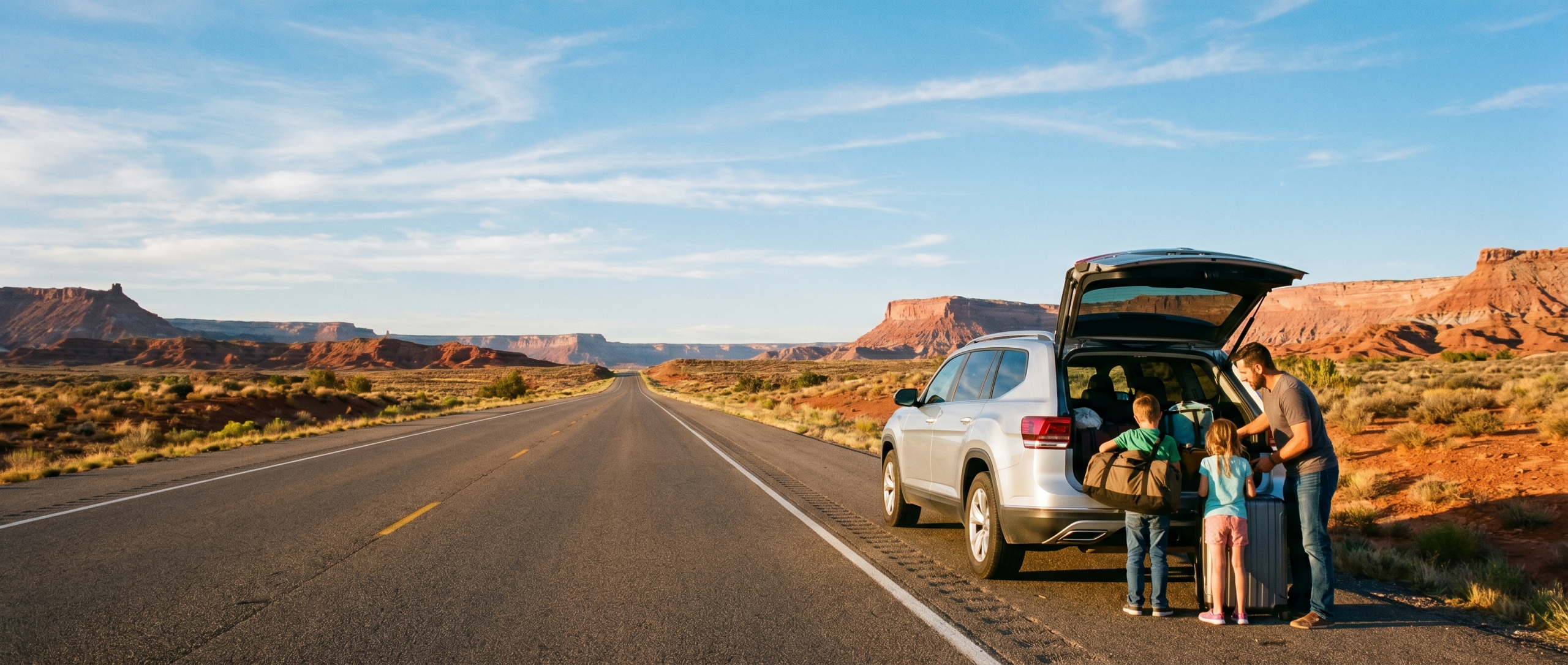
Volkswagen Jetta and Tiguan comparison for summer driving in Amarillo TX

Volkswagen Jetta vs. Tiguan: Finding Your Perfect Summer Match in Amarillo, TX

Summer temperatures in Amarillo, TX regularly climb past 90°F, and choosing between the fuel-efficient Jetta sedan and the versatile Tiguan SUV becomes a decision that impacts every adventure from Palo Duro Canyon to Lake Meredith. Both models excel in the Texas Panhandle heat, but they serve distinctly different driver priorities - understanding which aligns with your summer plans makes all the difference. Understanding Your Summer Driving Style Your ideal vehicle depends on how you spend those long Texas summer days. The choice between sedan efficiency and SUV versatility starts with an honest assessment of your typical week. Daily Commuter Priorities: Fuel economy for trips along I-40 and I-27 Easy parking at Westgate Mall or downtown Comfortable cabin cooling in triple-digit heat Smooth handling on city streets Lower overall operating costs Weekend Adventure Seekers: Cargo space for camping gear and coolers Higher ground clearance for unpaved roads Room for bikes, kayaks, or fishing equipment All-wheel drive capability Passenger flexibility for group trips Consider your ratio of weekday commuting to weekend adventures. Drivers spending most time on paved roads between Canyon and downtown Amarillo might lean toward the Jetta, while those regularly heading to Caprock Canyons State Park or Lake Meredith need the Tiguan's capability. Jetta Excellence: When Efficiency Meets Comfort The 2024 Jetta delivers 41 highway MPG with its turbocharged engine - a significant advantage when gas prices spike during summer travel season. This efficiency translates to fewer stops between Amarillo and popular destinations like Santa Fe or Dallas. Jetta Summer Advantages Real-World Application 41 Highway MPG 500+ mile range per tank Compact Dimensions Easy downtown parking Turbocharged Power Confident highway merging Premium Interior Quiet, refined commute Lower Purchase Price More budget for adventures The Jetta's sedan profile offers unexpected benefits in Amarillo's summer conditions. Its lower center of gravity provides stability during sudden thunderstorms, while the trunk's separation from the cabin keeps groceries cooler during shopping trips. The available sunroof brings an open-air feel without the wind buffeting common in larger vehicles. Pro tip: The Jetta's remote start feature lets you cool the cabin before entering - essential when parked in the Texas sun at venues like the Amarillo Botanical Gardens or Wonderland Amusement Park. For professionals commuting from neighborhoods like The Colonies or Sleepy Hollow to downtown offices, the Jetta provides an ideal combination of fuel efficiency and professional presentation. Tiguan Advantages: Room for Every Summer Plan The Tiguan transforms summer possibilities with 73.5 cubic feet of cargo space when rear seats fold flat. This SUV adapts from Monday morning commutes to Saturday adventures at Lake Meredith without missing a beat. Tiguan Versatility by the Numbers: 7 passenger seating in available third row 8 inches of ground clearance 37.6 cubic feet behind second row Standard turbocharged engine across all trims Available 4MOTION® all-wheel drive Weekend trips to Palo Duro Canyon showcase the Tiguan's strengths. The higher driving position provides better views of the canyon's colorful walls, while the cargo area easily swallows camping gear, hiking boots, and coolers. Families appreciate the available third row when bringing friends along to Globe-News Center events or Amarillo Sox games. The Tiguan's power liftgate proves invaluable when arms are full of beach gear at Lake Meredith or groceries from United Supermarkets. Climate control extends to rear passengers, keeping everyone comfortable during longer drives to Red River or Ruidoso. Matching Vehicles to Amarillo Lifestyles Different Amarillo residents need different capabilities from their summer vehicle. Here's how each model serves specific local lifestyles. Summer Lifestyle Best Match Key Reasons Downtown Professional Jetta Fuel economy, easy parking, refined image Growing Family Tiguan Passenger space, cargo flexibility, safety Outdoor Enthusiast Tiguan Ground clearance, AWD option, gear capacity College Student Jetta Affordability, efficiency, style Small Business Owner Tiguan Hauling capability, professional presence West Texas State students often find the Jetta perfect for campus parking while maintaining style. The sedan's trunk security keeps valuables hidden during classes or shifts at local employers like Northwest Texas Healthcare System. Families in master-planned communities such as Tuscany or City View appreciate the Tiguan's ability to handle school runs, grocery hauls, and spontaneous trips to Wonderland Lake without requiring a second vehicle. Technology and Comfort: Summer Essential Features Both models include Volkswagen's latest tech features that enhance summer driving in the Texas Panhandle. The differences lie in application and passenger access. Jetta Technology Highlights: 8-inch touchscreen with wireless Apple CarPlay® Digital cockpit with customizable displays IQ.DRIVE® driver assistance features Dual-zone automatic climate control Available BeatsAudio® premium sound Tiguan Technology Advantages: Larger 8-inch touchscreen standard Available digital cockpit pro Third-zone climate control available Ambient interior lighting Available wireless device charging Did you know? Both models feature Volkswagen's Car-Net® system that allows remote vehicle access through your smartphone - perfect for pre-cooling your car while finishing lunch at The Big Texan or checking if you locked the doors at Westgate Mall. The Tiguan's panoramic sunroof spans both seating rows, giving rear passengers sky views during drives through Wildcat Bluff Nature Center area. The Jetta counters with a more intimate cabin that reduces road noise on highway drives to Lubbock or Oklahoma City. Real-World Performance: Amarillo Roads and Beyond Summer driving from Amarillo presents unique challenges both vehicles handle differently. Understanding these distinctions helps match the right vehicle to your needs. The Jetta's aerodynamic profile slices through notorious Panhandle winds more efficiently than the Tiguan's upright stance. This advantage becomes apparent during gusty spring and summer storms, translating to better fuel economy and reduced driver fatigue on long Interstate 40 stretches. Conversely, the Tiguan's height advantage proves valuable during flash flood conditions common in summer thunderstorms. Extra ground clearance navigates standing water on streets like Western or Bell more confidently than the Jetta's lower stance. Performance in Local Conditions: Wind resistance matters when crossing the Llano Estacado's open spaces. The Jetta's sedan profile experiences less buffeting, while the Tiguan's mass provides planted stability despite higher wind resistance. Both vehicles feature turbocharged engines that maintain power at Amarillo's 3,650-foot elevation. Summer heat challenges any vehicle's air conditioning system. Both models feature efficient climate control, but the Jetta cools its smaller cabin faster - often reaching comfortable temperatures before leaving parking lots at Amarillo National Bank Plaza or The Shops at Wolflin. Common Questions About Jetta vs. Tiguan in Amarillo, TX How do the Jetta and Tiguan handle Amarillo's summer heat? Both vehicles feature powerful air conditioning systems designed for extreme temperatures, with the Jetta cooling its compact cabin in under three minutes and the Tiguan offering available three-zone climate control. The Tiguan's larger glass area requires slightly more cooling time but provides rear passengers with individual temperature controls. Which Volkswagen® is better for road trips from Amarillo, TX? The Jetta excels on paved highway trips with 41 MPG highway efficiency and comfortable seating for five adults, while the Tiguan better serves adventures requiring cargo space or optional all-wheel drive. Your destination determines the best choice - Jetta for city trips, Tiguan for outdoor adventures. What's the typical price difference between Jetta and Tiguan? The Jetta generally starts several thousand dollars below the Tiguan, though exact differences vary by trim level and available incentives. This price gap often allows Jetta buyers to add premium features while staying within budget. Does the altitude in Amarillo, TX affect these vehicles? Both models use turbocharged engines that compensate for Amarillo's 3,650-foot elevation, maintaining full power unlike naturally aspirated engines. The turbochargers ensure responsive acceleration whether merging onto Interstate 40 or climbing toward Palo Duro Canyon. Which model offers better visibility in West Texas conditions? The Tiguan's elevated seating position and larger windows provide superior visibility for spotting wildlife near Wildcat Bluff or navigating parking at United Supermarkets Plaza. The Jetta offers excellent forward visibility with less wind noise during highway cruising. How do these vehicles handle sudden summer thunderstorms? The Jetta's lower center of gravity provides stability in crosswinds while its sedan profile sheds rain effectively, and the Tiguan's available 4MOTION® all-wheel drive adds confidence on wet roads. Both include advanced traction control systems standard, ensuring safe travel when storms roll across the Panhandle. Your Summer Decision Starts Here Choosing between the Jetta and Tiguan comes down to how you'll spend most summer days. City commuters and highway travelers often find the Jetta's efficiency and nimble handling ideal for navigating between Amarillo's business districts and nearby cities. Adventure seekers and growing families typically discover the Tiguan's versatility opens more possibilities for spontaneous weekend escapes. The beauty lies in having both exceptional options available. Whether you're drawn to the Jetta's sophisticated efficiency or the Tiguan's go-anywhere capability, your perfect summer companion awaits. Browse our new inventory to compare current models, colors, and features. The team at Street Volkswagen of Amarillo knows these vehicles inside and out, ready to help match your lifestyle to the ideal Volkswagen for conquering summer in the Texas Panhandle. View New Inventory View Used Inventory Street Volkswagen of Amarillo 8707 Pilgrim Dr, Amarillo, TX 79119 (864) 288-8300
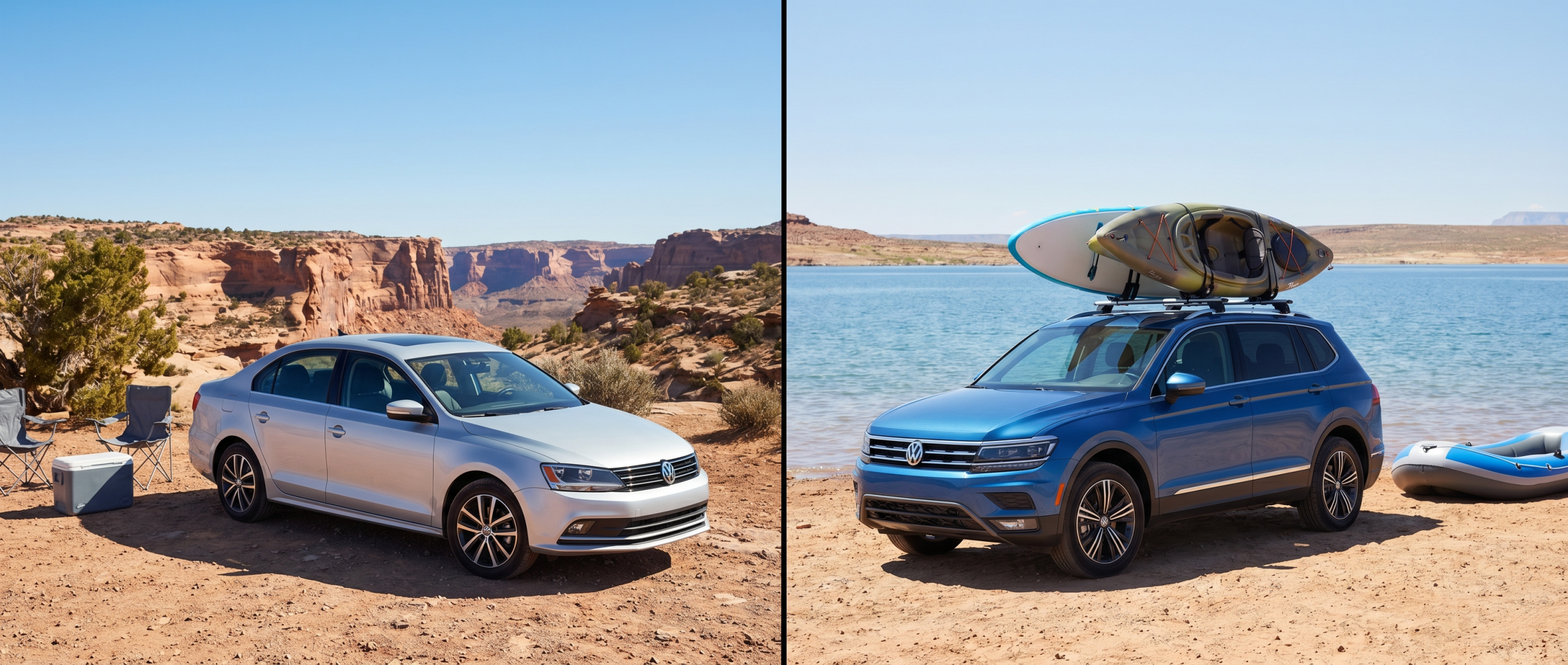
VW Atlas Cross Sport summer evening downtown Amarillo TX

Why the Volkswagen Atlas Cross Sport Fits Summer Nights in Downtown Amarillo, TX

Summer evenings in downtown Amarillo, TX transform the city into an outdoor playground where rooftop patios buzz with conversation and live music drifts through the warm air. The Volkswagen® Atlas Cross Sport™ becomes your perfect companion for these nights out, combining sophisticated style with practical features that match the rhythm of summer social life. From valet parking at OHMS to hauling friends between West 6th venues, this five-passenger SUV adapts to however your evening unfolds. The Downtown Scene Meets Modern SUV Design Your Atlas Cross Sport's coupe-like profile turns heads as you cruise down Polk Street, where the evening crowd gathers at spots like Crush Wine Bar and Public House. The panoramic sunroof frames the Texas sunset perfectly while you search for street parking near the Amarillo Civic Center Complex. With 20.1 cubic feet of cargo space behind the rear seats, you've got room for folding chairs if you're heading to a concert at Hodgetown or blankets for movie night at Center City. The hands-free power liftgate proves invaluable when you're carrying takeout from 575 Pizzeria back to your friends at the park. Park once and walk to multiple destinations - the Atlas Cross Sport's remote start keeps your cabin cool while you explore the Arts District on foot. Why the Atlas Cross Sport Works Downtown: Compact enough for parallel parking on tight streets Panoramic sunroof perfect for stargazing at Sam Houston Park Ambient lighting sets the mood for evening drives Easy-clean leatherette seats handle spills from food truck adventures Hands-free liftgate when your arms are full of farmers market finds Pro tip: The Atlas Cross Sport's Bird's Eye View camera system makes navigating the angled parking spots along Southeast 6th Avenue much easier, especially during busy First Friday Art Walks. Summer Night Features That Shine When temperatures finally drop below 90°F around 9 PM, Amarillo residents emerge to enjoy their city. The Atlas Cross Sport's three-zone automatic climate control keeps everyone comfortable - crucial when you're shuttling between air-conditioned venues and outdoor patios. The heated and ventilated front seats work overtime during Texas summers, cooling you down after walking the hot pavement, then keeping you cozy when desert nights turn surprisingly cool. Feature Summer Night Benefit Downtown Application LED headlights Superior visibility Navigate unlit side streets near Barfield Building Digital cockpit Easy night viewing Track parking time limits without squinting Wireless charging Phone always ready Stay connected between venues BeatsAudio™ system Concert-quality sound Pre-party playlist on the way to Starlight Theatre Ambient lighting Customizable mood Match the vibe from casual to upscale The wireless smartphone integration means your navigation stays visible while hunting for parking spots near Golden Light Cantina. No fumbling with cords when friends hop in and out at different stops along the entertainment district. Navigating Amarillo's Entertainment Districts Summer brings food trucks to every corner and outdoor seating to restaurants throughout downtown. Your Atlas Cross Sport adapts to each neighborhood's unique character. In the historic Route 66 district, the smooth ride quality handles the older streets while you cruise between antique shops staying open late for special events. The responsive steering makes quick work of navigating between the San Jacinto neighborhood's narrow streets during block parties. Heading from downtown to explore Wolflin Village? The Atlas Cross Sport's V6 engine provides plenty of power merging onto I-40, while the eight-speed automatic transmission keeps things smooth. Canyon Drive becomes your gateway to upscale dining, and the SUV's refined presence fits perfectly pulling up to DUSK or Touch of Europe. Popular Summer Routes: Downtown to Palo Duro Canyon for sunset hikes (25 minutes via US-287) Polk Street to Thompson Park for evening disc golf West Amarillo to downtown for First Friday festivities Historic Route 66 cruise from San Jacinto to Western Street Whether you're heading to the Amarillo Little Theatre for an evening show or catching live music at Leftwood's, having reliable transportation that matches your style matters. Check out our new inventory to find an Atlas Cross Sport that fits your summer lifestyle. Making the Most of Outdoor Events Amarillo's summer calendar fills with outdoor concerts, movies in the park, and festivals that bring the community together. The Atlas Cross Sport's 73.3 cubic feet of maximum cargo space (with rear seats folded) swallows camping chairs, coolers, and pop-up canopies for concerts at John Stiff Memorial Park. The roof rails accept crossbars for hauling bikes to the Greenways trails when you want to explore before sunset. Did you know? The Atlas Cross Sport's towing capacity of 5,000 pounds means you can bring a small trailer for tailgating at Amarillo Sod Poodles games - perfect for serious baseball fans who make every home game a party. The power tailgate becomes your serving station at outdoor gatherings. Set up your spread in the Amarillo Community Market parking lot and enjoy farm-fresh produce and local crafts every Saturday morning. The wide rear opening makes loading and unloading a breeze, while the low lift-over height saves your back after a long day of adventure. Tech That Enhances Your Evening Modern summer nights require staying connected, and the Atlas Cross Sport delivers. The Digital Cockpit Pro displays navigation clearly, helping you find that new speakeasy everyone's talking about. Apple CarPlay® and Android Auto™ compatibility mean your favorite playlist streams seamlessly as you cruise between destinations. The wireless charging pad keeps phones powered through long evenings of photo-taking and social sharing. Tech Features for Summer Socializing: Wireless hotspot capability for passengers sharing the night's highlights USB-C ports in all three rows for device charging Voice commands for hands-free control while driving Navigation system with real-time traffic updates SiriusXM® satellite radio for discovering new music The Volkswagen Car-Net® system adds convenience with remote features. Start your Atlas Cross Sport from inside the restaurant to cool it down before leaving. Check if you locked the doors without walking back to the parking garage. These small conveniences make summer nights flow more smoothly. Common Questions About the VW Atlas Cross Sport in Amarillo, TX How does the Atlas Cross Sport handle West Texas summer heat? The Atlas Cross Sport features a powerful air conditioning system with three-zone automatic climate control that quickly cools the cabin even on 105°F days. The available ventilated front seats circulate air directly through the perforations, while the tinted windows and available panoramic sunroof shade help reduce heat buildup when parked. What's the real-world fuel economy for Amarillo driving? Expect around 22 mpg in combined city and highway driving with the V6 engine, though your efficiency improves on long stretches of I-40 or US-287. The eight-speed automatic transmission optimizes fuel usage, and the auto stop-start system saves gas during downtown traffic. Does the Atlas Cross Sport work for both daily commutes and weekend adventures? The Atlas Cross Sport excels at dual duty, offering comfortable seating for five during weekday drives to Pantex or the medical district, then providing ample cargo space for weekend trips to Lake Meredith. The available 4Motion® all-wheel drive system adds confidence during sudden summer storms or dusty canyon roads. Where can I test drive an Atlas Cross Sport in Amarillo, TX? Schedule a test drive at Street Volkswagen of Amarillo to experience how the Atlas Cross Sport handles familiar roads like Soncy, Coulter, and Bell Street. Our team knows the local driving conditions and can demonstrate features during a route that includes both city streets and highway driving. What colors show dirt less on dusty Amarillo roads? The Atlas Cross Sport's Pure Gray, Platinum Gray Metallic, and Aurora Red Metallic finishes hide dust better than darker colors. These shades maintain their appearance between washes, important when dealing with West Texas wind and dirt roads leading to recreation areas. How does VW warranty coverage work in the Texas Panhandle? Volkswagen's comprehensive warranty includes 4 years/50,000 miles bumper-to-bumper coverage and a 6 year/72,000 mile powertrain warranty. The coverage follows you whether you're exploring Cadillac Ranch, driving to Lubbock, or taking road trips across Texas. Your Summer Starts Here Summer nights in Amarillo, TX offer endless possibilities, from rooftop gatherings downtown to sunset drives through Palo Duro Canyon. The Volkswagen Atlas Cross Sport adapts to each adventure with style, comfort, and capability that matches your lifestyle. Its blend of sophisticated design and practical features makes every evening outing more enjoyable. Ready to elevate your summer experiences? Visit Street Volkswagen of Amarillo to explore our Atlas Cross Sport selection and discover which configuration fits your vision of perfect summer nights. Our team understands how Amarillo residents use their vehicles and can help match you with the ideal setup for your adventures. View New Inventory Get Pre-Approved for Financing Street Volkswagen of Amarillo 8707 Pilgrim Dr, Amarillo, TX 79119 (864) 288-8300
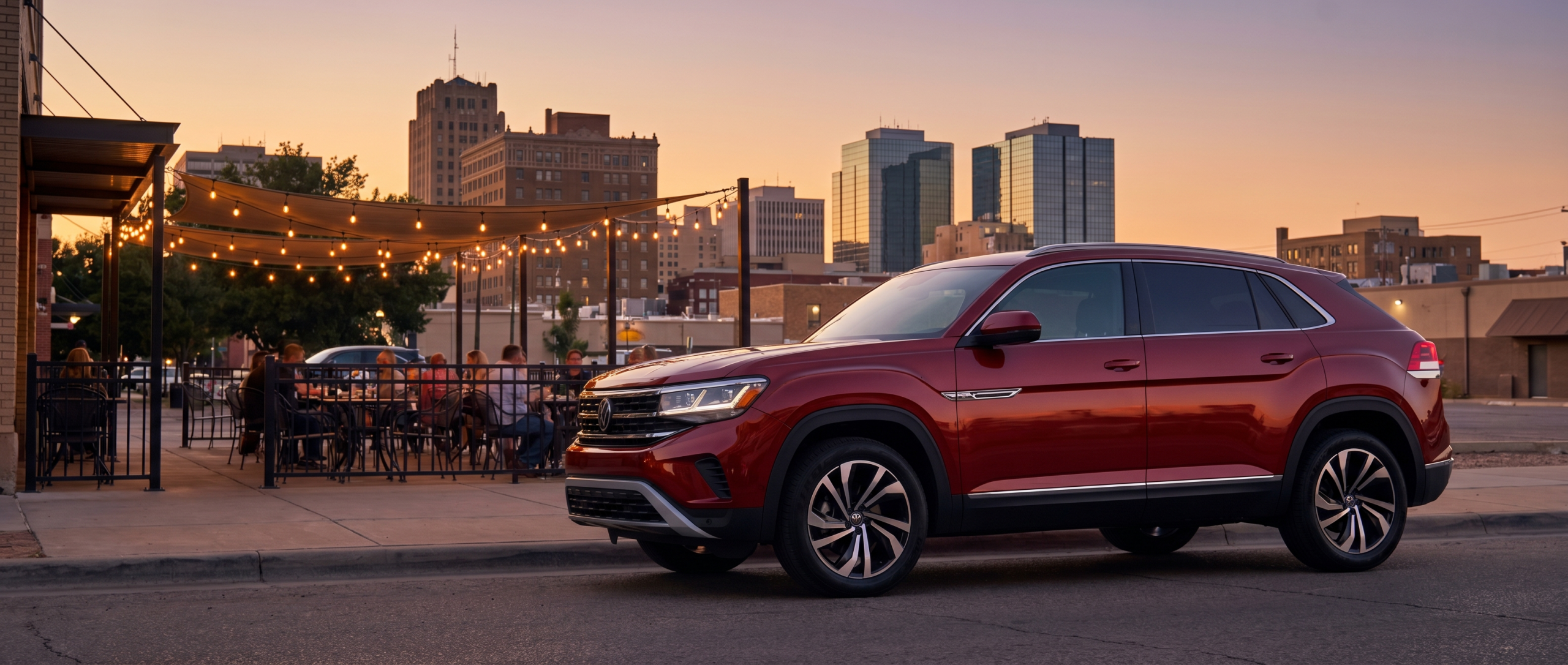
Volkswagen AC service and maintenance in Amarillo, TX

Smart Volkswagen AC Service Tips to Beat the Amarillo, TX Heat

Your Volkswagen 's AC system can lose up to 10% of its refrigerant each year through microscopic leaks in hoses and seals - meaning that perfectly cool cabin from last summer might struggle when Amarillo, TX temperatures climb past 95°F this season. With our notorious Texas Panhandle heat waves and sudden temperature spikes, preparing your VW's air conditioning system now prevents uncomfortable surprises during your daily commute on I-40 or weekend trips to Lake Meredith. This guide walks you through essential AC maintenance steps that protect your comfort and your Volkswagen's longevity in our challenging high plains climate. Understanding Your Volkswagen's Climate Control System Modern Volkswagen vehicles feature sophisticated automatic climate control systems that do more than just blow cold air - they actively monitor cabin temperature, humidity levels, and even sun intensity to maintain your ideal environment. The Climatronic® system found in models like the Atlas and Tiguan uses multiple sensors throughout the cabin to adjust airflow and temperature zones independently. This technology works harder in Amarillo's extreme temperature swings, where mornings near Bushland might start at 45°F before afternoon temperatures soar past 90°F. Your VW's AC system contains several key components that require regular attention: Cabin air filter that removes dust and pollen Refrigerant that absorbs and releases heat Compressor that pressurizes the refrigerant Condenser that releases heat outside the vehicle Evaporator that cools the air entering your cabin Did you know? Volkswagen's newest ID.4 electric models use a heat pump system that's up to 30% more efficient than traditional AC, extending your driving range even when cooling the cabin in Texas heat. Understanding these components helps you recognize early warning signs of AC problems. That musty smell when you first turn on the air? It's likely time for a cabin filter replacement. Weak airflow despite maximum fan settings often indicates a clogged filter or debris in the system. Early Warning Signs Your VW Needs AC Service Strange noises from your dashboard vents aren't just annoying - they're your Volkswagen's way of asking for help before a minor issue becomes a major repair. In the Amarillo area, where dust storms and agricultural activity create challenging conditions, AC systems work overtime filtering particles from the air. Catching problems early saves both money and comfort during those inevitable summer heat waves. Watch for these symptoms that indicate AC service is needed: Rattling or clicking sounds when the AC engages Air that feels humid rather than dry and cool Unusual odors, especially moldy or chemical smells Longer time to cool the cabin than previous summers Water pooling under your vehicle (beyond normal condensation) AC only works while driving, not when idling Symptom Likely Cause Urgency Level Typical Service Needed Weak airflow Clogged cabin filter Low Filter replacement Warm air only Low refrigerant High Leak test & recharge Musty smell Bacterial growth Medium System cleaning Clicking noise Debris in blower Medium Blower inspection No air at all Electrical issue High Diagnostic service Regular maintenance prevents most of these issues. The dusty conditions around Potter County mean cabin filters need more frequent replacement than VW's standard recommendations suggest. Seasonal AC Maintenance Schedule for Texas Panhandle Drivers Timing your AC service with Amarillo's weather patterns maximizes system efficiency and prevents breakdowns during peak summer heat. The Texas Panhandle's unique climate - with its rapid temperature changes, high winds, and occasional dust storms - demands a proactive maintenance approach that goes beyond standard manufacturer recommendations. Spring Preparation (March-April) Replace cabin air filter after winter months Test AC performance before temperatures rise Check refrigerant levels Inspect belt tension and condition Early Summer Check (May-June) Clean condenser of cottonwood seeds and debris Verify proper thermostat operation Test all climate control zones Ensure drainage tubes are clear Mid-Summer Maintenance (July-August) Inspect system for signs of strain Check for unusual odors or sounds Monitor cooling efficiency Address any performance drops immediately Fall Preparation (September-October) Clean evaporator coils Test heating system operation Replace cabin filter if needed Prepare for temperature extremes Pro tip: Schedule your AC service appointment in April or early May to beat the summer rush. Many Amarillo drivers wait until the first 100-degree day to address AC problems, creating longer wait times at service centers. Consider the demands of your specific driving patterns. If you frequently travel Highway 287 toward Dumas or take dusty county roads near Lake Tanglewood, your system needs more frequent filter changes. Browse our new inventory to see how newer Volkswagen models feature enhanced filtration systems designed for challenging environments. Professional vs. DIY AC Maintenance: What's Safe to Handle Yourself Some AC maintenance tasks are perfect for handy Volkswagen owners, while others require professional equipment and expertise to complete safely and effectively. Understanding the difference protects both your vehicle and your wallet from costly mistakes that could leave you sweating through an Amarillo summer. Safe DIY Maintenance Tasks: Cabin air filter replacement (usually behind glove box) Visual inspection of AC belt condition Cleaning debris from front grille and condenser Checking and clearing AC drain tube Running AC monthly during winter to maintain seals Tasks Requiring Professional Service: Refrigerant level testing and recharging Leak detection with UV dye or electronic tools Compressor diagnosis and replacement Electrical troubleshooting System evacuation and moisture removal Service Task DIY Difficulty Tools Required Risk if Done Wrong Filter replacement Easy None Reduced airflow Belt inspection Easy Flashlight None (visual only) Refrigerant check Professional only Gauges, recovery equipment Environmental damage, system damage Leak detection Professional only UV light, dye injector Missed leaks, wasted refrigerant Drain cleaning Moderate Compressed air Water damage if improper Working with refrigerant requires EPA certification and specialized equipment. Modern R-1234yf refrigerant used in newer VW models like the ID.4 and Atlas requires different handling than older R-134a systems. Professional technicians have the tools to properly diagnose issues without releasing refrigerant into the atmosphere. How Amarillo's Climate Affects Your Volkswagen's AC System The Texas Panhandle presents unique challenges that test even Volkswagen's robust engineering - from subfreezing winter mornings to scorching summer afternoons that turn your Jetta or Taos into an oven within minutes. Our average of 260 sunny days per year means your AC system rarely gets a break, while dust storms and agricultural activity near Canyon create additional strain on filters and components. Temperature extremes cause particular stress on AC components: Rubber hoses expand and contract, developing microscopic cracks Seals lose flexibility after repeated heating and cooling cycles Metal components experience thermal stress at connection points Refrigerant pressure fluctuates more dramatically than in moderate climates The low humidity that makes Amarillo summers more bearable than Houston also affects your AC system differently. While you might not feel as sticky, the dry air can cause rubber components to deteriorate faster. Combined with our elevation at 3,605 feet, your AC compressor works harder to achieve the same cooling effect as vehicles at sea level. Amarillo-Specific AC Challenges: Rapid 40-50°F temperature swings in spring and fall Fine dust infiltration from agricultural areas High UV exposure degrading rubber components Altitude effects on system pressures Extreme temperature parking situations Did you know? Parking in shade at Westgate Mall or under trees at Thompson Park can reduce your AC workload by up to 40% compared to direct sun exposure, extending component life. Schedule Your VW AC Service Before Summer Peak Season April and May represent the sweet spot for AC service in Amarillo - you'll avoid the emergency rush when temperatures first hit triple digits, and any needed parts are readily available without extended wait times. As summer approaches and more Volkswagen owners realize their AC needs attention, appointment availability becomes scarce just when you need service most. Planning ahead offers several advantages: Shorter wait times for service appointments Better parts availability for any needed repairs Time to address issues properly without emergency pressure Often lower service costs before peak season demand Peace of mind before summer road trips Ideal Service Timeline: March: Schedule your appointment April: Complete AC inspection and any needed repairs May: Enjoy reliable cooling before the heat arrives June-August: Drive confidently through peak summer Consider combining AC service with other seasonal maintenance. Your Tiguan or Atlas might also need summer tires, wiper blades for monsoon season, or that 10,000-mile service. Bundling services saves time and often reduces overall costs. Don't wait until you're driving past Amarillo College in 95°F heat to discover your AC needs attention. It's better to catch small issues now than face major repairs during peak summer temperatures. When you're ready to ensure cool, comfortable drives all summer long, schedule service with experienced technicians who understand how our unique climate affects your Volkswagen. Common Questions About Volkswagen AC Service in Amarillo, TX How often should I service my Volkswagen's AC system in Amarillo, TX? Service your VW's AC system annually, ideally in spring before Amarillo's summer heat arrives. The Texas Panhandle's dusty conditions and extreme temperature swings mean more frequent cabin filter changes - every 10,000-12,000 miles instead of the standard 20,000-mile interval. Professional inspection catches small issues before they become expensive repairs. Why does my Volkswagen's AC smell musty when I first turn it on? Musty odors indicate bacterial or mold growth on your evaporator core, common in vehicles exposed to Amarillo's dust and occasional humidity. The moisture that naturally collects during AC operation combines with dust particles, creating an ideal environment for growth. Professional cleaning with antimicrobial treatment eliminates odors and improves air quality. Can I recharge my VW's AC system myself? Professional service is strongly recommended for AC recharging, as Volkswagen vehicles require specific refrigerant types and precise amounts. Overcharging damages the compressor while undercharging provides poor cooling. Certified technicians use proper equipment to detect leaks, recover old refrigerant safely, and add the exact amount specified for your model. How much does Volkswagen AC service typically take? Basic AC inspection and cabin filter replacement takes 30-60 minutes, while refrigerant recharge requires 60-90 minutes including leak testing. Complete system diagnosis for complex issues may take 2-3 hours. Spring scheduling usually offers faster service than waiting until Amarillo's first 100-degree day when demand peaks. Do electric Volkswagen models like the ID.4 need different AC service? Yes, electric Volkswagen models use heat pump systems that require specialized service procedures different from traditional vehicles. The ID.4's system is more efficient but needs specific coolants and handling procedures. Always service electric VWs with technicians trained on EV climate control systems. What's the difference between R-134a and R-1234yf refrigerant in Volkswagens? Newer Volkswagen models (2017 and later) use R-1234yf refrigerant, which has lower environmental impact but costs more than older R-134a. The two types aren't interchangeable and require different service equipment. Your VW's refrigerant type is listed on a label under the hood - using the wrong type damages your AC system. Preparing your Volkswagen's AC system before temperatures soar above 95°F makes the difference between comfortable summer drives and sweating through traffic on Coulter Street. With proper maintenance tailored to our unique Texas Panhandle climate - from dust storms to sudden temperature swings - your VW's climate control will keep you comfortable whether you're commuting to West Texas A&M or heading out to Palo Duro Canyon for a weekend adventure. The team at Street Volkswagen of Amarillo understands exactly how our local conditions affect your vehicle's AC system and can help ensure reliable cooling all summer long. Schedule a Service View New Inventory Street Volkswagen of Amarillo 8707 Pilgrim Dr, Amarillo, TX 79119 (864) 288-8300
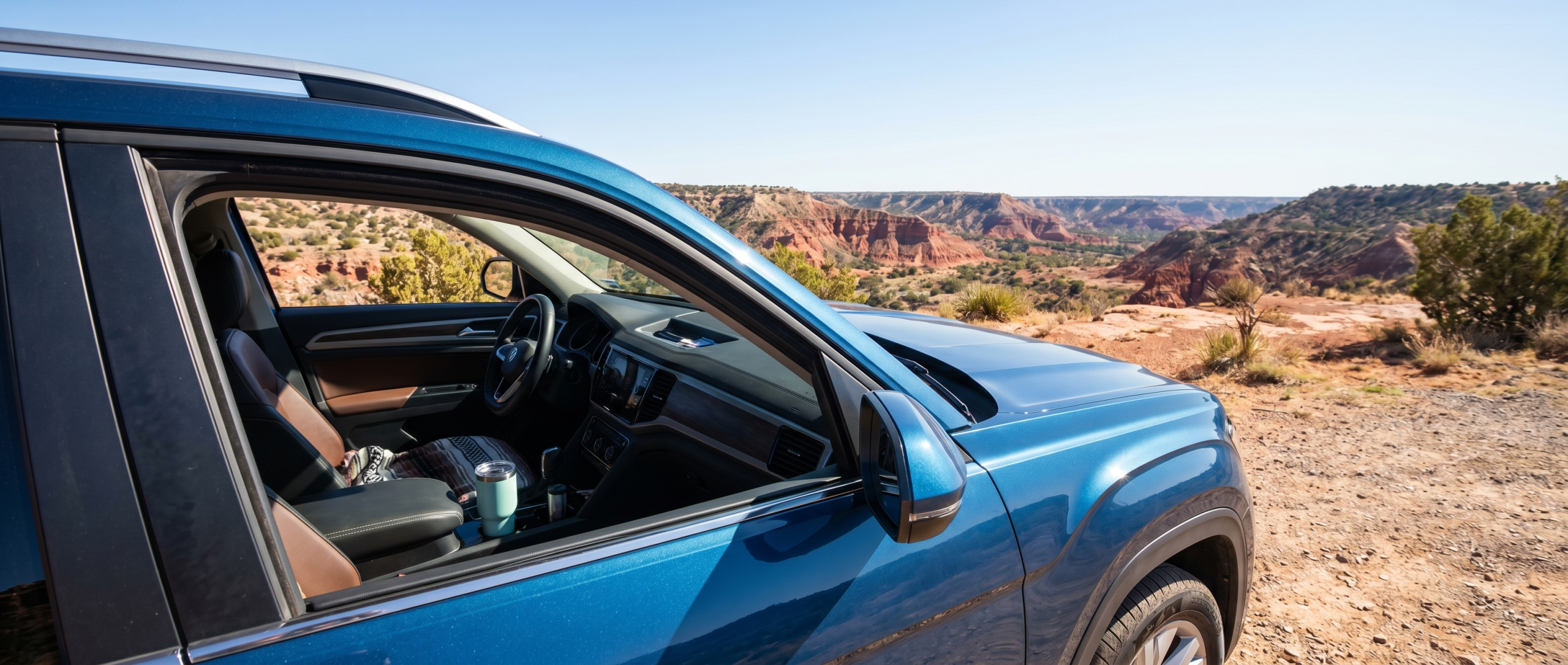
Volkswagen Atlas driving on I-40 near Amarillo TX showcasing highway comfort

How the Volkswagen Atlas Handles Long Drives on I-40 Through Amarillo, TX

The 177-mile stretch of I-40 through the Texas Panhandle tests every vehicle that crosses it - and the Volkswagen Atlas turns this challenge into its greatest showcase. Whether you're hauling the family to Cadillac Ranch or pushing through to Albuquerque, this three-row SUV transforms endless highway miles into comfortable journeys. For drivers in Amarillo, TX who regularly face long stretches of open road, understanding how the Atlas performs where it matters most - on I-40 - makes all the difference in choosing the right family vehicle. Why I-40 Through the Panhandle Demands a Different Kind of SUV Wind gusts averaging 15-20 mph year-round make I-40 through Potter and Randall Counties particularly demanding on vehicles - which is precisely where the Atlas's 5,037-pound curb weight becomes an advantage. This substantial mass, combined with the SUV's wide stance, creates remarkable stability even when semi-trucks create turbulent air pockets. The Atlas maintains its composure where lighter crossovers get pushed around. The flat terrain might look easy, but the combination of sustained highway speeds, crosswinds, and temperature extremes creates unique challenges: Constant headwinds reduce fuel efficiency by up to 25% in typical vehicles Temperature swings from 20°F winter mornings to 100°F summer afternoons stress mechanical systems Limited service stations between Amarillo and Tucumcari mean reliability matters more Monotonous scenery for hours demands superior comfort to combat driver fatigue Residents commuting between Canyon and downtown Amarillo understand these conditions aren't occasional - they're daily reality. The Atlas addresses each challenge through engineering specifically suited to long-distance highway driving. Pro tip: The Atlas 's aerodynamic design includes active grille shutters that close at highway speeds, reducing drag and improving efficiency by approximately 2 MPG on long I-40 stretches. Real-World Fuel Economy Between Amarillo and Major Destinations Destination Distance from Amarillo Atlas V6 Fuel Used Typical Fuel Stops Drive Time Oklahoma City, OK 260 miles 10.4 gallons 1 (optional) 3 hrs 45 min Albuquerque, NM 290 miles 11.6 gallons 1 recommended 4 hrs 15 min Dallas, TX 360 miles 14.4 gallons 1 required 5 hrs 30 min Denver, CO 425 miles 17.0 gallons 1-2 required 6 hrs 30 min The Atlas V6 achieves 23-25 MPG on I-40 under real conditions - not just EPA estimates. With its 18.6-gallon tank, you'll pass numerous gas stations before needing to stop, providing flexibility to choose stations with better prices or cleaner facilities. Cross-referencing fuel consumption with actual Atlas owners driving through the Panhandle reveals the AWD models typically see only a 1-2 MPG decrease compared to FWD versions. This minimal penalty makes AWD worth considering for those who also navigate unpaved roads near Lake Meredith or Caprock Canyons State Park. Comfort Features That Matter After 300 Miles By the time you reach the New Mexico border, inferior seats reveal themselves through backaches and numbness - but the Atlas keeps occupants comfortable well past the 5-hour mark. The driver's seat offers 12-way power adjustment including 4-way lumbar support, addressing the lower back strain that develops on flat, straight highways. The Atlas provides comfort advantages that become apparent on long hauls: Tri-zone climate control prevents the common "too hot in back, too cold in front" battle Panoramic sunroof (available on SE trim and above) combats the claustrophobic feeling of endless highway Ambient lighting in 10 colors helps reduce eye strain during pre-dawn or night drives Heated and ventilated front seats adapt to Panhandle temperature extremes Second-row captain's chairs (optional) provide first-class comfort for adult passengers What sets the Atlas apart is how these features work together during extended drives. The ventilated seats circulate air continuously, preventing the sticky discomfort that develops after hours of sitting. Meanwhile, the panoramic sunroof's power shade can be partially opened to brighten the cabin without creating wind noise. Take a look at our new inventory to explore Atlas models with these long-distance comfort features. Wind Noise and Cabin Quietness at Panhandle Speeds The Texas Panhandle's notorious winds create a natural sound laboratory for testing vehicle refinement - and the Atlas excels where it counts. At a steady 75 mph on I-40, the cabin maintains conversation-friendly sound levels thanks to acoustic glass in the windshield and front doors. This isn't just marketing speak; it translates to arriving in Santa Fe refreshed rather than exhausted from fighting noise fatigue. VW engineers specifically addressed high-speed wind noise through: Triple door seals that prevent air infiltration Aerodynamic mirror designs that minimize turbulence Active noise cancellation through the Fender premium audio system Underbody panels that smooth airflow beneath the vehicle During spring windstorms when gusts exceed 40 mph near Wildorado, the Atlas 's cabin remains remarkably composed. You'll notice the wind's presence through gentle body motions, but the howling stays outside where it belongs. Did you know? The Atlas's coefficient of drag (0.33 Cd) matches many sedans, despite its boxy three-row shape. This aerodynamic efficiency directly translates to reduced wind noise and improved fuel economy. Technology That Enhances Long-Distance Driving Safety Travel Assist - Volkswagen's hands-on semi-autonomous driving system - transforms I-40's monotonous straightaways from exhausting to manageable. This technology package (standard on SEL trim and above) combines adaptive cruise control with lane-keeping assistance to reduce the physical and mental fatigue of constant steering corrections. Here's how Atlas technology specifically helps on I-40: Active Safety Features: Travel Assist maintains centered lane position automatically Adaptive Cruise Control adjusts speed for traffic and curves Front Assist with Automatic Emergency Braking watches for sudden stops Blind Spot Monitor covers the long blind spots created by three rows Rear Traffic Alert prevents backing accidents at busy rest stops Driver Assistance Benefits: Reduced steering input means less shoulder fatigue Automatic speed adjustments for construction zones near Conway Lane departure warnings combat highway hypnosis High beam control maximizes night visibility without blinding others The 8-inch touchscreen (10.25-inch on higher trims) runs Volkswagen's latest infotainment system with wireless Apple CarPlay and Android Auto. This means your phone charges in the wireless pad while streaming navigation and entertainment - no cables to manage during fuel stops. Cargo Flexibility for Extended Road Trips Behind the third row, the Atlas provides 20.6 cubic feet of cargo space - enough for a week's worth of luggage without playing Tetris. Fold that third row flat (power-folding on SEL Premium R-Line and above), and cargo capacity expands to 55.5 cubic feet. Drop the second row too, and you're looking at 96.8 cubic feet - more than most pickup truck beds. Cargo Configuration Options: Seating Configuration Cargo Space Real-World Capacity All seats up (7 passengers) 20.6 cu ft 4-5 carry-on suitcases Third row down (5 passengers) 55.5 cu ft Full Costco run + camping gear Second & third rows down 96.8 cu ft Queen mattress or bicycles The power liftgate (standard on SE w/Technology and above) opens to reveal a low load floor - just 32.7 inches from the ground. This proves invaluable when loading heavy coolers at United Supermarkets before heading west. Hidden underfloor storage compartments keep emergency supplies and tools organized without eating into usable space. For Amarillo residents who regularly transport gear to Palo Duro Canyon or haul supplies for lake weekends, the Atlas's combination of passenger comfort and cargo flexibility eliminates the need for multiple vehicles. Performance at Altitude: Climbing to Flagstaff and Beyond West of Amarillo, I-40 climbs from 3,600 feet to over 7,000 feet elevation near Flagstaff - a test that reveals underpowered engines quickly. The Atlas's 3.6-liter V6 produces 276 horsepower and 266 lb-ft of torque, maintaining highway speeds even when fully loaded with seven passengers and cargo. The 8-speed automatic transmission rarely hunts for gears, holding steady ratios during long climbs. The turbocharged 2.0-liter four-cylinder (235 hp) available in lower trims provides adequate power for most situations but shows its limits above 6,000 feet elevation with a full load. For families who regularly drive beyond the Panhandle's flat expanses, the V6 proves worth its modest fuel economy penalty. AWD Atlas models include Hill Descent Control, particularly useful when navigating the steep grades near Tucumcari or exploring unpaved Forest Service roads outside Flagstaff. The system maintains a controlled speed without riding the brakes, preventing the fade that ruins many vacation drives. Check out our pre-owned inventory for V6-equipped Atlas models perfect for high-altitude adventures. Maintenance Considerations for High-Mileage Highway Driving Interstate driving might be easier on vehicles than stop-and-go traffic, but the Atlas still requires proper maintenance to handle countless I-40 miles reliably. Volkswagen designs the Atlas for 10,000-mile oil change intervals using synthetic oil - though Panhandle dust conditions might warrant slightly shorter intervals. Highway Driving Maintenance Schedule: Oil changes: Every 8,000-10,000 miles with full synthetic Transmission service: Every 80,000 miles for the 8-speed automatic Coolant flush: Every 100,000 miles or 5 years Brake fluid: Every 2 years regardless of mileage Cabin air filter: Every 20,000 miles (more frequently during dust storm season) The Atlas's maintenance needs align well with highway-heavy use patterns. Brake pads last significantly longer with interstate driving - often exceeding 70,000 miles. The regenerative braking system on certain trims extends this even further by reducing mechanical brake use during gentle deceleration. Pro tip: Schedule service during spring and fall to ensure your Atlas is prepared for the Panhandle's extreme summer and winter temperatures. Comparing the Atlas to Competitors on Long Highway Drives Feature VW Atlas Honda Pilot Toyota Highlander Mazda CX-9 Highway MPG 25 (V6) 27 29 28 Cargo (3rd row folded) 55.5 cu ft 46.8 cu ft 48.4 cu ft 38.2 cu ft Towing Capacity 5,000 lbs 5,000 lbs 5,000 lbs 3,500 lbs Warranty 4yr/50k 3yr/36k 3yr/36k 3yr/36k 3rd Row Adult Comfort Excellent Good Fair Poor While competitors might edge out the Atlas in fuel economy, the VW provides superior passenger space and comfort for all three rows. The Highlander's third row, for instance, forces adults into uncomfortable positions on long drives. The Atlas's third row actually accommodates 6-foot passengers for multi-hour stints. The 4-year/50,000-mile bumper-to-bumper warranty (plus 6-year/72,000-mile powertrain coverage) provides peace of mind for high-mileage drivers. This exceeds most competitors' coverage, particularly valuable for those accumulating miles on I-40 quickly. Common Questions About the Volkswagen Atlas on I-40 in Amarillo, TX How does the Atlas handle crosswinds on I-40 near Amarillo? The Atlas's 5,037-pound weight and wide track provide excellent stability in the 15-20 mph crosswinds common through Potter County. The electronic stability control system actively counters wind gusts, while the substantial mass prevents the unsettling sideways movements lighter SUVs experience near Bushland and Wildorado. What's the real-world range of an Atlas on a single tank driving I-40? With the 18.6-gallon fuel tank and achieving 24-25 MPG highway, expect 440-465 miles of range in normal conditions. This means driving from Amarillo to Albuquerque and halfway back before needing fuel, or reaching Oklahoma City with over half a tank remaining. Does the Atlas require premium gas for highway driving? No, the Atlas V6 runs perfectly on regular 87-octane fuel, even during high-speed highway driving or when climbing to elevation. This saves approximately $7-10 per tank compared to competitors requiring premium fuel. How comfortable is the third row for adults on long trips? The Atlas offers class-leading third-row space with 33.7 inches of legroom and proper cushion height. Adults up to 6 feet tall can sit comfortably for 2-3 hour stretches, though most prefer the captain's chairs in row two for all-day comfort. What's the towing capacity for RV or boat pulling on I-40? The Atlas V6 tows up to 5,000 pounds when properly equipped with the factory tow package. This handles most travel trailers under 25 feet, boat/trailer combinations, or utility trailers without strain, even maintaining 70+ mph on I-40's grades. Does Volkswagen's warranty cover high-mileage highway driving? Yes, VW's 4-year/50,000-mile comprehensive warranty and 6-year/72,000-mile powertrain warranty apply regardless of driving type. The transferable coverage protects your investment whether accumulating city or highway miles. Your Next Adventure Starts Here Long drives on I-40 reveal the true character of any vehicle, and the Atlas proves itself mile after mile. From battling crosswinds near Cadillac Ranch to climbing toward Flagstaff fully loaded, this three-row SUV delivers the comfort, capability, and efficiency that Panhandle drivers need. The combination of a smooth V6 engine, genuinely spacious three-row seating, and advanced driver assistance technology transforms necessary travel into enjoyable journeys. Whether you're commuting to Canyon for work or planning the next family vacation west, the Atlas adapts to your needs while keeping everyone comfortable. The team at Street Volkswagen of Amarillo understands the unique demands of Panhandle driving and can help match you with the perfect Atlas configuration for your lifestyle. View New Inventory View Used Inventory Street Volkswagen of Amarillo 8707 Pilgrim Dr, Amarillo, TX 79119 (864) 288-8300
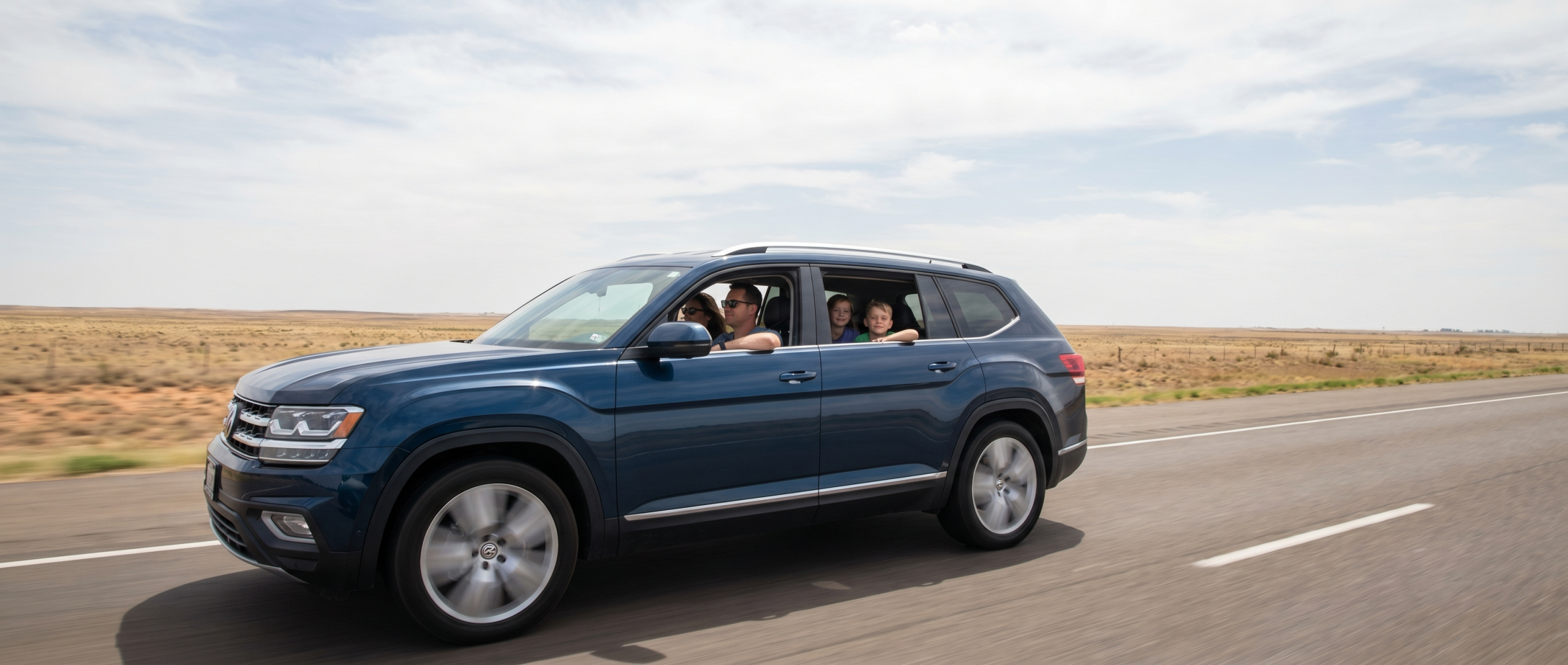
Contact Us

Fill out this form below and we'll contact you shortly
*Required Fields